Kerala Liquor Policy Overhaul: Fiscal vs. Social Tightrope
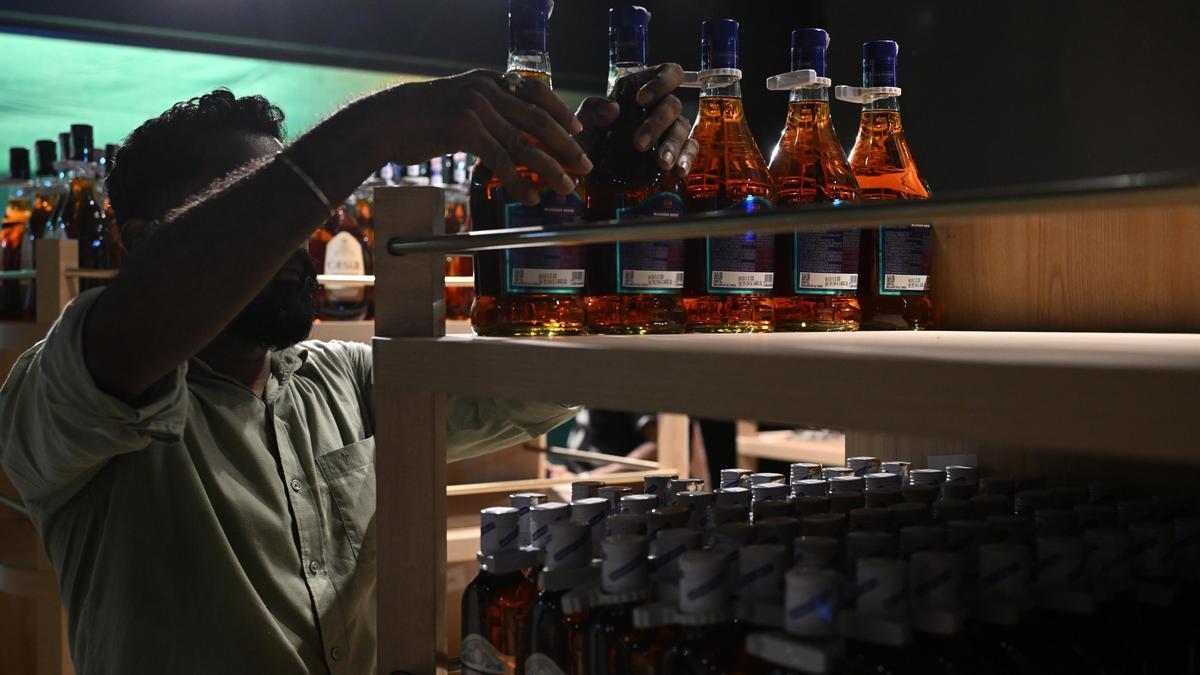
Kerala's UDF government forms a sub-committee to finalize liquor policy, balancing fiscal needs with social and health concerns. The move impacts the state's beverage alcohol market and regulatory landscape.
Executive Takeaways
- Kerala's UDF government has formed a sub-committee to finalize the state's liquor policy, aiming to balance fiscal revenue with social and public health concerns.
- The policy review comes amid declining liquor revenue and rising demand for regulation from religious and social groups.
- Industry stakeholders are watching closely as potential changes could impact pricing, distribution, and retail operations.
- The sub-committee's recommendations, expected in the next few months, will shape the state's alcohol market for years.
The Core Event & Breaking Timeline
In a move that underscores the delicate balance between fiscal imperatives and social sensitivities, the Kerala government has constituted a sub-committee to finalize the state's liquor policy. The decision, announced by the United Democratic Front (UDF) government, comes after months of deliberations and mounting pressure from various stakeholders, including religious groups, public health advocates, and industry representatives. The sub-committee, comprising senior officials from the Excise Department and the Kerala State Beverages Corporation (KSBC), is tasked with reviewing the existing policy framework and recommending changes that align with the state's economic and social goals.
The timeline of events leading to this development is telling. Over the past year, Kerala has witnessed a decline in liquor revenue, partly due to the COVID-19 pandemic's impact on tourism and hospitality sectors. According to data from the Kerala Excise Department, revenue from liquor sales in the fiscal year 2020-21 dropped by approximately 15% compared to the previous year, from ₹11,500 crore to ₹9,800 crore. This decline has put pressure on the state's finances, as liquor contributes a significant portion of Kerala's own tax revenue—around 20-25%. Simultaneously, there has been a surge in demand from religious and social organizations to tighten regulations, citing rising alcoholism and its impact on families.
The formation of the sub-committee was first reported by The Hindu, which noted that the panel would "walk a tightrope between the State's fiscal exigencies and social, religious, and political sensitivities." The sub-committee is expected to submit its report within three months, after which the government will draft a new policy. Initial market reactions have been muted, as the policy is still in the formative stage. However, industry insiders are already speculating about potential changes, including adjustments to the number of retail outlets, pricing mechanisms, and the licensing regime for bars and clubs.
Key figures involved in the process include State Excise Minister T.P. Ramakrishnan and KSBC Managing Director Yogesh Gupta, who will likely play pivotal roles in shaping the final policy. The sub-committee's composition includes experts from the finance and health departments, ensuring a multi-disciplinary approach. The move is seen as an attempt by the UDF government to address both the immediate fiscal challenges and the long-term social consequences of alcohol consumption, which has been a contentious issue in Kerala's political landscape for decades.
Deep Technical & Financial Architecture
The financial architecture of Kerala's liquor policy is complex, intertwining revenue generation with social welfare. The Kerala State Beverages Corporation (KSBC) is the sole wholesaler and retailer of liquor in the state, operating through a network of over 300 retail outlets. In the fiscal year 2019-20, KSBC reported a turnover of ₹11,500 crore, contributing significantly to the state exchequer. The corporation's monopoly ensures that the government captures a large share of the retail margin, which is used to fund public welfare programs. However, this model has been criticized for encouraging consumption and lacking competition, leading to inefficiencies.
The sub-committee is likely to examine the unit economics of liquor sales, including the cost of procurement, distribution, and retail operations. Currently, the state imposes a high excise duty and a turnover tax on liquor, making it one of the most expensive states in India for alcohol. For instance, a 750ml bottle of Indian Made Foreign Liquor (IMFL) that costs ₹300 in neighboring Karnataka may retail for ₹500 in Kerala. This price disparity has led to cross-border smuggling and a thriving black market, estimated to be worth ₹1,000 crore annually. The sub-committee may consider rationalizing taxes to curb illicit trade while maintaining revenue.
Technology plays a role in the policy's implementation. The KSBC has implemented an ERP system to track inventory and sales, and the Excise Department uses a digital permit system for transportation. However, there is scope for improvement, such as implementing blockchain for supply chain transparency and AI for demand forecasting. The sub-committee might recommend technological upgrades to enhance efficiency and reduce leakages. For example, a recent pilot project using IoT sensors in warehouses showed a 5% reduction in pilferage, according to an internal report.
On the balance sheet impact, the policy changes could affect the state's fiscal deficit, which stood at 3.5% of GSDP in 2020-21. Liquor revenue is a crucial component of the state's own tax revenue, and any decline could force spending cuts or increased borrowing. The sub-committee will need to project revenue under different scenarios, considering factors like tourism recovery and regulatory tightening. A sensitivity analysis by the Finance Department suggests that a 10% reduction in liquor sales would result in a revenue loss of ₹1,000 crore, equivalent to 0.5% of GSDP.
Furthermore, the policy must navigate the legal framework, including the Kerala Abkari Act and Supreme Court rulings on highway liquor bans. The sub-committee will need to ensure that any changes are legally sound and enforceable. For instance, the 2017 Supreme Court order banning liquor sales within 500 meters of highways led to the closure of numerous outlets, causing a revenue hit. The new policy must address such judicial mandates while optimizing the outlet network.
Industry & Global Market Ripple Effects
The liquor policy review in Kerala has significant implications for the broader alcohol industry in India. Kerala is one of the largest markets for IMFL and beer, with annual sales of over 100 million cases. Major players like United Spirits, Pernod Ricard, and Diageo have a substantial presence in the state. Any change in pricing or distribution could affect their revenues. For example, if the sub-committee recommends a price hike to discourage consumption, it could lead to a volume decline but potentially higher margins per unit. Companies are closely monitoring the situation and may adjust their strategies accordingly.
Supply chain stakeholders, including bottling plants, logistics providers, and retailers, are also bracing for impact. The KSBC's procurement process involves tenders and fixed margins, which could be revised. A shift towards a more liberalized regime, such as allowing private retail, could open up opportunities for new entrants but also disrupt the existing monopoly. Global beverage companies are watching Kerala's experiment as a test case for other Indian states, many of which are also grappling with similar fiscal-social trade-offs.
Investor sentiment in the alcohol sector could be influenced by the policy outcome. Stocks of listed companies like United Spirits and Radico Khaitan have shown volatility in response to regulatory news from Kerala. Analysts note that while Kerala accounts for a small percentage of national sales, the policy could set a precedent for other states. For instance, if Kerala successfully implements a technology-driven enforcement system, it might be replicated elsewhere, benefiting companies that invest in compliance.
Ecosystem shifts could also occur in the hospitality and tourism sectors. Kerala is a major tourist destination, and liquor licensing for hotels and restaurants is a critical factor. The sub-committee may consider separate rules for tourism-centric areas, balancing revenue from high-spending tourists with local sensitivities. This could lead to a dual-licensing system, creating new opportunities for premium establishments. However, it may also face resistance from temperance groups.
Critical Perspectives, Analyst Debates & Risk Factors
The formation of the sub-committee has elicited mixed reactions. Prohibitionist groups, such as the Kerala Temperance Federation, have welcomed the move but demand a complete ban on liquor, citing rising domestic violence and health issues. They argue that the state's revenue dependence on liquor is a "Faustian bargain" that sacrifices social well-being for short-term fiscal gains. On the other hand, industry bodies like the Kerala Bar Hotels Association (KBHA) have cautioned against restrictive measures, warning of job losses and revenue leakage. They advocate for a balanced approach that includes responsible drinking campaigns and stricter enforcement against illicit liquor.
Analysts are debating the optimal policy mix. Some economists suggest that the state should gradually reduce its reliance on liquor revenue by diversifying tax sources, such as increasing GST collections or promoting tourism. Others argue that a sudden crackdown would be counterproductive, leading to a surge in black-market activities and loss of control. A middle path could involve differential pricing based on alcohol content, with higher taxes on spirits and lower on beer and wine, as recommended by the World Health Organization.
Regulatory friction is a significant risk. The sub-committee's recommendations must align with central laws and avoid legal challenges. For instance, any attempt to impose a total prohibition could be struck down by courts, as seen in Bihar. Additionally, the state must consider the impact on neighboring states, as cross-border smuggling could increase if Kerala's prices remain high. Coordination with Karnataka and Tamil Nadu, which also have strict liquor policies, will be crucial.
Another risk factor is the political sensitivity. The UDF government must balance the demands of its coalition partners, including the Indian Union Muslim League (IUML), which has a strong stance against liquor. Any perceived leniency could alienate vote banks. Conversely, overly restrictive measures could hurt the government's popularity among urban voters and the hospitality industry. The sub-committee's report will be scrutinized for political neutrality.
Strategic Forecast & Road Ahead
Over the next 12 to 24 months, Kerala's liquor policy will likely undergo incremental changes rather than a radical overhaul. The sub-committee is expected to recommend a phased approach, starting with tightening enforcement and rationalizing taxes. Key milestones include the submission of the report (expected within three months), followed by a cabinet decision and legislative amendments. The government may also launch a public awareness campaign on responsible drinking, partnering with NGOs and health experts.
Technology adoption will be a cornerstone of the new policy. The KSBC plans to implement a real-time tracking system using RFID tags and a mobile app for consumers to verify authenticity. This could reduce counterfeit sales and improve tax compliance. Additionally, the Excise Department may use data analytics to identify high-risk areas and optimize enforcement. These initiatives align with the state's broader digital governance push, such as the K-FON internet project.
What to watch: The sub-committee's recommendations on retail outlet density, pricing structure, and licensing for tourism zones. Also, monitor the state's revenue collection in the next fiscal year to gauge the policy's fiscal impact. Industry players should prepare for potential changes in procurement tenders and compliance requirements. Investors should track regulatory developments in other states that might follow Kerala's lead.
Ultimately, Kerala's liquor policy review is a high-stakes balancing act that will test the government's ability to reconcile economic pragmatism with social responsibility. The outcome will not only shape the state's fiscal health but also set a precedent for alcohol regulation in India. As the sub-committee deliberates, all eyes are on how this tightrope walk unfolds.

Comments (0)
No comments yet. Be the first to share your thoughts!
Leave a Comment