China Launches Shenzhou-24 With First Pakistani Astronaut Aboard
China launched the Shenzhou-24 mission, carrying three astronauts including Pakistan's first, to its Tiangong space station, marking a milestone in Beijing's push to internationalize its orbital outpost.
Executive Takeaways
- Launch confirmed: China launched the Shenzhou-24 crewed mission toward its Tiangong space station, carrying three astronauts — among them the first Pakistani national to fly on a Chinese vehicle.
- Symbolic and technical milestone: The flight marks Tiangong's continued transition from a purely national asset into a platform for international crewed cooperation, a first for a non-Chinese partner nation.
- Commercial and geopolitical signal: Beijing is positioning Tiangong as an alternative destination for emerging-space nations that lack access to the ISS or Western launch providers.
- What to watch: Mission duration, scientific payload manifest, the Pakistani astronaut's specific research role, and whether follow-on partner agreements materialize.
Section 1: The Core Event & Breaking Timeline
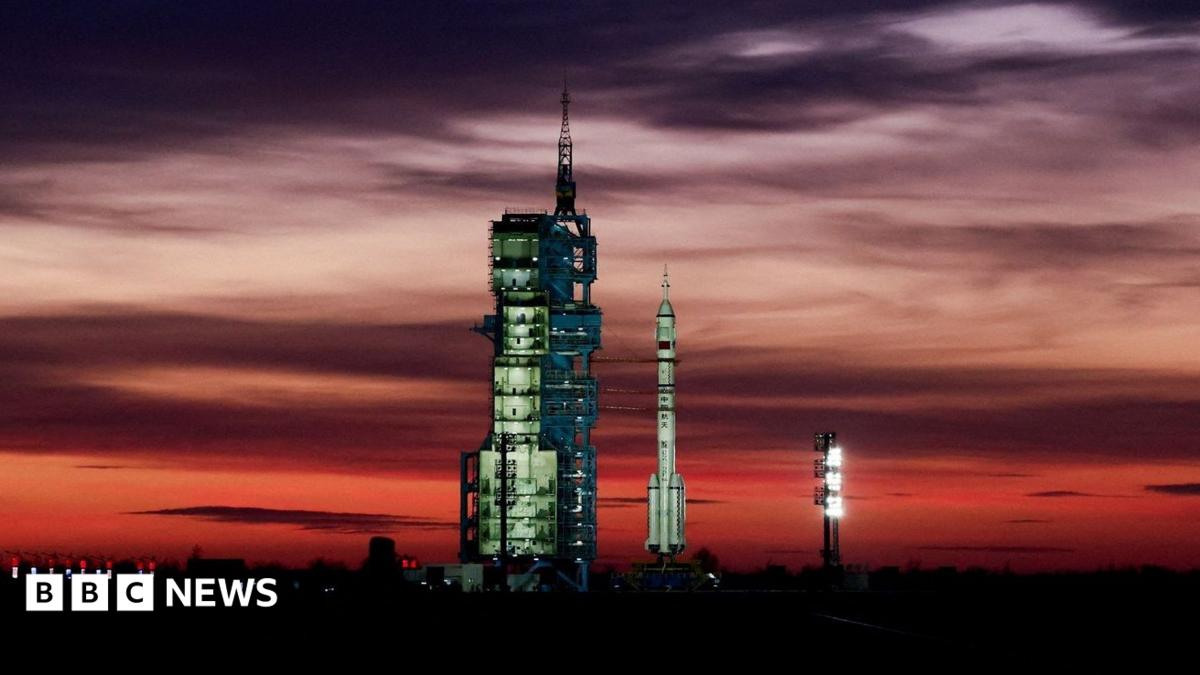
The Shenzhou-24 mission lifted off from China's Jiuquan Satellite Launch Center in the Gobi Desert, propelled by a Long March 2F carrier rocket — the workhorse vehicle that has flown every Chinese crewed mission since Shenzhou-5 in 2003. The spacecraft carried a three-person crew bound for Tiangong, China's modular orbital station, which has been continuously inhabited since 2022. The launch represents the latest scheduled rotation in China's steady, methodical crewed cadence, which has settled into a roughly twice-yearly rhythm of crew exchanges and cargo resupply flights.
The headline development is the composition of the crew: for the first time, a Pakistani astronaut is aboard. This is not a trivial diplomatic garnish. Crewed spaceflight seats are among the most scarce and expensive commodities in the global scientific enterprise, and allocating one to a partner nation signals a deliberate strategic choice by Beijing to convert Tiangong into an international platform. The Pakistan Space and Upper Atmosphere Research Commission (SUPARCO) has for years pursued cooperation with China, and this flight is the most visible fruit of that partnership to date.
The mission follows a well-established operational template. Shenzhou spacecraft launch atop the Long March 2F, perform an automated rendezvous, and dock at Tiangong's radial or forward port within hours. The crew then transitions to a roughly six-month rotation, conducting experiments, maintenance spacewalks, and station upkeep before returning to Earth via a ballistic reentry and parachute landing in Inner Mongolia. Shenzhou-24 continues this cadence, with the Pakistani astronaut's participation adding a new dimension to the station's scientific and public-diplomacy profile.
Initial market and industry reaction was muted but attentive. Space-sector analysts noted the launch as further evidence of China's reliable, low-drama crewed program — a contrast to the schedule pressures and cost overruns that have plagued some Western programs. For investors in China's commercial space supply chain, the mission reinforces the durability of state-backed demand for launch services, avionics, life-support systems, and ground infrastructure. The absence of a market shock is itself the story: China's crewed spaceflight has become routine, and routine is precisely what institutional partners and insurers want to see.
Section 2: Deep Technical & Financial Architecture
Tiangong — meaning "Heavenly Palace" — is a modular station assembled in low Earth orbit at roughly 340 to 450 kilometers altitude. Its core module, Tianhe, provides life support, propulsion, and habitation, with two laboratory modules, Wentian and Mengtian, docked to expand experimental capacity. The station is designed to host three astronauts for extended periods and up to six during crew handovers. Shenzhou-24 slots into this architecture as a crew transport and lifeboat vehicle, remaining docked throughout the mission to serve as an emergency return craft.
The Shenzhou spacecraft itself is a three-module design: an orbital module for habitation and experiments, a reentry capsule, and a service module with propulsion and power systems. The Long March 2F rocket, a human-rated variant of China's Long March family, has an enviable safety record across more than two decades of crewed flights. This reliability is the technical foundation on which China's international partnership ambitions rest — partner nations are being asked to trust a vehicle with a demonstrated, if shorter, track record than the Soyuz or Crew Dragon.
On the financial side, China's space budget is opaque by Western standards, but the crewed program is widely estimated to consume a substantial share of the China National Space Administration's annual outlay, which analysts peg in the range of $12–15 billion across all civil and military-adjacent activities. The marginal cost of adding a partner astronaut to an already-scheduled Shenzhou flight is comparatively low — the launch, capsule, and ground operations are fixed costs — which makes seat-sharing an efficient diplomatic and scientific instrument. For Pakistan, the cost of developing an astronaut and its experiment payload is a fraction of what an independent human spaceflight program would require.
The unit economics of Tiangong operations are increasingly relevant as China markets the station to international users. Cargo resupply via Tianzhou freighters, crew rotations via Shenzhou, and expanding experimental rack capacity create a recurring cost base that Beijing seeks to offset through partnership agreements, commercial payload hosting, and scientific collaboration. The Pakistani flight is a proof-of-concept for this model: a partner contributes payloads and prestige, China contributes access and infrastructure, and both share the scientific returns.
- Launch vehicle: Long March 2F, human-rated, flown on all Chinese crewed missions since 2003.
- Spacecraft: Shenzhou, three-module design with orbital, reentry, and service segments.
- Station altitude: Approximately 340–450 km low Earth orbit.
- Crew rotation: Roughly six months, with twice-yearly Shenzhou flights.
- Partner model: Payload contribution plus crew seat allocation, offsetting station operating costs.
Section 3: Industry & Global Market Ripple Effects
The most immediate ripple effect is competitive. Tiangong now stands as the only operational crewed space station apart from the International Space Station, and the ISS is scheduled for retirement around 2030. That timeline gives China a window — perhaps a decade — in which Tiangong could be the sole functioning crewed orbital outpost. For nations without ISS access, including many in the Global South, Tiangong becomes the default option. The Pakistani astronaut's flight is the first concrete demonstration of that value proposition.
Supply-chain implications extend beyond launch. China's space industrial base — encompassing state conglomerates like CASC and a growing cohort of commercial launch startups — benefits from the steady demand signal that a permanently crewed station provides. Life-support systems, ECLSS hardware, space-grade materials, and ground-segment software all see recurring procurement. International partnerships add export opportunities for Chinese space technology and services, though Western export-control regimes limit the reverse flow of sensitive components.
For investors, the mission reinforces the thesis that China's space sector is a durable, state-anchored growth industry. Public-market exposure remains limited — most Chinese space firms are state-owned or privately held — but the commercial launch and satellite sectors have attracted venture capital and, increasingly, listings on Chinese exchanges. The Shenzhou-24 flight is a reminder that government demand underpins the entire ecosystem, providing a floor beneath commercial ambitions.
Ecosystem shifts are also visible in the scientific community. International researchers who might once have viewed Tiangong as inaccessible now have a pathway through partner-nation agreements. This could gradually reshape collaboration networks, drawing scientists from emerging-space countries into Chinese-led consortia. The long-term effect is a parallel scientific ecosystem centered on Tiangong, complementary to — and potentially competitive with — Western-led ISS-derived networks.
Section 4: Critical Perspectives, Analyst Debates & Risk Factors
Skeptics caution against overreading the Pakistani astronaut's flight. One crewed seat does not constitute a broad internationalization of Tiangong, and China's partnership model remains state-to-state, with limited transparency around selection criteria, payload review, and data-sharing. Analysts note that the ISS's international character emerged from a multilateral treaty framework with shared governance; Tiangong's partnerships are bilateral and China-centric, which may limit their scientific depth even as they expand in number.
Technical and safety questions persist. China's crewed program has an excellent recent record, but its total flight count remains far below that of the US and Russia. Independent verification of Tiangong's safety standards is limited, and partner nations must rely on Chinese assurances. For a first-time spacefaring nation like Pakistan, the risk calculus is different from that of a seasoned partner — the prestige and capacity-building benefits may outweigh concerns that a more experienced space agency would raise.
Regulatory and geopolitical friction is a structural risk. US law restricts NASA cooperation with China, and Western allies largely follow suit. This bifurcation means Tiangong partnerships will cluster among non-aligned and emerging-space nations, potentially reinforcing a two-bloc dynamic in space science. Export controls on sensitive technology further constrain what partner nations can contribute, limiting the sophistication of collaborative payloads.
There is also the question of sustainability. Tiangong's long-term funding depends on continued state priority, and China's space budget faces competing demands. If international partnerships fail to generate meaningful scientific output or commercial revenue, the station's value proposition narrows to prestige and domestic political signaling — a weaker foundation than the ISS's broad multilateral commitment. The Pakistani flight is a test of whether the partnership model can deliver substance, not just symbolism.
Section 5: Strategic Forecast & Road Ahead
Over the next 12 to 24 months, expect China to accelerate Tiangong's international outreach. Additional partner-nation astronaut agreements are likely, with candidates drawn from countries already cooperating with China on satellite and launch programs. The Pakistani astronaut's mission will be closely watched as a template: if the scientific returns are visible and the partnership runs smoothly, more nations will seek seats. China has signaled interest in expanding Tiangong's experimental capacity, potentially adding modules or external payload platforms to attract users.
Upcoming milestones include the Shenzhou-24 crew's return and the next rotation, continued Tianzhou cargo flights, and possibly the first commercial payloads hosted on Tiangong under a newly formalized access framework. China has also floated plans for a co-orbital space telescope and, further out, a crewed lunar program targeting the 2030s. Tiangong serves as a proving ground for the life-support, rendezvous, and long-duration habitation technologies those ambitions require.
What to watch: the specific experiments the Pakistani astronaut conducts and whether results are published in accessible journals; the terms of any follow-on partnership agreements; China's progress on expanding station capacity; and the response of Western space agencies and companies to Tiangong's growing role as an alternative destination. The ISS retirement timeline looms over all of these calculations.
For Incisor News readers, the strategic takeaway is that China's crewed space program has crossed a threshold from national achievement to international platform. The Shenzhou-24 launch is not a dramatic breakthrough but a quiet, consequential step in a long game. The question is no longer whether Tiangong will host international astronauts — it now has — but whether the partnerships it fosters will produce the scientific and commercial value that sustains the station into the 2030s and beyond.


Comments (0)
No comments yet. Be the first to share your thoughts!
Leave a Comment