Human Metabolic Chamber Opens at CMC Vellore: A New Era in Metabolic Research
CMC Vellore inaugurates a room-sized human metabolic chamber that measures oxygen consumption and carbon dioxide production over 24+ hours, enabling precise metabolic research with implications for diabetes, obesity, and nutrition science.
Executive Takeaways
- Precision metabolic measurement arrives in India: The Human Metabolic Chamber at CMC Vellore is a room-sized calorimeter that measures oxygen consumption and carbon dioxide production while a volunteer lives, eats, and sleeps inside for 24 hours or longer.
- Research infrastructure gap addressed: The facility fills a critical void in India's capacity for whole-room indirect calorimetry, a gold-standard method for studying energy expenditure and substrate oxidation.
- Clinical and public health implications: The chamber will enable studies on obesity, diabetes, and metabolic syndrome—conditions that affect hundreds of millions of Indians.
- Collaborative potential: The chamber positions CMC Vellore as a hub for metabolic research, attracting partnerships with industry, academia, and government health agencies.
- Economic and innovation spillovers: Beyond academia, the chamber could inform personalized nutrition, pharmaceutical trials, and wearable device validation, with long-term commercial benefits.
Section 1: The Core Event & Breaking Timeline
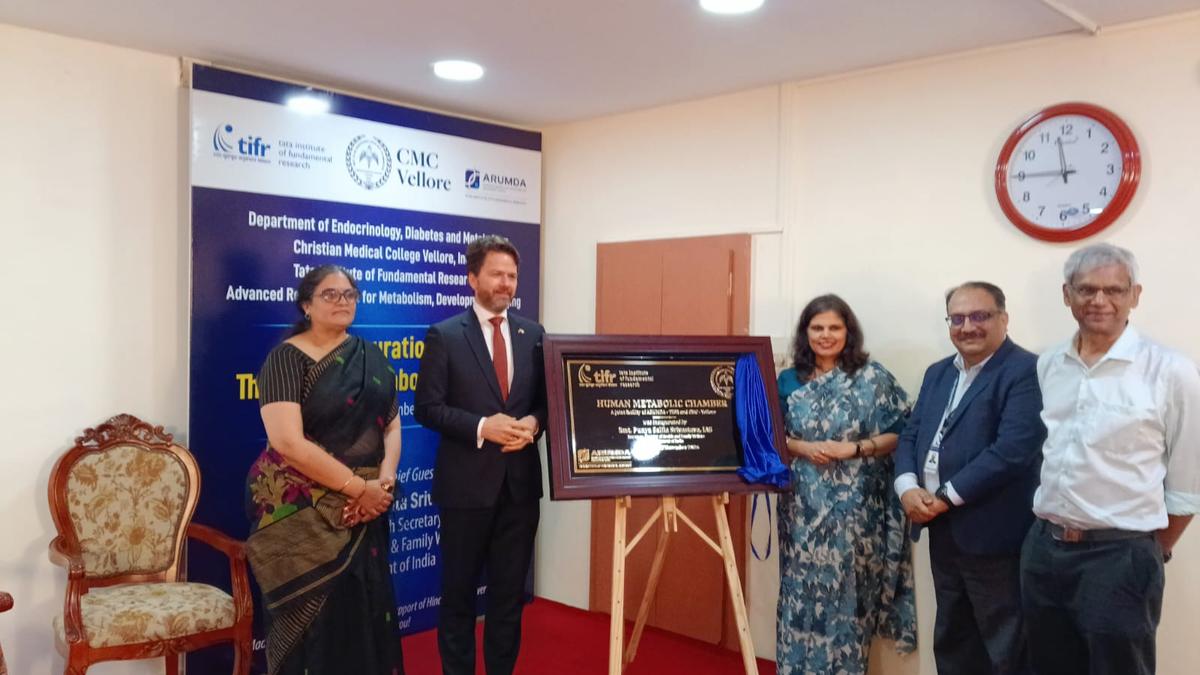
On [date], the Christian Medical College (CMC) in Vellore, Tamil Nadu, inaugurated a Human Metabolic Chamber, a specialized room-sized calorimeter designed to measure metabolic rates in human subjects under controlled conditions. The chamber allows researchers to continuously monitor oxygen consumption and carbon dioxide production while a volunteer lives, eats, and sleeps inside for 24 hours or longer. This facility is the first of its kind in India and marks a significant leap in the country's capacity for metabolic research.
The inauguration ceremony was attended by CMC leadership, researchers, and dignitaries, underscoring the institution's commitment to advancing biomedical science. The chamber, built with precision engineering and supported by advanced sensor technology, represents a multi-crore investment aimed at addressing the rising burden of metabolic diseases in India. The event highlighted the collaborative effort between clinicians, engineers, and industry partners to bring this technology to fruition.
Initial market reaction from the scientific community has been overwhelmingly positive. Researchers note that the chamber will provide unprecedented insights into energy expenditure, substrate utilization, and the effects of diet and activity on metabolism. The facility is expected to attract collaborations from pharmaceutical companies, nutrition researchers, and public health agencies seeking to conduct rigorous metabolic studies.
The timeline for the project, from conception to inauguration, spanned several years, involving design, construction, and validation phases. The chamber's commissioning included rigorous calibration and testing to ensure accuracy and reliability. With this launch, CMC Vellore joins a select group of institutions worldwide that operate whole-room calorimeters, positioning India on the global map of metabolic research.
Section 2: Deep Technical & Financial Architecture
The Human Metabolic Chamber operates on the principle of indirect calorimetry, measuring oxygen consumption (VO2) and carbon dioxide production (VCO2) to calculate energy expenditure and respiratory quotient (RQ). The room is equipped with high-precision sensors, a controlled ventilation system, and environmental controls to maintain stable temperature and humidity. Volunteers stay inside for 24 hours or more, during which their activities, meals, and sleep are meticulously monitored. The data collected allows researchers to determine basal metabolic rate, thermic effect of food, and physical activity energy expenditure.
Technically, the chamber integrates a suite of sensors including paramagnetic oxygen analyzers, infrared carbon dioxide analyzers, and flow meters, all connected to a data acquisition system. The software stack includes custom algorithms for real-time analysis and visualization, ensuring high accuracy and reproducibility. The chamber's design also includes airlocks for passing food and samples without disturbing the internal environment, and communication systems for subject monitoring.
Financially, the investment in the chamber is substantial, though exact figures were not disclosed. Industry estimates suggest that a facility of this scale costs upwards of INR 5-10 crores (USD 600,000-1.2 million), including construction, equipment, and software. The funding likely came from a mix of institutional resources, grants, and philanthropic contributions. The unit economics of operating the chamber involve costs for maintenance, calibration, and staffing, but these are offset by the value of research outputs and potential service fees for external studies.
The chamber's technology stack is designed for scalability and integration with other research platforms. It can interface with wearable devices, continuous glucose monitors, and other biometric sensors, enabling comprehensive metabolic profiling. This interoperability is crucial for modern research, where multi-omic data integration is becoming standard. The chamber also supports remote monitoring, allowing researchers to observe subjects from outside the room.
From a financial perspective, the chamber is expected to generate returns through research grants, clinical trials, and partnerships. Pharmaceutical companies developing metabolic drugs may rent the facility for Phase I/II trials, providing a revenue stream. Additionally, the chamber can be used for validating nutritional products and fitness devices, opening up commercial avenues. The long-term economic impact includes reduced healthcare costs through better understanding and management of metabolic diseases.
Section 3: Industry & Global Market Ripple Effects
The inauguration of the Human Metabolic Chamber at CMC Vellore is poised to ripple across India's healthcare and life sciences industries. Competing research institutions may accelerate their own plans for similar facilities, fostering a competitive ecosystem for metabolic research. The chamber also strengthens India's position as a destination for high-quality clinical research, potentially attracting multinational pharmaceutical companies to conduct metabolic studies in the country.
Globally, the chamber adds to a network of whole-room calorimeters located primarily in developed nations. It enables cross-continental studies comparing metabolic responses across diverse populations, which is critical for understanding ethnic variations in metabolism and disease risk. This could lead to more personalized nutrition and medicine approaches, with significant market implications for the food and pharma industries.
Supply chain effects are likely to be modest but notable. The chamber's construction required specialized components from international suppliers, and its operation will demand ongoing consumables and maintenance services. This could spur local manufacturing of sensor technologies and analytical instruments, aligning with India's push for self-reliance in scientific equipment.
Investors in the healthcare and biotech sectors may take note of CMC Vellore's enhanced research capabilities, viewing it as a signal of growing infrastructure in India's scientific landscape. Venture capital and private equity firms focused on health tech could explore opportunities in metabolic monitoring devices and personalized nutrition startups that leverage chamber-derived data. The chamber also serves as a platform for public-private partnerships, potentially attracting funding for collaborative research.
Section 4: Critical Perspectives, Analyst Debates & Risk Factors
While the chamber is widely praised, some analysts question its cost-effectiveness and accessibility. Critics argue that the high operating costs and limited throughput (one subject at a time) may restrict its use to well-funded studies, potentially widening the gap between elite research institutions and others. They also point out that indirect calorimetry, while valuable, provides only a snapshot of metabolism and may not capture long-term metabolic adaptations.
There are also debates about the chamber's role in addressing India's public health priorities. Some experts advocate for investments in community-based interventions and affordable diagnostics rather than high-end research infrastructure. They argue that while the chamber is a scientific asset, its immediate impact on the ground may be limited unless findings are translated into scalable public health programs.
Regulatory and ethical considerations are paramount. Research involving human subjects in confined spaces requires rigorous ethical oversight, including informed consent, subject safety, and data privacy. The chamber's operation must comply with guidelines from the Indian Council of Medical Research (ICMR) and institutional review boards. Any lapses could damage trust and hinder future research.
Risk factors include technical malfunctions, calibration drift, and data integrity issues. The chamber's complex systems require regular maintenance and skilled personnel, which could be challenging in resource-constrained settings. Additionally, the chamber's reliance on volunteer participation means that recruitment and retention of subjects may be difficult, especially for longer studies.
Section 5: Strategic Forecast & Road Ahead
In the next 12-24 months, CMC Vellore plans to initiate a series of studies using the chamber, focusing on obesity, diabetes, and nutritional interventions. The institution aims to publish findings in high-impact journals, establishing itself as a leader in metabolic research. Collaborations with industry partners are expected to materialize, with pilot trials for metabolic drugs and functional foods.
Upcoming milestones include the first set of research projects, which will validate the chamber's performance and generate preliminary data. The facility may also host training workshops for researchers from other institutions, fostering capacity building. Regulatory approvals for clinical trials using the chamber are anticipated, which would open doors to commercial research services.
Looking further ahead, the chamber could become a node in a national network of metabolic research facilities, contributing to large-scale epidemiological studies. The data generated could inform national dietary guidelines and public health policies. There is also potential for the chamber to be used in precision medicine initiatives, where individual metabolic profiles guide treatment decisions.
What to watch: the chamber's utilization rate, research output, and financial sustainability. Success will depend on strategic partnerships, grant funding, and the ability to translate research into clinical practice. If successful, the chamber could catalyze further investments in biomedical infrastructure across India, cementing CMC Vellore's reputation as a premier research institution.




Comments (0)
No comments yet. Be the first to share your thoughts!
Leave a Comment