$10M Lawsuit Hits Lakeview Over Red Rock Lien: RNG Project in Peril
Tiger Industrial Holdings and Lakeview RNG sue the Town of Lakeview, its interim manager, mayor and attorney for $10 million over a disputed lien on the former Red Rock facility, testing municipal risk in renewable gas finance.
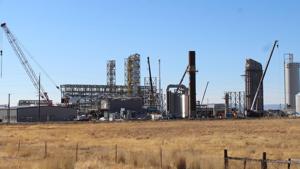
Executive Takeaways
- $10 million claim: Tiger Industrial Holdings, LLC, Lakeview RNG, LLC and affiliated Tiger entities have sued the Town of Lakeview, Interim Town Manager Stan Foster, Mayor Marc O'Brien and Town Attorney William Buchanan over a lien tied to the former Red Rock facility.
- Municipal exposure: The suit names individual officials alongside the municipality, a structure that raises personal-liability and insurance questions for small-town governments.
- Asset at the center: The dispute concerns a stranded or contested bioenergy/RNG site, a class of infrastructure whose economics depend heavily on offtake contracts and tax credits.
- Market signal: The case is a test of how aggressively developers will litigate against local governments when renewable-gas projects sour.
- What to watch: Court filings, the town's insurance coverage position, and whether the Red Rock site is re-marketed to other operators.
The Core Event & Breaking Timeline
The Town of Lakeview, a small municipality in Lake County, Oregon, has been hit with a $10 million lawsuit stemming from a lien placed on the former Red Rock facility, according to a dispatch from the Lake County Examiner. The plaintiffs are Tiger Industrial Holdings, LLC; Lakeview RNG, LLC; and additional Tiger-affiliated entities. The defendants are the Town of Lakeview itself, Interim Town Manager Stan Foster, Mayor Marc O'Brien and Town Attorney William Buchanan. The complaint alleges that the lien and the town's handling of the former Red Rock site caused damages quantified at roughly $10 million.
The naming of individual officials — the interim manager, the mayor and the town attorney — is the most consequential procedural detail. In municipal litigation, plaintiffs typically sue the government entity alone. Adding named officers suggests the plaintiffs intend to argue that specific decisions, possibly including the recording or enforcement of the lien, exceeded lawful authority or breached duties owed to the project owners. That framing shifts the case from a pure contract dispute into territory that could involve official immunity, insurance coverage and personal exposure.
The timeline, as reflected in the dispatch, runs from the operation or ownership of the former Red Rock facility, through the imposition of a lien by or on behalf of the town, to the filing of the $10 million action. The raw report does not specify the exact filing date, the court, or the precise legal theories, and those gaps matter: the venue and causes of action will determine whether this is a lien-priority fight, a takings-style claim, a tort claim, or a combination. Incisor News has not independently verified the complaint's specific allegations.
Initial market reaction is best described as localized but telling. Lakeview is a rural community where a $10 million claim is material relative to municipal budgets, and the case lands in the broader renewable natural gas (RNG) and bioenergy sector, where project failures have multiplied as developers chase methane-capture and waste-to-energy economics. For investors in small-scale RNG, the Lakeview suit is a reminder that local-government risk — liens, permits, utility agreements — can convert a stranded asset into litigation.
Deep Technical & Financial Architecture
At its core, this is a secured-credit dispute dressed as a municipal lawsuit. A lien on a facility is a legal claim against property securing an obligation — typically unpaid taxes, utility charges, cleanup costs or contractual payments. When a town records a lien on an industrial site, it can subordinate or block the project owner's lenders, complicate refinancing, and chill a sale. For an RNG or bioenergy project, where lenders rely on the facility as collateral, a municipal lien can be the difference between a performing loan and a default.
The financial architecture of a facility like the former Red Rock site typically involves layered capital: sponsor equity, construction debt, and increasingly, tax-equity or transferability structures tied to federal credits. RNG projects depend on revenue from gas sales, environmental attribute markets (RINs under the Renewable Fuel Standard, and state low-carbon fuel programs), and tipping fees for waste feedstock. Each revenue stream is contract-dependent. A lien that clouds title can trigger cross-defaults in offtake agreements and financing documents, rapidly converting a technical dispute into a liquidity crisis.
Unit economics for small RNG facilities are unforgiving. A plant processing a few thousand standard cubic feet per minute of biogas may generate revenue in the low millions annually, with thin margins after operating costs, debt service and royalty or host payments. A $10 million claim is therefore not a nuisance suit relative to the asset — it is existential for the project entity, Lakeview RNG, LLC. The damages figure likely aggregates lost enterprise value, stranded capital expenditures, financing costs and lost tax-credit value rather than a single unpaid invoice.
The balance-sheet impact splits along the parties. For the plaintiffs, the lawsuit is an attempt to recover impaired capital and possibly to establish leverage in a sale or restructuring of the site. For the Town of Lakeview, a $10 million contingent liability is large relative to a small municipal budget; even if insured, defense costs and coverage disputes can strain resources. The naming of the town attorney and manager may also trigger professional liability and public-entity insurance questions.
Technically, the case will turn on documentation: the lien instrument, the underlying agreement between the town and the project owners, meeting minutes and resolutions, and any notices. Lien priority, statutory compliance and the authority of officials to bind the municipality are the load-bearing issues. If the lien was recorded without proper statutory basis, the plaintiffs will argue it was wrongful; if the town followed procedure, the fight shifts to damages and whether the project's losses were caused by the lien or by independent market factors.
Industry & Global Market Ripple Effects
The Lakeview case arrives during a difficult stretch for the RNG sector. Developers have raced to build anaerobic digestion and landfill-gas projects, attracted by federal incentives and corporate decarbonization commitments. But feedstock volatility, interconnection delays, permitting friction and falling credit prices have squeezed smaller sponsors. Litigation against host municipalities is an emerging pattern: when projects fail, sponsors look for a deep pocket, and local governments that imposed liens or revoked approvals become targets.
For competitors and strategic buyers, the dispute is an opportunity. Distressed bioenergy assets often trade at steep discounts, and a court-supervised resolution can clarify title and accelerate a sale. Larger RNG operators with balance sheets to absorb legal risk may see the former Red Rock facility as an acquisition candidate if the lien is resolved or extinguished. The case could therefore function as a price-discovery mechanism for a stranded asset.
Supply-chain and ecosystem effects are more subtle. Equipment vendors, engineering firms and contractors on the original project may face claims or unpaid receivables. Local utilities and gas off-takers may need to reassess counterparty risk. Insurers of municipal entities will watch closely, because a ruling that officials can be held personally liable for lien decisions would raise premiums and change risk management practices across small-town governments nationwide.
Globally, the case reinforces a structural truth about decentralized energy finance: the smallest counterparties — towns, counties, water districts — carry outsized legal risk relative to their budgets. As climate-linked infrastructure spreads into rural jurisdictions, the mismatch between project scale and municipal capacity becomes a systemic vulnerability. Investors pricing RNG and bioenergy assets should treat host-government legal risk as a distinct, quantifiable factor rather than a footnote.
Critical Perspectives, Analyst Debates & Risk Factors
The plaintiffs' theory is straightforward: the lien and the town's conduct impaired a valuable project, and the damages are quantifiable at $10 million. From this vantage, the town either lacked authority to impose the lien, imposed it improperly, or enforced it in a way that destroyed the asset's value. Naming individual officials signals an intent to pursue claims that survive even if the municipality asserts immunity.
The town's likely defense is equally clear: the lien was lawful, properly recorded and within the town's authority; any losses stem from the project's own failures, market conditions or the plaintiffs' decisions. Municipalities also typically assert statutory immunities and argue that officials acted in good faith within their official duties. The town may further argue that the plaintiffs failed to exhaust remedies or that the dispute belongs in a different forum.
Analyst debate centers on causation and valuation. A $10 million figure is a pleading number, not a proven loss. The plaintiffs must show that the lien, rather than feedstock problems, offtake failures or financing gaps, caused the damage. Defense experts will likely argue the project was already distressed. The outcome may hinge on contemporaneous documents — emails, meeting records, and the sequence of lien recording versus project shutdown.
Key risk factors include insurance coverage disputes, the potential for personal liability of named officials, reputational damage to Lakeview as a venue for future investment, and the possibility of counterclaims. There is also regulatory friction: if federal or state incentives were involved, agencies may take interest in representations made in financing documents. The case's trajectory will depend heavily on early procedural rulings.
Strategic Forecast & Road Ahead
Over the next 12 months, expect a motions phase: the town will likely move to dismiss claims against individual officials and to narrow the case. Discovery will focus on the lien file, town council records and the project's financial history. Settlement talks are plausible, particularly if insurance coverage is confirmed, because both sides face escalating costs.
Within 12 to 24 months, the case could resolve through mediation, summary judgment or trial. A settlement would likely be confidential, but its existence would signal that municipal insurers viewed exposure as real. A trial verdict would set precedent on official liability for lien decisions, with implications for small governments nationwide.
For the asset itself, watch for marketing of the former Red Rock facility, any bankruptcy filing by Lakeview RNG, LLC, and assignments of claims to litigation funders. Strategic buyers may emerge if title is cleared. The town's budget disclosures and insurance renewals will reveal how seriously it is provisioning for the claim.
Finally, track the broader RNG litigation trend. If sponsors increasingly sue host municipalities, project finance documents will evolve to require indemnities, escrow and dispute-resolution clauses. The Lakeview case is small in dollar terms for Wall Street but large as a signal: in decentralized energy, legal architecture is financial architecture, and the smallest counterparty can become the biggest risk.




Comments (0)
No comments yet. Be the first to share your thoughts!
Leave a Comment