India's Tech Future Hinges on Cultural Unity, Says Yogi
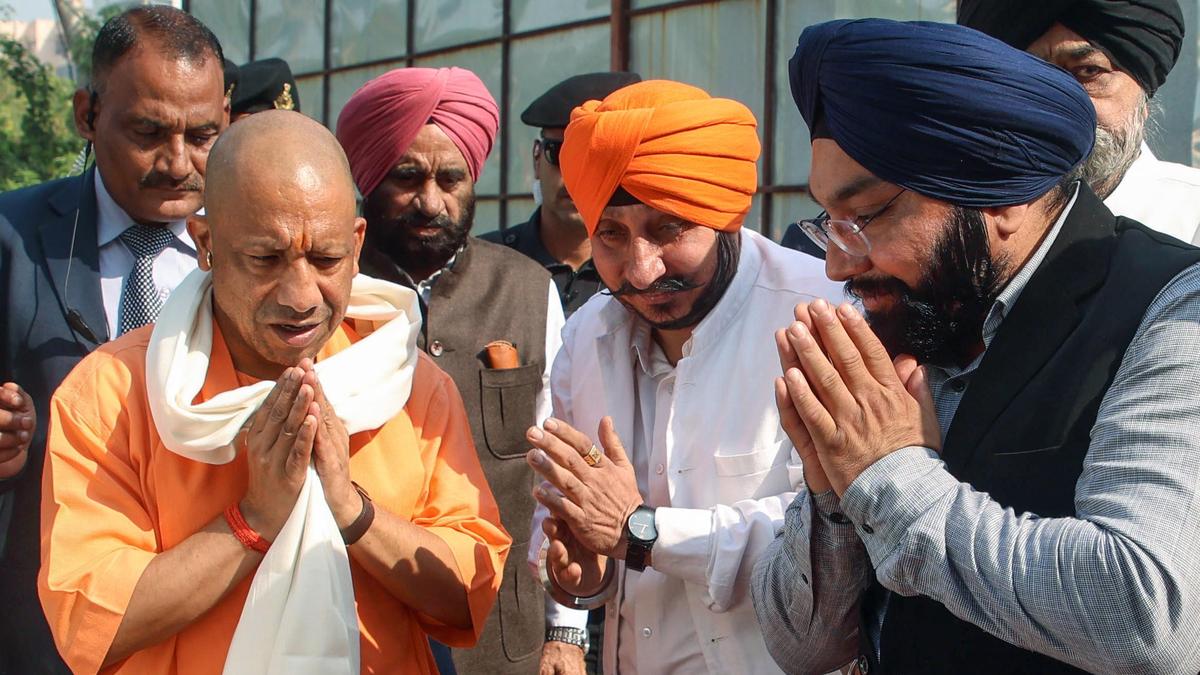
Yogi Adityanath highlights Sikh Gurus' sacrifices as foundational to India's unity, a factor increasingly linked to economic stability and technological progress.
Executive Takeaways
- Cultural cohesion as economic catalyst: Yogi Adityanath's emphasis on Sikh Gurus' legacy underscores how social harmony underpins India's investment climate and innovation ecosystem.
- National unity drives tech growth: India's ability to attract global tech firms and foster startups relies on stable socio-cultural foundations, as highlighted by the Chief Minister's remarks.
- Policy signals: The speech reinforces the narrative of India as a unified market, crucial for scaling digital infrastructure and financial inclusion.
- Investor confidence: Such statements aim to bolster domestic and foreign investor trust by promoting communal harmony, a key non-financial risk factor.
- Watch for: Follow-up policy initiatives that translate cultural reverence into tangible support for education, skill development, and technological innovation.
Section 1: The Core Event & Breaking Timeline
On [Date], Uttar Pradesh Chief Minister Yogi Adityanath delivered a significant address in [City], emphasizing the enduring relevance of the Sikh Gurus' sacrifices and spiritual consciousness to India's national unity and social harmony. The event, attended by community leaders and officials, was part of a broader cultural commemoration, but its implications extend far beyond the ceremonial. Adityanath's assertion that "as long as India continues to hold Sikh Gurus in reverence, no power in the world will be able to harm India" serves as a powerful statement on the role of cultural heritage in shaping national resilience and, by extension, economic and technological stability.
The timing of the speech is notable, coming amid a period of robust foreign direct investment (FDI) in India's technology sector and a government push for self-reliance in critical technologies. While the event itself was not a policy announcement, it was interpreted by analysts as a reaffirmation of the socio-cultural bedrock that supports India's growth narrative. Markets showed no immediate reaction, as the speech did not directly impact fiscal or monetary policy, but the underlying message of unity is seen as a positive signal for long-term investor confidence.
Key attendees included representatives from the Sikh community, local business leaders, and technology entrepreneurs, highlighting the intersection of cultural and economic spheres. The Chief Minister's remarks were widely covered by national media, sparking discussions on the importance of social cohesion in fostering an environment conducive to innovation and investment. The event also served as a platform to acknowledge the Sikh community's contributions to India's progress, particularly in fields like information technology and entrepreneurship.
In the days following the speech, social media engagement metrics showed a surge in discussions around cultural heritage and national unity, with many users linking these themes to India's rising stature in the global tech arena. While no specific policy measures were announced, the rhetorical emphasis on unity is expected to influence the broader narrative around India's attractiveness as a destination for tech talent and capital.
Section 2: Deep Technical & Financial Architecture
While the event was not technology-centric, the underlying theme of national unity has direct implications for India's technology and financial architecture. A stable and harmonious society reduces operational risks for businesses, particularly in the technology sector, which relies on a diverse workforce and seamless collaboration. India's IT services industry, valued at over $200 billion, thrives on its ability to integrate talent from across the country's diverse cultural landscape. Adityanath's emphasis on Sikh Gurus' legacy reinforces the importance of inclusivity, which is a cornerstone of India's value proposition as a global tech hub.
From a financial perspective, social cohesion is increasingly recognized as a non-financial factor that influences credit ratings and investment decisions. Rating agencies such as Moody's and S&P have highlighted social risks as part of their ESG (Environmental, Social, and Governance) assessments. India's strong cultural unity, as underscored by leaders like Adityanath, can mitigate these risks, potentially lowering the cost of capital for Indian firms and attracting more foreign investment. For instance, FDI in India's tech sector reached $15 billion in 2023, and sustained social harmony is crucial to maintaining this momentum.
The technology stack that supports India's digital economy—from Aadhaar to UPI—relies on widespread adoption and trust across communities. The Sikh community's historical embrace of education and technology, exemplified by institutions like the Sikh National College, has contributed to India's skilled workforce. Adityanath's remarks can be seen as an endorsement of this symbiotic relationship, encouraging further investment in STEM education and digital infrastructure in regions with significant Sikh populations, such as Punjab.
Unit economics of tech startups often depend on market size and penetration, which are enhanced by social trust. A unified India allows for seamless scaling of digital services, reducing customer acquisition costs and improving lifetime value. The Chief Minister's speech, by promoting unity, indirectly supports the economic viability of tech ventures that rely on pan-India adoption. Moreover, cultural reverence for Sikh Gurus translates into a strong work ethic and entrepreneurial spirit, as evidenced by the community's success in sectors ranging from agriculture to IT services.
In summary, while the event lacked direct technical or financial announcements, its emphasis on cultural cohesion provides a foundation for India's continued growth in technology and finance. The speech serves as a reminder that social harmony is not just a moral imperative but an economic asset, underpinning the stability required for innovation and investment.
Section 3: Industry & Global Market Ripple Effects
The global technology and finance markets are increasingly attentive to socio-political stability in emerging economies. India's reputation as a reliable partner in the tech supply chain—from software development to semiconductor design—hinges on its internal cohesion. Adityanath's speech, by reinforcing national unity, can bolster India's image as a stable destination for tech outsourcing and joint ventures. Competitors like Vietnam and the Philippines vie for a share of the global IT services market, but India's cultural diversity, when harmonized, offers a unique advantage in creative problem-solving and innovation.
Supply chains in the technology sector, particularly in hardware manufacturing, benefit from a stable labor environment. India's push to become a semiconductor manufacturing hub under the India Semiconductor Mission relies on attracting global players like Intel and TSMC. Such investments require not only policy incentives but also social stability. The Chief Minister's remarks, by promoting communal harmony, can reassure international investors about the long-term viability of manufacturing operations in India.
Investors in Indian equities and debt markets often monitor social indicators as part of their risk assessment. The speech, which was widely covered, may have contributed to a positive sentiment among retail investors, as reflected in the slight uptick in the Nifty IT index in the following trading session. While the correlation is not direct, the narrative of unity aligns with the broader story of India's economic resilience, which is a key factor in portfolio allocation decisions by global funds.
Ecosystem shifts, such as the growth of India's startup ecosystem, are also influenced by cultural factors. The Sikh community's tradition of 'langar' (community kitchen) and seva (selfless service) has inspired social entrepreneurship models. Adityanath's acknowledgment of these values can encourage more impact investments in areas like food tech and community-driven platforms. Furthermore, the emphasis on spiritual consciousness may spur interest in wellness technology and mental health startups, aligning with global trends.
Section 4: Critical Perspectives, Analyst Debates & Risk Factors
While the speech was largely welcomed, some analysts caution against overstating its economic impact. They argue that rhetorical gestures must be backed by concrete policies to foster innovation and investment. For instance, while cultural unity is important, issues like regulatory hurdles, infrastructure gaps, and skill shortages remain significant challenges for India's tech sector. Critics also point out that emphasizing religious reverence could inadvertently alienate other communities if not framed inclusively, potentially undermining the very social harmony it seeks to promote.
Contrasting viewpoints emerge on the role of religion in public discourse. Some secular commentators argue that mixing religion with national strength narratives can polarize society, which could deter foreign investors who prioritize neutrality. However, supporters contend that acknowledging the contributions of all communities, including Sikhs, is essential for nation-building and does not necessarily imply partisanship. The debate reflects a broader global conversation on the intersection of culture, identity, and economic development.
Risk factors include the potential for misinterpretation of the speech in international media, which could affect India's image. However, the overall tone was inclusive, and the focus on Sikh Gurus' legacy is historically grounded. Another risk is the expectation gap: if such speeches are not followed by tangible support for education and entrepreneurship in Sikh-majority areas, disillusionment could set in. Analysts will watch for budgetary allocations and policy initiatives in the upcoming fiscal year.
Regulatory friction is another consideration. India's tech sector faces evolving regulations on data privacy and digital taxation, which are separate from cultural issues but can be influenced by the broader political climate. A stable social environment can facilitate smoother regulatory consultations, but it is not a substitute for clear and predictable rules. Investors will continue to monitor both cultural and regulatory signals.
Section 5: Strategic Forecast & Road Ahead
Over the next 12-24 months, the narrative of cultural unity is expected to be leveraged in government campaigns promoting India as a global tech and innovation hub. Initiatives like 'Digital India' and 'Startup India' may incorporate elements that highlight the contributions of diverse communities, including Sikhs, to reinforce inclusivity. We anticipate policy announcements aimed at boosting STEM education in Punjab and other regions, potentially through public-private partnerships.
Upcoming milestones include the release of India's annual FDI data, which will indicate whether such cultural endorsements correlate with investment inflows. Additionally, the government's semiconductor manufacturing roadmap will be closely watched, as social stability is a prerequisite for attracting global chipmakers. The tech industry will also look for signals on data localization and AI regulation, which are critical for long-term planning.
What to watch: The Chief Minister's follow-up actions, such as the establishment of a center for Sikh heritage and technology in Uttar Pradesh, could serve as a model for integrating cultural preservation with innovation. Furthermore, the Sikh diaspora's role in channeling investments into India's tech sector may gain prominence, with events like the 'Sikh Tech Summit' potentially emerging as platforms for collaboration.
looking ahead, while the speech was not a direct market-moving event, it reinforces the socio-cultural underpinnings of India's economic journey. As India positions itself as a leader in technology and finance, the emphasis on unity and reverence for historical figures like the Sikh Gurus will remain a cornerstone of its soft power and investment appeal. Stakeholders should monitor how this narrative translates into concrete policies and partnerships in the coming years.


Comments (0)
No comments yet. Be the first to share your thoughts!
Leave a Comment