3D Bioprinting Breakthrough: RIT Lab Prints Skin, Eyes Organs
RIT researchers are testing 3D bioprinting to create skin grafts, prosthetics, and eventually organs, potentially transforming regenerative medicine. The basement lab work could unlock major medical breakthroughs.
Executive Takeaways
- Rochester Institute of Technology (RIT) researchers are advancing 3D bioprinting technology with the goal of producing skin grafts, prosthetics, and eventually functional organs.
- The work, led by Professor Ahasan Habib in the College of Art and Design, represents a significant step toward clinical applications of bioprinting.
- If successful, this technology could disrupt the $200 billion regenerative medicine market and reduce reliance on organ donors.
- Key challenges remain, including vascularization, regulatory approval, and scalable manufacturing.
- Investors and industry players should watch for preclinical milestones and partnerships over the next 12-24 months.
The Core Event & Breaking Timeline
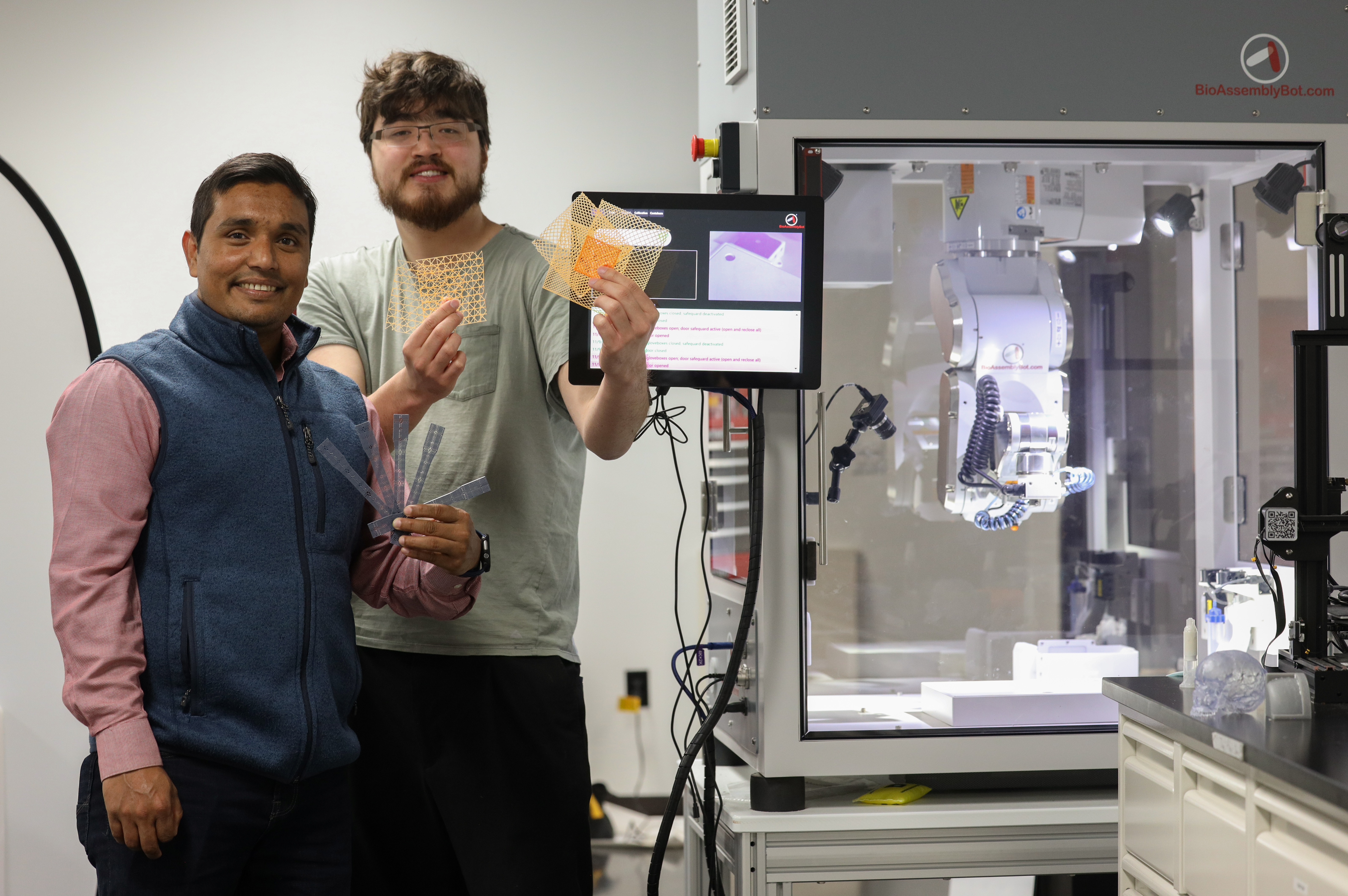
In the basement of the College of Art and Design at Rochester Institute of Technology (RIT), Professor Ahasan Habib holds up a flat, flexible, web-like printout. This unassuming object represents a critical step in a decades-long quest to bio-print human skin grafts, prosthetics, and, one day, entire organs. The work is part of a broader effort at RIT to push the boundaries of 3D bioprinting, a field that sits at the intersection of engineering, biology, and materials science.
The announcement, first reported by Wrvo Public Media, highlights the incremental but essential progress being made in academic labs. While the headline may seem modest—a researcher testing a new printing technique—it underscores a larger trend: the quiet, methodical advancement of bioprinting technologies that could eventually reshape regenerative medicine. The timeline of this development is not marked by a single eureka moment but by a series of small, cumulative breakthroughs.
RIT's bioprinting initiative has been underway for several years, with Habib's lab focusing on creating biocompatible scaffolds that mimic the extracellular matrix of human tissues. The web-like printout is likely a hydrogel-based structure designed to support cell growth and differentiation. Such scaffolds are essential for creating thick tissues like skin, which require a porous architecture to allow nutrients and oxygen to reach cells.
The initial market reaction has been muted, as is typical for early-stage academic research. However, industry insiders are paying close attention. The global bioprinting market was valued at approximately $1.5 billion in 2022 and is projected to grow at a compound annual growth rate (CAGR) of over 20% through 2030, according to various market research firms. RIT's work, while not yet commercialized, adds to the growing body of evidence that bioprinting is moving from science fiction to clinical reality.
Deep Technical & Financial Architecture
At its core, 3D bioprinting involves layer-by-layer deposition of living cells, biomaterials, and growth factors to create tissue-like structures. The technology stack typically includes a bioprinter (which can be inkjet, extrusion, or laser-assisted), a bioink (a mixture of cells and hydrogels), and a bioreactor to mature the printed tissue. RIT's approach appears to leverage extrusion-based printing, which is well-suited for creating porous scaffolds like the web-like structure shown.
The financial architecture of bioprinting is complex. Research and development costs are substantial, with a single bioprinter costing anywhere from $10,000 to over $1 million depending on capabilities. Bioinks are also expensive, often requiring custom formulations. However, the potential payoff is enormous: the regenerative medicine market, which includes tissue engineering and cell therapy, is expected to reach $200 billion by 2030. The unit economics of bioprinted skin grafts, for example, could be highly favorable if scaled, as they would reduce the need for painful autografts and shorten hospital stays.
From a balance sheet perspective, academic institutions like RIT rely on grants from agencies such as the National Science Foundation (NSF) and the National Institutes of Health (NIH), as well as industry partnerships. RIT has not disclosed the specific funding for this project, but similar initiatives often receive multi-year grants in the range of $500,000 to $2 million. The university may also file patents on the scaffold design or printing process, which could lead to licensing revenue.
The technology stack also includes software for designing the tissue architecture and simulating its mechanical properties. RIT's College of Art and Design brings a unique perspective, as design thinking can aid in creating user-friendly interfaces and optimizing structures for both function and aesthetics. This interdisciplinary approach could be a competitive advantage.
Key technical challenges remain, particularly vascularization—the ability to print blood vessels to supply nutrients to thick tissues. Without vascularization, printed tissues are limited to a few hundred micrometers in thickness. Habib's lab is likely exploring strategies such as printing sacrificial materials that can later be removed to create channels for blood vessels.
Industry & Global Market Ripple Effects
The bioprinting landscape is populated by a mix of startups, established medical device companies, and academic labs. Key players include Organovo (which has focused on liver tissue), CELLINK (now part of BICO), and 3D Systems. RIT's entry into this space, while academic, could spur collaborations with these companies or spin out new ventures. The university has a history of commercializing research through its Venture Creations incubator.
Supply chains for bioprinting are still nascent. Bioinks often rely on natural polymers like alginate, collagen, and fibrin, as well as synthetic polymers. The availability and cost of these materials can fluctuate. For example, collagen, a common bioink component, is derived from animal sources and can vary in quality. Companies are developing recombinant human collagens to address this, but they are more expensive. RIT's work may drive demand for higher-quality bioinks, benefiting suppliers.
Investors are increasingly interested in regenerative medicine, with venture capital funding for bioprinting startups reaching record levels in 2021 and 2022. However, the sector has seen a cooling in 2023 amid broader market downturns. Academic milestones like RIT's can reignite interest by demonstrating technical feasibility. Strategic investors, including pharmaceutical companies and medical device giants, are watching for signs of scalability.
Ecosystem shifts are also underway. Regulatory bodies like the FDA are developing frameworks for evaluating bioprinted tissues, which will be crucial for commercialization. The FDA has already approved some bioprinted products for research use, but clinical trials for implantable tissues are still rare. RIT's work could contribute to the body of data that informs these regulations.
Critical Perspectives, Analyst Debates & Risk Factors
While the promise of bioprinting is immense, skeptics point out that the field has been hyped for years with few clinical breakthroughs. The complexity of human biology means that replicating the intricate structure of organs is far more difficult than printing simple tissues. Some analysts argue that bioprinting will first find success in drug testing and disease modeling rather than direct implantation, as these applications have lower regulatory hurdles.
Another debate centers on the business model. Will bioprinted tissues be produced centrally and shipped to hospitals, or will hospitals have in-house bioprinters? The former requires robust logistics and quality control, while the latter demands significant capital investment and trained personnel. RIT's work, which is rooted in design and engineering, may lean toward developing user-friendly systems for point-of-care printing.
Risk factors include technical failures, such as immune rejection of printed tissues or mechanical failure of scaffolds. There are also ethical considerations, particularly around printing organs and the potential for creating life-like structures. Regulatory friction is a major hurdle; the FDA's approval process for combination products (which include cells, drugs, and devices) is complex and time-consuming.
From a financial perspective, the long development timelines and high failure rates in biotech mean that investors must be patient. RIT's project is early-stage, and it may take a decade or more before any commercial product emerges. However, the university's focus on foundational science could yield valuable intellectual property that attracts licensing deals.
Strategic Forecast & Road Ahead
Over the next 12-24 months, expect RIT to publish peer-reviewed research detailing the performance of its printed scaffolds in vitro and possibly in animal models. The lab may seek additional funding from government agencies or industry partners to scale up production and test more complex tissues. Collaborations with medical centers could provide access to clinical expertise and patient samples.
Key milestones to watch include the successful printing of a vascularized skin graft that can be implanted in a animal model, and the filing of patents on the scaffold design. RIT may also launch a startup to commercialize the technology, leveraging its incubator. The university's participation in conferences like the Society for Biomaterials annual meeting will be a platform to showcase results.
For investors, the signal to watch is partnerships with established medical device companies or pharmaceutical firms. Such deals would validate the technology and provide resources for clinical trials. Additionally, regulatory clearances for clinical trials of bioprinted tissues would be a major catalyst for the entire sector.
In the longer term, RIT's work could contribute to the development of a thriving bioprinting ecosystem in upstate New York, attracting talent and investment. The intersection of art and design with engineering and biology may lead to innovative solutions that are both functional and aesthetically pleasing, particularly for facial prosthetics. As the technology matures, the dream of printing organs may move from the basement to the bedside.



Comments (0)
No comments yet. Be the first to share your thoughts!
Leave a Comment