India's Higher Ed Minister Certifies 700 Graduates in New College Convocation
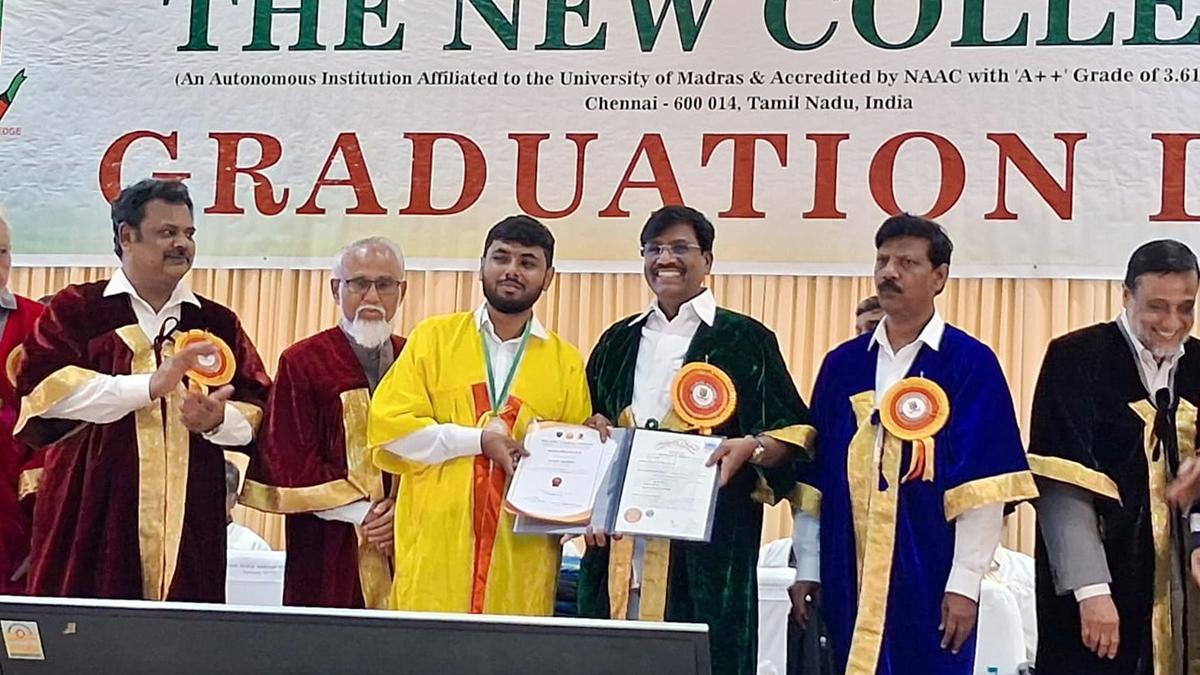
Higher Education Minister K. Ponmudy awarded certificates to 700 graduands at New College's convocation in Chennai, highlighting India's focus on skill development and employability in higher education.
Executive Takeaways
- 700 graduands received certificates from Higher Education Minister K. Ponmudy at New College, Chennai, underscoring the scale of India's higher education output.
- The event highlighted skill development and employability as central themes in India's National Education Policy (NEP) 2020 implementation.
- New College, an autonomous institution affiliated with the University of Madras, exemplifies the legacy and modernization of India's higher education sector.
- Minister Ponmudy emphasized industry-academia collaboration and research funding as key to boosting graduate outcomes.
- The convocation comes amid rising enrollment in Indian higher education, with over 43 million students and a Gross Enrollment Ratio (GER) of 28.4%.
Section 1: The Core Event & Breaking Timeline
On Saturday, Tamil Nadu's Higher Education Minister K. Ponmudy presided over the convocation ceremony at New College, Chennai, awarding degree certificates to 700 graduands. The event, held on the college campus, marked the culmination of academic journeys for students across undergraduate and postgraduate programs in arts, science, and commerce. The ceremony was attended by college officials, faculty, and families, reflecting the traditional grandeur of Indian convocations.
New College, established in 1951, is an autonomous institution affiliated with the University of Madras and has a storied history of academic excellence. The convocation comes at a time when India's higher education sector is undergoing significant transformation, driven by the National Education Policy (NEP) 2020, which emphasizes multidisciplinary learning, skill integration, and digital education. The minister's presence underscores the state government's commitment to advancing educational infrastructure and outcomes.
In his address, Minister Ponmudy congratulated the graduates and highlighted the importance of adapting to a rapidly changing job market. He reiterated the Tamil Nadu government's initiatives to enhance research funding, promote entrepreneurship, and foster industry-academia partnerships. The ceremony also featured the presentation of medals to top performers, celebrating academic excellence.
The event garnered local media attention, with coverage focusing on the minister's call for graduates to contribute to society and the economy. While no immediate market reaction was observed, the convocation symbolizes the steady pipeline of skilled talent entering India's workforce, a critical factor for the nation's economic growth trajectory.
Section 2: Deep Technical & Financial Architecture
India's higher education system is a massive enterprise, with over 1,000 universities and 42,000 colleges catering to more than 43 million students. The sector is regulated by bodies like the University Grants Commission (UGC) and state higher education departments. Funding flows from both public and private sources, with the government allocating significant portions of its budget to education—approximately 4.6% of GDP in recent years, though still below the 6% target recommended by the Kothari Commission.
New College, as an autonomous institution, receives financial support from the state government and generates revenue through fees and endowments. The college's infrastructure and faculty are key assets, but like many Indian institutions, it faces challenges in upgrading facilities and integrating technology. The convocation highlights the output side of this financial architecture: graduates who are expected to contribute to the economy through higher productivity and tax revenues.
The unit economics of Indian higher education vary widely. Government colleges often charge subsidized fees, while private institutions command higher fees but may offer better placement opportunities. The return on investment for students is a critical metric, with employability rates and salary packages being key indicators. The minister's emphasis on skill development aligns with the need to improve these outcomes, as reports indicate that only about 45% of Indian graduates are considered employable by industry standards.
Technology integration is a growing focus, with initiatives like the National Digital Education Architecture (NDEAR) and SWAYAM platform aiming to democratize access. However, the digital divide remains a hurdle, with many rural students lacking reliable internet access. The convocation serves as a reminder that while the system produces millions of graduates, the quality and relevance of education must keep pace with technological advancements and industry demands.
Section 3: Industry & Global Market Ripple Effects
The convocation at New College is a microcosm of India's broader talent supply chain. As one of the largest producers of STEM graduates globally, India's education system directly impacts industries from IT services to manufacturing. Companies like Infosys, TCS, and Wipro rely heavily on this talent pool, and the quality of graduates affects their global competitiveness. The minister's focus on industry-academia collaboration is thus crucial for aligning curricula with market needs.
Globally, Indian graduates are a significant source of skilled migration, contributing to the tech sectors of the US, UK, and Australia. The reputation of Indian institutions, however, varies; while IITs and IIMs are globally recognized, many regional colleges struggle with branding. The convocation at New College, while local, contributes to the overall perception of Indian higher education. Efforts to improve accreditation and rankings, such as the National Institutional Ranking Framework (NIRF), are steps toward enhancing global standing.
Supply chain effects are indirect but notable. The education sector consumes resources like textbooks, technology, and infrastructure, supporting allied industries. Moreover, the output of graduates influences wage levels and innovation capacity. As India aims to become a $5 trillion economy, the role of higher education in fostering entrepreneurship and research cannot be overstated. The minister's mention of research funding resonates with the need to boost R&D expenditure, which currently stands at around 0.7% of GDP, far below that of developed nations.
Investor sentiment in the education sector is cautiously optimistic, with edtech startups attracting significant venture capital. However, regulatory uncertainties and the slow pace of reform can dampen enthusiasm. The convocation's emphasis on skill development may signal policy continuity, which investors view positively. Overall, the event underscores the systemic importance of higher education to India's economic narrative.
Section 4: Critical Perspectives, Analyst Debates & Risk Factors
While the convocation is a celebratory occasion, critics point to systemic challenges. The employability gap remains a major concern, with many graduates lacking the skills required by industry. The minister's call for skill development is welcomed, but analysts argue that implementation is lagging. Bureaucratic hurdles, outdated curricula, and insufficient faculty training are often cited as barriers. The National Education Policy aims to address these, but progress is uneven across states.
Another debate centers on the autonomy of institutions. While autonomy can foster innovation, it also requires robust accountability mechanisms. New College's autonomous status is a case in point; it allows flexibility but also demands high standards. Some experts worry that without proper oversight, quality may vary. The government's role in funding and regulation must strike a balance between autonomy and accountability.
Regulatory friction is another risk factor. The higher education sector is governed by a complex web of regulations, and frequent policy changes can create uncertainty. For instance, the UGC's draft regulations on minimum standards often face resistance from institutions. The minister's remarks on research funding may face budgetary constraints, especially in a post-pandemic fiscal environment. Additionally, the digital divide poses a risk to the adoption of online education, which is a key NEP goal.
From a global perspective, Indian graduates face competition from other emerging economies like China and Vietnam. To maintain its edge, India must invest in quality and innovation. The convocation serves as a reminder that while the quantity of graduates is impressive, the quality must be the priority. Stakeholders must engage in constructive dialogue to address these challenges.
Section 5: Strategic Forecast & Road Ahead
Looking ahead, the next 12-24 months will be critical for India's higher education sector. The implementation of NEP 2020 will accelerate, with a focus on multidisciplinary education, multiple entry-exit options, and internationalization. New College and similar institutions will likely see curriculum revisions to include skill-based courses, internships, and research projects. The minister's emphasis on industry collaboration may lead to more public-private partnerships and guest lectures from industry experts.
Upcoming milestones include the rollout of the Academic Bank of Credits (ABC) and the National Higher Education Qualification Framework (NHEQF), which aim to standardize credits and facilitate student mobility. These initiatives could transform the educational landscape, making it more flexible and student-centric. Additionally, the government's target to increase GER to 50% by 2035 will require significant expansion of infrastructure and faculty, presenting opportunities for edtech and infrastructure companies.
What to watch: The allocation of funds in the upcoming Union Budget for education, the progress of the Higher Education Financing Agency (HEFA) in funding infrastructure projects, and the adoption of digital learning platforms. The success of these initiatives will determine whether India can harness its demographic dividend. The convocation at New College is a small but symbolic step in this journey, highlighting the aspirations of millions of students and the challenges that lie ahead.
looking ahead, the event underscores the need for continuous reform and investment in higher education. As Minister Ponmudy handed out certificates, he not only celebrated individual achievements but also signaled the collective responsibility to build an education system that meets the demands of the 21st century. The road ahead is fraught with challenges, but the potential is immense.
Comments (0)
No comments yet. Be the first to share your thoughts!
Leave a Comment