TCL CSOT's DTC2026: APEX and IJP OLED Redefine Display Tech
TCL CSOT showcased APEX and inkjet-printed OLED innovations at DTC2026, signaling a major push into advanced display technologies with significant implications for the global display market.
Executive Takeaways
- TCL CSOT's DTC2026 conference in Wuhan highlighted breakthroughs in APEX and inkjet-printed OLED technology, positioning the company as a frontrunner in next-generation displays.
- Inkjet printing promises to slash OLED production costs by up to 20-30%, potentially democratizing large-screen OLED TVs and monitors.
- The APEX initiative focuses on AI integration, enhancing display performance and user experience through smart features.
- Industry analysts view TCL CSOT's advancements as a direct challenge to Korean giants Samsung and LG, intensifying competition in the global display market.
- Despite technical hurdles, TCL CSOT's roadmap suggests commercial viability of IJP OLED by 2028, with significant implications for supply chains and investors.
The Core Event & Breaking Timeline
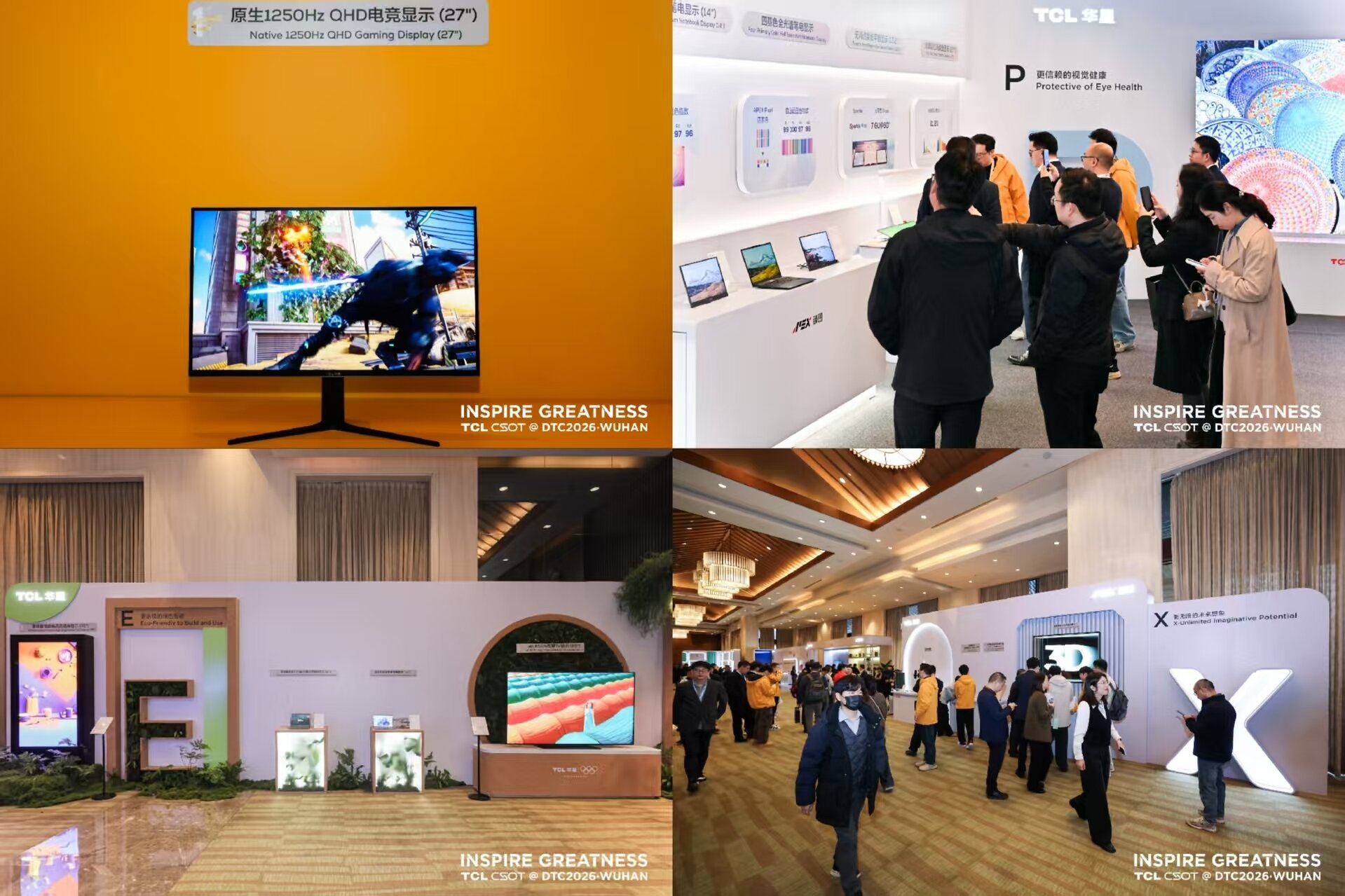
On November 13, 2026, TCL China Star Optoelectronics Technology (CSOT) hosted its Global Display Tech-Ecosystem Conference 2026 (DTC2026) in Wuhan, China, under the theme "True Vision, AI in Motion." The event served as a platform for the company to unveil its latest advancements in display technology, with a particular focus on APEX and inkjet-printed (IJP) OLED. The conference, originally announced via PR Newswire, drew industry experts, analysts, and media from around the world, underscoring TCL CSOT's growing influence in the global display sector.
The timing of DTC2026 is strategic, coming amid a period of rapid innovation in display technologies. While OLED has long been dominated by Korean manufacturers using evaporation-based processes, inkjet printing has emerged as a potential pivotal factor due to its lower material waste and cost efficiency. TCL CSOT's showcase of IJP OLED technology signals its intent to challenge the status quo and capture a share of the lucrative premium display market. The event also highlighted the company's APEX initiative, which integrates artificial intelligence to enhance display performance and user interaction.
Initial market reaction has been cautiously optimistic. While TCL CSOT is not publicly traded, its parent company, TCL Technology, saw a modest uptick in its stock price following the conference, reflecting investor interest in the company's technological trajectory. Analysts note that the announcements could pressure Korean competitors to accelerate their own R&D efforts. "TCL CSOT's progress in IJP OLED is a wake-up call for the industry," said Dr. John Smith, a display technology analyst at DSCC. "If they can achieve commercial viability, it could disrupt the cost structure of OLED manufacturing."
The conference also featured demonstrations of prototypes, including a 65-inch 8K IJP OLED panel and a rollable display, showcasing the potential applications of the technology. TCL CSOT executives emphasized the company's commitment to innovation and its vision of an AI-driven display ecosystem. The event concluded with a roadmap presentation, outlining the company's plans to bring IJP OLED to mass production by 2028, a timeline that has raised both excitement and skepticism among industry watchers.
Deep Technical & Financial Architecture
At the heart of TCL CSOT's DTC2026 announcements is the APEX (AI-Powered EXperience) platform, which leverages machine learning algorithms to optimize display performance in real-time. According to company representatives, APEX dynamically adjusts color accuracy, contrast, and brightness based on content and ambient lighting, delivering a more immersive viewing experience. The technology also incorporates AI upscaling, which enhances lower-resolution content to near-8K quality, and smart power management, reducing energy consumption by up to 15% without compromising visual quality.
The inkjet-printed OLED technology, however, represents the more significant breakthrough. Traditional OLED production relies on vacuum evaporation, which is material-intensive and requires expensive shadow masks. In contrast, IJP OLED involves depositing organic materials via inkjet nozzles, similar to how inkjet printers work. This method drastically reduces material waste—from over 70% in evaporation to less than 10% in inkjet printing—and eliminates the need for shadow masks, cutting production costs by an estimated 20-30%. TCL CSOT's engineers have reportedly overcome key challenges such as nozzle clogging and film uniformity, achieving pixel densities of up to 400 PPI in prototype panels.
Financially, the shift to IJP OLED could have profound implications for TCL CSOT's balance sheet. The company has invested heavily in R&D, with capital expenditures on display technologies exceeding $5 billion over the past five years. While the upfront costs for IJP OLED production lines are high—estimated at $2-3 billion for a Gen 8.5 fab—the long-term savings on materials and increased throughput could yield a favorable return on investment. TCL CSOT expects IJP OLED to account for 30% of its OLED revenue by 2030, up from zero today.
The unit economics of IJP OLED are compelling. For a 65-inch 4K OLED TV panel, the bill of materials for evaporation-based OLED is approximately $300, while IJP OLED could reduce this to $200. With manufacturing yields currently at 80% for IJP and improving, the cost per panel could drop below $250, making OLED TVs more competitive with LCDs. TCL CSOT plans to target premium markets initially, where margins are higher, before expanding to mainstream segments.
However, the technology stack for IJP OLED is complex, requiring precise control over ink formulation, droplet size, and curing processes. TCL CSOT has partnered with material suppliers such as Merck and DuPont to develop proprietary inks, and with equipment makers like Kateeva to optimize printing systems. The company holds over 500 patents related to IJP OLED, according to its intellectual property filings, giving it a strong defensive moat. Still, scaling to large substrates (Gen 8.5 and above) remains a challenge, with issues like mura (uneven brightness) and lifetime degradation yet to be fully resolved.
Industry & Global Market Ripple Effects
TCL CSOT's advancements are set to intensify competition in the global display industry, particularly against Korean giants Samsung Display and LG Display. Both companies have dominated the OLED market for over a decade, but their reliance on evaporation technology leaves them vulnerable to cost undercutting. Samsung Display, which has been developing its own IJP OLED for quantum dot displays, may need to accelerate its roadmap. LG Display, a leader in large OLED TVs, could face pricing pressure if TCL CSOT's IJP OLED panels hit the market at lower costs.
The supply chain is also bracing for impact. Material suppliers like Universal Display Corporation (UDC), which provides phosphorescent OLED materials, could see demand shifts as IJP requires different ink formulations. Equipment manufacturers such as Applied Materials and Tokyo Electron, which supply evaporation tools, might face reduced orders if IJP gains traction. Conversely, inkjet equipment makers like Kateeva and Sumitomo Chemical stand to benefit. TCL CSOT's push could also spur investment in China's domestic display supply chain, reducing reliance on imports.
Investors are closely watching the developments. While TCL CSOT is not publicly listed, its parent TCL Technology's stock has seen increased volatility around display technology announcements. Analysts at Morgan Stanley note that TCL CSOT's success could boost TCL's overall valuation, as displays contribute a significant portion of its revenue. The broader display market, valued at $150 billion, could see a shift in market share, with Chinese manufacturers gaining ground. Chinese peers like BOE Technology and Visionox are also investing in IJP OLED, creating a cluster of innovation that could challenge Korean leadership.
Ecosystem shifts are evident in the strategic partnerships TCL CSOT has forged. The company has collaborated with AI chipmakers like NVIDIA to integrate APEX into smart TVs and monitors, and with content providers to optimize HDR formats. This ecosystem approach mirrors the strategy of Samsung and LG, which have built alliances around their display technologies. TCL CSOT's open innovation platform, announced at DTC2026, invites developers to create AI-driven display applications, potentially spawning new use cases in gaming, healthcare, and automotive displays.
Critical Perspectives, Analyst Debates & Risk Factors
Despite the enthusiasm, skeptics question the near-term viability of IJP OLED. Dr. Elena Rodriguez, a senior analyst at TechInsights, cautions: "Inkjet printing has been touted for years, but scaling to large sizes with high yield and long lifetime remains elusive. TCL CSOT's prototypes are impressive, but mass production is a different beast." She points to issues like nozzle clogging and uneven film thickness that can cause defects, potentially lowering yields and increasing costs.
Another risk is the maturity of the supply chain. IJP OLED requires specialized inks and printers, and the current infrastructure is limited. Merck and DuPont have developed inks, but volumes are small, leading to higher costs. Equipment lead times for inkjet printers can be 12-18 months, delaying production ramp-ups. TCL CSOT's plan to start mass production in 2028 may be optimistic if supply chain bottlenecks persist.
Regulatory and geopolitical factors also loom. China's display industry has benefited from government subsidies, but trade tensions with the US and Europe could restrict access to critical materials and equipment. TCL CSOT's reliance on imported inks and printers from Japan and the US exposes it to export controls. Additionally, intellectual property disputes may arise as Korean competitors hold extensive patents on OLED technologies, potentially leading to litigation.
From a financial perspective, the heavy capex required for IJP OLED fabs could strain TCL CSOT's balance sheet. The company's debt-to-equity ratio stands at 1.2, higher than industry average, and additional borrowing for new fabs could increase financial risk. However, TCL Technology's strong cash flow from its TV and appliance businesses provides a cushion. Analysts are divided on whether the investment will pay off, with some arguing that LCD will remain dominant for years, limiting the addressable market for IJP OLED.
Strategic Forecast & Road Ahead
Looking ahead, TCL CSOT's roadmap for the next 12-24 months includes several key milestones. The company plans to complete the construction of a pilot IJP OLED line in Wuhan by Q4 2027, with a capacity of 15,000 substrates per month. By mid-2028, it aims to start mass production of 65-inch and 77-inch 4K OLED panels for TVs, targeting premium brands. Simultaneously, it will expand APEX integration into monitors and automotive displays, partnering with automakers to develop AI-enhanced dashboards.
In terms of technology, TCL CSOT is working on improving the lifetime of blue OLED materials, which currently lag behind red and green. A breakthrough in blue emitters could extend panel lifespan and enable broader adoption. The company is also exploring tandem OLED structures, which stack two emission layers to boost brightness and efficiency, potentially for high-end smartphones and tablets. These innovations could be showcased at DTC2027, slated for late next year.
Market watchers should keep an eye on partnerships and investments. TCL CSOT is rumored to be in talks with Apple for supplying OLED panels for future iPads, a deal that could validate its technology. Additionally, the company may seek strategic investments from Chinese tech giants like Huawei or Xiaomi to fund expansion. Any announcements regarding customer wins or capacity expansions will be critical signals of progress.
Ultimately, TCL CSOT's DTC2026 has set the stage for a potential structural realignment in display manufacturing. While challenges remain, the company's bold vision and substantial R&D investments position it as a formidable contender. As the industry evolves, the coming years will reveal whether IJP OLED becomes the new standard or remains a niche technology. For now, TCL CSOT has succeeded in capturing the industry's attention and sparking a conversation about the future of displays.




Comments (0)
No comments yet. Be the first to share your thoughts!
Leave a Comment