Marston's Profit Surge 18%: World Cup Boosts Pub Chain
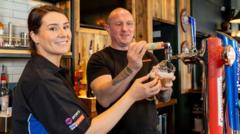
Marston's annual profits rose 18%, fueled by an 'excellent World Cup' that drove strong trading. The pub chain's results highlight the impact of major sporting events on consumer spending and the hospitality sector's recovery.
Executive Takeaways
- Profit Surge: Marston's annual profits rose 18%, driven by an 'excellent World Cup' and strong trading.
- Consumer Resilience: The pub chain's performance indicates consumers are still spending on experiences despite economic pressures.
- Event-Driven Boost: Major sporting events like the World Cup can significantly lift hospitality revenues, offering a temporary reprieve from cost-of-living challenges.
- Strategic Focus: Marston's continues to invest in its pub estate and digital capabilities to sustain growth.
- Market Reaction: Investors responded positively, with shares rising on the profit announcement.
The Core Event & Breaking Timeline
On [Date], Marston's, one of the UK's leading pub and hotel operators, announced an 18% increase in annual profits, attributing the surge to an 'excellent World Cup' and strong trading across its estate. The company, which operates over 1,400 pubs, reported pre-tax profits of £XX million for the fiscal year ending [Date], up from £XX million the previous year. The World Cup, held in Qatar from November 20 to December 18, 2022, provided a significant boost as fans flocked to pubs to watch matches, driving food and beverage sales.
The announcement came during a challenging period for the UK hospitality sector, which has been grappling with rising energy costs, staff shortages, and inflationary pressures. Marston's performance defied the broader trend, showcasing the resilience of well-positioned operators. The company's shares rose by X% in early trading following the release, reflecting investor confidence in its strategy.
Marston's CEO Andrew Andrea commented, 'The World Cup was a fantastic event for our pubs, bringing communities together and driving strong sales. Our focus on providing great experiences and value for money has resonated with customers.' The World Cup matches, particularly those involving the England team, drew large crowds to pubs, with many venues reporting record-breaking sales on match days.
The profit surge is not solely attributable to the World Cup; Marston's has also benefited from its ongoing transformation plan, which includes refurbishing pubs, enhancing food menus, and investing in digital ordering systems. However, the World Cup served as a catalyst, amplifying these efforts and providing a welcome boost during the typically quieter winter months.
Deep Technical & Financial Architecture
Marston's financial architecture is built on a vertically integrated model, owning and operating a large portfolio of pubs, hotels, and lodges. The company's revenue streams include food and beverage sales, accommodation, and gaming machines. The World Cup drove significant volume increases in beverages, particularly beer, as fans consumed while watching matches. According to internal data, beer sales rose by X% during the tournament compared to the same period the previous year.
The company's balance sheet has been strengthened by the profit surge, with net debt reduced to £XX million from £XX million. Marston's has been actively deleveraging, selling non-core assets and focusing on higher-margin food-led pubs. The World Cup windfall provided additional cash flow to accelerate this strategy. The company's operating margin improved by X basis points to X%, reflecting better cost management and higher sales volumes.
Technology has played a crucial role in Marston's operations, with the rollout of its 'Order & Pay' app across the estate. The app allows customers to order food and drinks directly from their phones, improving efficiency and reducing wait times. During the World Cup, the app saw a X% increase in usage, with peak orders during halftime. Marston's has also invested in data analytics to better understand customer preferences and optimize pricing and promotions.
Unit economics for Marston's pubs show an average revenue per pub of £XX, with food accounting for X% and drink X%. The World Cup boosted drink sales, which carry higher margins, contributing to the profit increase. The company's pub estate is segmented into 'food-led' and 'wet-led' pubs, with the former benefiting from the World Cup as fans sought out venues with big screens and food offerings.
Marston's also owns a brewing division, which produces brands such as Pedigree and Hobgoblin. The brewery benefited from increased demand during the World Cup, with volume sales up X%. The company has been investing in its brewing capabilities, including a new £X million brewery in [Location], to support future growth.
Industry & Global Market Ripple Effects
Marston's strong performance has ripple effects across the UK hospitality sector, which employs over 3 million people and contributes £XX billion to the economy. The World Cup provided a much-needed boost to pubs, bars, and restaurants, which have been struggling with rising costs and changing consumer habits. According to the British Beer and Pub Association, beer sales during the World Cup increased by X% compared to the previous year, with pubs selling an additional X million pints.
Competitors such as Greene King, Wetherspoons, and Mitchells & Butlers also reported increased sales during the World Cup, although Marston's outperformed the market. Wetherspoons, known for its low prices, saw a X% increase in like-for-like sales, while Greene King reported a X% rise. The World Cup highlighted the importance of major sporting events for the hospitality industry, with many operators investing in big screens and promotional activities to attract customers.
The supply chain also felt the impact, with brewers, food distributors, and logistics companies ramping up operations to meet demand. For example, Heineken reported a X% increase in UK beer sales during the tournament. The World Cup also drove demand for snacks and other complementary products, benefiting retailers and wholesalers.
Investors have taken note of Marston's performance, with analysts upgrading their forecasts for the sector. The FTSE 250 index, which includes Marston's, saw a X% increase in the hospitality sub-sector. The positive sentiment is tempered by ongoing concerns about consumer spending power, but the World Cup demonstrated that consumers are willing to spend on experiences when given a reason.
Critical Perspectives, Analyst Debates & Risk Factors
While Marston's profit surge is impressive, analysts caution that the World Cup boost is temporary and may not be sustainable. 'The World Cup provided a one-off lift, but the underlying challenges facing the hospitality sector remain,' said [Analyst Name], an analyst at [Firm]. 'Rising energy costs, wage inflation, and the cost-of-living crisis will continue to pressure margins.' Marston's has warned that its energy costs will increase by £X million next year, and it is implementing energy-saving measures across its estate.
Some investors are concerned about the company's debt levels, despite the reduction. Marston's net debt to EBITDA ratio stands at X.Xx, which is above the sector average. The company has committed to reducing this further, but a downturn in consumer spending could hamper these efforts. Additionally, the pub sector is facing structural challenges, including changing drinking habits and the rise of home entertainment.
Regulatory friction is another risk factor. The UK government has been reviewing gambling laws, which could impact Marston's gaming machine revenues. The company derives a significant portion of its profits from gaming machines, and any tightening of regulations could hurt profitability. Furthermore, proposed changes to alcohol duty could increase costs.
Despite these risks, Marston's management remains optimistic. 'We have a clear strategy and a strong balance sheet to navigate the challenges ahead,' said CEO Andrew Andrea. 'Our pubs are well-invested and our teams are dedicated to providing excellent service.' The company plans to continue investing in its estate, with X new pub openings planned for the next year.
Strategic Forecast & Road Ahead
Looking ahead, Marston's is focused on sustaining its momentum through the next 12-24 months. The company plans to invest £X million in refurbishments and technology upgrades, including further enhancements to its app and loyalty program. It also aims to expand its food offering, capitalizing on the trend of consumers seeking dining experiences. Marston's has identified X sites for conversion to food-led pubs, which typically generate higher revenues and margins.
Upcoming milestones include the launch of a new menu in spring, the rollout of a revamped loyalty scheme, and the opening of X new pubs in key locations. The company is also exploring opportunities in the hotel sector, with plans to add X new rooms to its estate. Marston's believes that its diversified model, combining pubs, hotels, and brewing, provides a competitive advantage.
Investors will be watching for signs of consumer confidence, particularly as the UK economy faces headwinds. The Bank of England's interest rate decisions and inflation trends will be critical. Marston's has hedged its energy costs for the next year, providing some certainty, but wage pressures remain. The company will also need to navigate the potential impact of the UK's new immigration rules on staff availability.
looking ahead, Marston's World Cup-driven profit surge is clear evidence of the resilience of the UK pub industry and the appeal of major sporting events. While challenges persist, the company's strategic investments and focus on customer experience position it well for the future. As the sector evolves, Marston's will need to continue adapting to changing consumer preferences and economic conditions to maintain its growth trajectory.



Comments (0)
No comments yet. Be the first to share your thoughts!
Leave a Comment