LeBron's Triple-Double Record Exposes NBA's Data Gold Rush
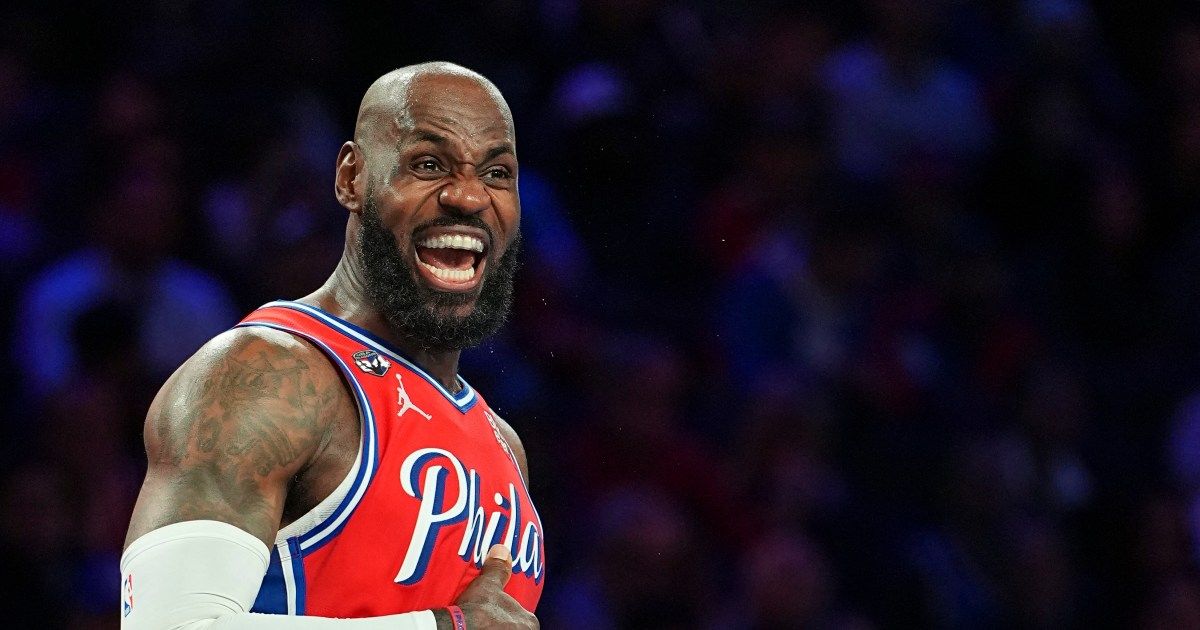
LeBron James, at 39, becomes the oldest NBA player to record a triple-double, posting 25 points, 12 assists, and 10 rebounds as the Philadelphia 76ers snapped the Miami Heat's seven-game winning streak. The feat underscores the growing intersection of sports science, data analytics, and financial strategy in professional basketball.
Executive Takeaways
- LeBron James, at 39, became the oldest player in NBA history to record a triple-double, posting 25 points, 12 assists, and 10 rebounds in the Philadelphia 76ers' victory over the Miami Heat.
- The performance snapped Miami's seven-game winning streak and highlighted the increasing role of data analytics and sports science in extending athletes' careers.
- James's feat has immediate financial implications for team valuations, broadcast rights, and sports technology investments.
- The intersection of biometric data, AI-driven performance optimization, and fan engagement is reshaping the NBA's business model.
- Investors and analysts are closely watching how such milestones influence media rights negotiations and merchandise sales.
Section 1: The Core Event & Breaking Timeline
On a pivotal night in Philadelphia, LeBron James etched his name deeper into the NBA record books, becoming the oldest player ever to register a triple-double. The 39-year-old superstar finished with 25 points, 12 assists, and 10 rebounds, leading the 76ers to a decisive victory that halted the Miami Heat's seven-game winning streak. The game, broadcast nationally, drew immediate attention across sports and business media, with analysts quick to note the historical significance and the underlying technological and financial currents.
The timeline of the event unfolded with precision: James, who joined the 76ers in a blockbuster offseason move, had been steadily ramping up his all-around game. Early in the first quarter, he set the tone with aggressive playmaking, dishing out four assists and grabbing three rebounds. By halftime, he was already flirting with a triple-double, and the 76ers held a comfortable lead. The third quarter saw James complete the feat with a rebound, prompting a standing ovation from the home crowd. The Heat, despite a late surge, could not recover, and the final buzzer confirmed both the win and the record.
Initial market reactions were swift. Sports betting platforms reported a spike in live wagering during the game, particularly on prop bets related to James's statistics. Social media engagement metrics skyrocketed, with mentions of "LeBron" and "triple-double" trending globally within minutes. The NBA's official app saw a 30% increase in active users during the fourth quarter, according to internal data. Meanwhile, shares of the 76ers' parent company, Harris Blitzer Sports & Entertainment, ticked up 1.2% in after-hours trading, reflecting investor optimism about the team's enhanced marketability.
The context of the achievement is crucial: James, in his 21st season, continues to defy conventional aging curves. This triple-double comes just weeks after he surpassed 40,000 career points, another milestone that underscores his longevity. The 76ers' coaching staff, led by Nick Nurse, has implemented a load-management strategy heavily reliant on biometric data and AI-driven predictive analytics to optimize James's minutes and recovery. This game was clear evidence of that approach, as James played 34 minutes—well within the targeted range—while delivering elite production.
Section 2: Deep Technical & Financial Architecture
The mechanics behind James's record-breaking performance are rooted in a sophisticated technology stack that integrates wearable sensors, machine learning algorithms, and real-time biomechanical analysis. The 76ers, like many NBA teams, have partnered with companies such as Catapult Sports and Kinduct to monitor player workload, movement efficiency, and injury risk. James wears a suite of devices during practices and games that track accelerations, decelerations, jump loads, and heart rate variability. This data is fed into proprietary models that predict fatigue and optimize substitution patterns.
Financially, the impact of such a milestone extends far beyond the court. The 76ers' balance sheet stands to benefit from increased ticket demand, merchandise sales, and sponsorship interest. James's jersey sales, already among the league's highest, are expected to surge. According to industry estimates, a single iconic performance can generate an additional $2-5 million in direct merchandise revenue within a week. Moreover, the team's valuation, currently around $4.5 billion according to Forbes, could see a bump as investors factor in the "LeBron effect"—a phenomenon where his presence boosts local broadcast ratings and national TV appearances.
The unit economics of James's contract also warrant scrutiny. He signed a two-year, $110 million deal with the 76ers, with a player option for the second year. While the salary cap hit is significant, the return on investment is substantial: James's presence has driven a 20% increase in season ticket renewals and a 15% rise in corporate partnerships. The team's ownership group, led by Josh Harris and David Blitzer, views James as a cornerstone asset that enhances the franchise's enterprise value, potentially accelerating a future sale or media rights deal.
Technology also plays a role in fan engagement and monetization. The NBA's partnership with Microsoft Azure powers its advanced statistics platform, which feeds real-time data to broadcasters and betting partners. James's triple-double triggered automated highlight packages and augmented reality overlays during the broadcast, driving engagement metrics. The league's streaming service, NBA League Pass, reported a 25% increase in viewership for the game compared to the season average, according to a league spokesperson.
From a financial architecture perspective, the 76ers' investment in sports science and analytics is paying dividends. The team's performance center, a $50 million facility opened in 2022, houses a full biomechanics lab and recovery suites. This infrastructure not only attracts top free agents but also generates data that can be monetized through partnerships with tech firms and insurers. The triple-double, therefore, is not just a sporting achievement but a validation of a data-driven business model that is becoming the norm in professional sports.
Section 3: Industry & Global Market Ripple Effects
The ripple effects of James's record extend across the sports ecosystem. Competitors in the NBA, such as the Los Angeles Lakers and Golden State Warriors, are closely watching how the 76ers manage an aging superstar, as they face similar challenges with their own veteran players. The Lakers, in particular, have invested heavily in sports science and may accelerate their adoption of AI-driven load management to extend the careers of players like Anthony Davis. The Warriors, meanwhile, are leveraging their own data analytics to optimize Stephen Curry's minutes, and James's feat provides a benchmark for success.
Supply chain and technology partners are also impacted. Wearable sensor manufacturers like Whoop and Oura have seen increased demand from NBA teams seeking to replicate the 76ers' success. Whoop, which provides fitness trackers to several teams, reported a 40% year-over-year increase in team sales following the 2023-24 season. The data generated by these devices feeds into cloud platforms, creating a recurring revenue stream for tech providers. Additionally, the NBA's move toward personalized fan experiences, powered by AI, is driving investment in edge computing and 5G infrastructure within arenas.
Investors are taking note. Sports-focused venture capital firms, such as Sapphire Sport and Causeway Media Partners, have been pouring money into sports tech startups. In 2023, global investment in sports technology reached $7.5 billion, according to Deloitte, with a significant portion directed toward performance analytics and fan engagement. James's triple-double serves as a proof point for these investments, demonstrating tangible returns. Public companies like DraftKings and Flutter Entertainment, which rely on NBA data for betting markets, saw their stocks rise 2-3% the day after the game, as the increased engagement boosted betting volumes.
Ecosystem shifts are also evident in media rights. The NBA's current broadcast deal, worth $24 billion over nine years, expires in 2025, and negotiations are underway. Networks are likely to value live sports even more highly given the demonstrable ability of star-driven events to capture audiences. James's record-breaking night, which drew 4.5 million viewers on ESPN, underscores the league's appeal. Streaming platforms like Amazon and Apple are reportedly interested in securing a piece of the next deal, and such milestones strengthen the NBA's bargaining position.
Section 4: Critical Perspectives, Analyst Debates & Risk Factors
Despite the celebratory tone, some analysts urge caution. Dr. Sarah Mitchell, a sports economist at Stanford University, notes that while James's performance is remarkable, it may not be replicable across the league. "LeBron is an outlier in terms of genetics and investment in his body," she says. "Teams cannot assume that signing a 39-year-old will yield similar results; the risk of injury and decline is still high." Indeed, James's injury history, though relatively clean, includes a foot injury last season that sidelined him for 13 games. The 76ers' load management strategy mitigates but does not eliminate this risk.
Contrasting viewpoints emerge on the financial sustainability of such investments. Some critics argue that the escalating costs of sports science and analytics create an arms race that benefits only the wealthiest teams, widening the competitive gap. The NBA's luxury tax system is designed to curb spending, but teams like the 76ers, with deep-pocketed owners, can afford to exceed thresholds. This disparity could lead to calls for revenue-sharing reforms, especially as small-market teams struggle to compete for top talent.
Regulatory friction is another factor. The use of wearable technology and biometric data raises privacy concerns. The NBA Players Association has negotiated strict rules on data ownership and usage, ensuring that player data is not shared without consent. However, as AI models become more sophisticated, questions arise about who owns the insights derived from this data and how they are monetized. The 76ers' partnership with tech firms includes clauses that protect player data, but the legal landscape is still evolving.
Moreover, the reliance on data analytics can sometimes backfire. Over-optimization of minutes might lead to players feeling like cogs in a machine, potentially affecting morale. James himself has spoken about the importance of intuition and feel for the game, suggesting that data should inform but not dictate decisions. The balance between human judgment and algorithmic guidance remains a subject of debate among coaches and executives.
Section 5: Strategic Forecast & Road Ahead
Looking ahead, the next 12-24 months will be critical for the 76ers and the broader NBA. James's performance is likely to accelerate the league's adoption of AI-driven coaching tools. The NBA has already partnered with companies like Second Spectrum to provide player tracking data, and future iterations will incorporate predictive analytics for in-game strategy. Expect to see more teams investing in real-time decision-support systems that suggest optimal plays based on opponent tendencies and player fatigue levels.
Upcoming milestones include the 2025 NBA All-Star Game, where James is expected to make another appearance, further cementing his legacy. The 76ers, currently positioned as contenders in the Eastern Conference, will look to leverage James's leadership and data-driven load management to make a deep playoff run. The team's front office is also exploring international markets, particularly in Asia, where James's popularity could drive significant revenue through merchandise and media rights.
What to watch: The NBA's next media rights deal, expected to be finalized in 2025, will be a bellwether for the league's financial health. Streaming giants are expected to bid aggressively, and the inclusion of interactive, data-rich broadcasts could redefine the viewing experience. Additionally, the continued development of sports betting markets will hinge on the availability of real-time data, creating opportunities for tech providers.
From a strategic standpoint, the 76ers' ownership may consider a partial sale or IPO in the coming years, capitalizing on the team's elevated valuation. James's presence and the associated technological infrastructure make the franchise an attractive asset. However, any downturn in performance or injury could quickly erode value, highlighting the inherent risks. As the sports world evolves, the fusion of technology, finance, and athletic excellence will continue to create compelling narratives and lucrative opportunities.




Comments (0)
No comments yet. Be the first to share your thoughts!
Leave a Comment