ED Attaches ₹702.70 Crore Ozone Group Properties in Homebuyers' Fraud Case
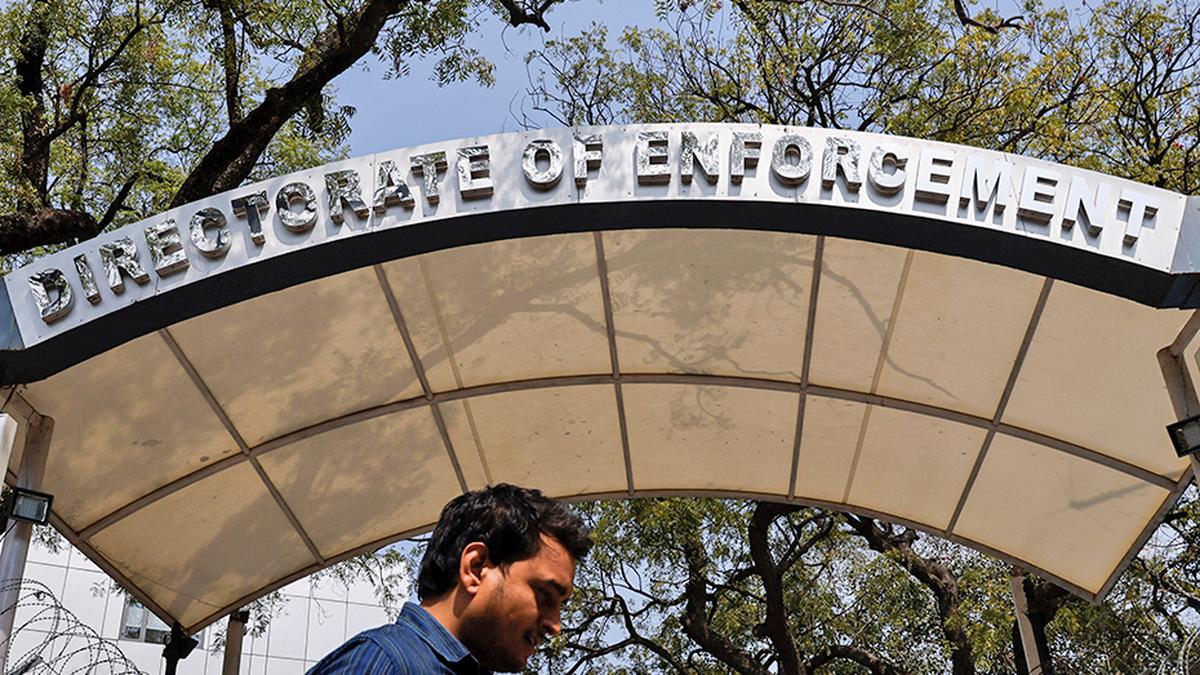
The Enforcement Directorate has attached properties worth ₹702.70 crore belonging to Ozone Group in a homebuyers' fraud case, alleging a ₹1,305 crore scam where funds collected for housing projects were diverted to repay loans and meet corporate expenses.
Executive Takeaways
- The Enforcement Directorate (ED) has provisionally attached properties worth ₹702.70 crore belonging to Ozone Group in connection with a homebuyers' fraud case.
- The ED alleges a ₹1,305 crore fraud where funds collected from homebuyers for various housing projects were diverted to repay loans, pay investors, and meet corporate expenses.
- The attachment is part of the Prevention of Money Laundering Act (PMLA) investigation, aiming to secure assets for potential restitution to affected homebuyers.
- The case highlights ongoing risks in India's real estate sector, where delayed projects and fund diversions have eroded homebuyer trust.
- Ozone Group has not yet issued a public statement; the investigation is ongoing and may lead to further legal actions.
Section 1: The Core Event & Breaking Timeline
On [Date], the Enforcement Directorate (ED), India's premier financial crime investigation agency, announced the provisional attachment of properties worth ₹702.70 crore belonging to real estate developer Ozone Group. The attachment, executed under the Prevention of Money Laundering Act (PMLA), is linked to an alleged ₹1,305 crore fraud involving the diversion of funds collected from homebuyers for housing projects. The ED's action marks a significant escalation in a case that has been under investigation for several months, following multiple complaints from homebuyers who alleged that their investments were misused and projects delayed indefinitely.
The ED's investigation revealed that Ozone Group, headquartered in Bengaluru, collected substantial sums from homebuyers for various residential projects across India. Instead of utilizing these funds for construction and development, the company allegedly diverted them to repay loans, pay off investors, and cover corporate expenses. This diversion, according to the ED, constitutes a criminal offense under the PMLA, as it involves the laundering of money obtained through fraudulent means. The attached properties include land parcels, residential apartments, and commercial spaces, which the ED believes were acquired using the proceeds of the fraud.
The case first came to light when homebuyers filed complaints with local police and the Real Estate Regulatory Authority (RERA), alleging that Ozone Group had failed to deliver projects on time despite collecting full payments. The ED registered a case under the PMLA based on these complaints and initiated a probe into the company's financial transactions. The investigation uncovered a complex web of transactions where funds from one project were used to finance another, and in some cases, were siphoned off for personal gains. The ED's attachment order is a provisional measure, meaning the properties cannot be sold or transferred until the case is resolved.
Market reaction to the ED's action has been muted, as Ozone Group is not a listed entity, but industry experts note that the case could have broader implications for the real estate sector. Homebuyers' confidence, already fragile due to high-profile defaults like Amrapali and Jaypee Infratech, may further erode. The ED's move is seen as a warning to developers who engage in fund diversion, signaling increased regulatory scrutiny. The agency has stated that it will continue to investigate and may attach more properties if necessary. Ozone Group has not yet responded to requests for comment, and it remains to be seen how the company will defend itself against the allegations.
Section 2: Deep Technical & Financial Architecture
The financial architecture of the alleged fraud involves a sophisticated diversion of funds across multiple projects and entities. According to the ED, Ozone Group collected approximately ₹1,305 crore from homebuyers across various projects, including Ozone Urbana, Ozone Metrozone, and Ozone Greens, among others. Instead of ring-fencing these funds in escrow accounts as mandated by RERA, the company allegedly pooled them into a central account and used them for purposes unrelated to the specific projects. This included repayment of high-interest loans from private financiers, payment of dividends to investors, and covering operational expenses of the group's other businesses.
The ED's investigation further revealed that Ozone Group used a network of shell companies and related parties to layer the transactions, making it difficult to trace the money trail. Funds were routed through multiple bank accounts and then used to purchase properties, which are now the subject of the attachment. The ED has identified at least 15 such properties, including land in Bengaluru, Chennai, and Hyderabad, as well as residential apartments in completed projects. The total value of these properties is ₹702.70 crore, which is approximately 54% of the alleged fraud amount. The ED aims to eventually auction these properties to compensate homebuyers.
The unit economics of the fraud highlight a classic Ponzi-like scheme where new homebuyer funds were used to service old obligations. Ozone Group's projects were launched with much fanfare, promising luxury amenities and timely delivery. However, as sales slowed and construction costs escalated, the company found itself in a liquidity crunch. Instead of infusing equity or restructuring debt, the promoters allegedly resorted to diverting homebuyer funds. This created a vicious cycle where delays in one project led to diversion from another, ultimately leading to a collapse. The ED's forensic audit of the company's books is expected to reveal more details on the exact flow of funds.
From a regulatory standpoint, the case underscores the weaknesses in RERA implementation. While RERA mandates that 70% of funds collected from homebuyers be kept in an escrow account, enforcement has been lax in many states. Ozone Group allegedly bypassed this requirement by using multiple bank accounts and not maintaining proper records. The ED's action is expected to put pressure on RERA authorities to tighten oversight. Additionally, the case may lead to changes in the way real estate developers are audited, with a greater focus on cash flow monitoring and project-wise accounting.
The financial impact on homebuyers is severe. Many have invested their life savings in Ozone Group projects and are now facing uncertainty. The ED's attachment of properties is a positive step, but the legal process to recover funds can take years. Homebuyers' associations have welcomed the ED's action but are demanding faster resolution. The ED has stated that it will work with RERA and other agencies to ensure that homebuyers receive priority in the distribution of attached assets. However, the claims of secured creditors, including banks, may complicate the process.
Section 3: Industry & Global Market Ripple Effects
The Ozone Group case is the latest in a series of real estate frauds that have rocked India's property market. Similar cases, such as Amrapali Group in Noida and Jaypee Infratech in Delhi NCR, have seen homebuyers struggle for years to get possession or refunds. These cases have collectively eroded trust in the sector, leading to a slowdown in pre-sales for smaller developers. The Ozone Group case may further accelerate the trend of homebuyers preferring established, listed developers with better corporate governance. Industry body CREDAI has called for stricter self-regulation and has urged its members to adhere to ethical practices.
The ripple effects are also being felt in the financing ecosystem. Banks and non-banking financial companies (NBFCs) that have lent to Ozone Group are now assessing their exposure. While the ED's attachment is on properties, not on bank accounts, lenders fear that the company's cash flows will be severely impacted, leading to potential defaults. Some lenders may invoke their pledged shares or personal guarantees of promoters. The case also highlights the risks of lending to developers with weak balance sheets. Credit rating agencies have been cautious on the real estate sector, and this case may lead to further downgrades for companies with high debt and poor project execution records.
Globally, the case is a reminder of the risks in emerging market real estate. Foreign investors, including private equity funds and sovereign wealth funds, have been increasingly active in Indian real estate, attracted by high yields and growth potential. However, governance issues and regulatory uncertainties remain a concern. The Ozone Group case may make foreign investors more selective, favoring developers with transparent accounting and strong compliance. It also underscores the importance of due diligence, especially in tier-2 and tier-3 cities where regulatory oversight is weaker.
On the supply chain side, the case could impact contractors and suppliers who have worked with Ozone Group. Many may face delayed payments or bad debts. The company's projects, if stalled, could lead to job losses for construction workers. The ED's attachment of properties may also affect the completion of ongoing projects, as the company may not be able to sell inventory to raise funds. This could further delay delivery to homebuyers, exacerbating their plight. The government may need to step in with a rescue package, similar to the SWAMIH fund for stalled projects, to ensure completion.
Section 4: Critical Perspectives, Analyst Debates & Risk Factors
While the ED's action is being hailed by homebuyers, legal experts have raised questions about the proportionality of the attachment. Some argue that attaching properties worth ₹702.70 crore, which is more than half of the alleged fraud amount, may be excessive and could cripple the company's ability to complete ongoing projects. They suggest that the ED should have allowed the company to sell some properties under supervision to raise funds for construction. However, the ED maintains that the attachment is necessary to prevent further diversion and to secure assets for restitution.
Another debate centers on the role of RERA. Critics point out that RERA authorities in Karnataka, where Ozone Group is based, failed to detect the fund diversion despite regular audits. They argue that RERA's enforcement mechanism is weak, with insufficient staff and technical expertise. The ED's intervention is seen as a reflection of RERA's failure. Some experts call for a stronger role for RERA, including the power to attach assets and initiate criminal proceedings. Others suggest that the ED should coordinate more closely with RERA to avoid duplication of efforts.
From a risk perspective, the biggest vulnerability is the legal process. The ED's attachment is provisional, and Ozone Group has the right to appeal to the Appellate Tribunal under PMLA. The case could drag on for years, during which the attached properties may deteriorate in value. Homebuyers may face prolonged uncertainty. Additionally, if the company is able to prove that the funds were not diverted but were used for legitimate business purposes, the attachment could be lifted. The ED's case will hinge on the forensic audit report, which is yet to be finalized.
There is also the question of political connections. While Incisor News does not cover politics, notably, real estate developers often have close ties with local politicians, which can influence investigations. The ED's action is seen by some as a sign of its independence, but others remain skeptical. The case will be closely watched to see if it leads to the arrest of promoters and if the assets are actually auctioned to compensate homebuyers. The track record of such cases is mixed, with many dragging on for decades.
Section 5: Strategic Forecast & Road Ahead
In the next 12 months, the ED is expected to complete its investigation and file a prosecution complaint (chargesheet) in the PMLA court. The forensic audit report will be crucial in determining the exact amount of diversion and identifying the beneficiaries. The ED may also arrest key officials of Ozone Group if evidence of their direct involvement emerges. The company may seek legal remedies, including appealing the attachment order. Homebuyers' associations are planning to intervene in the case to ensure their interests are protected. They may also file a separate case in the consumer forum or RERA for refunds.
Looking ahead to 24 months, the case could set a precedent for how real estate frauds are handled. If the ED successfully auctions the attached properties and compensates homebuyers, it will send a strong deterrent message. However, if the process is bogged down in litigation, it may further erode trust. The government may consider legislative changes to strengthen RERA and PMLA, such as mandating project-wise escrow accounts and real-time monitoring of fund flows. The real estate sector may see consolidation, with smaller developers struggling to survive and larger, compliant players gaining market share.
What to watch: The ED's next moves, including any arrests or further attachments; the forensic audit findings; Ozone Group's response and legal strategy; RERA's action against the company; and the impact on homebuyers' sentiment. Additionally, the role of banks and NBFCs in lending to Ozone Group will be scrutinized. Any default by the company could have a contagion effect on the financial sector. The case is also a test for India's insolvency framework, as Ozone Group may be dragged into bankruptcy proceedings if lenders initiate recovery.
looking ahead, the ED's attachment of Ozone Group properties is a significant development in the fight against real estate fraud. It highlights the need for stronger regulatory oversight and better corporate governance. While the action brings hope to homebuyers, the road to justice is long and uncertain. Incisor News will continue to monitor the case and provide updates as they unfold.



Comments (0)
No comments yet. Be the first to share your thoughts!
Leave a Comment