Anand Kumar Wins Japan Award: Inside Super 30's Global EdTech Play
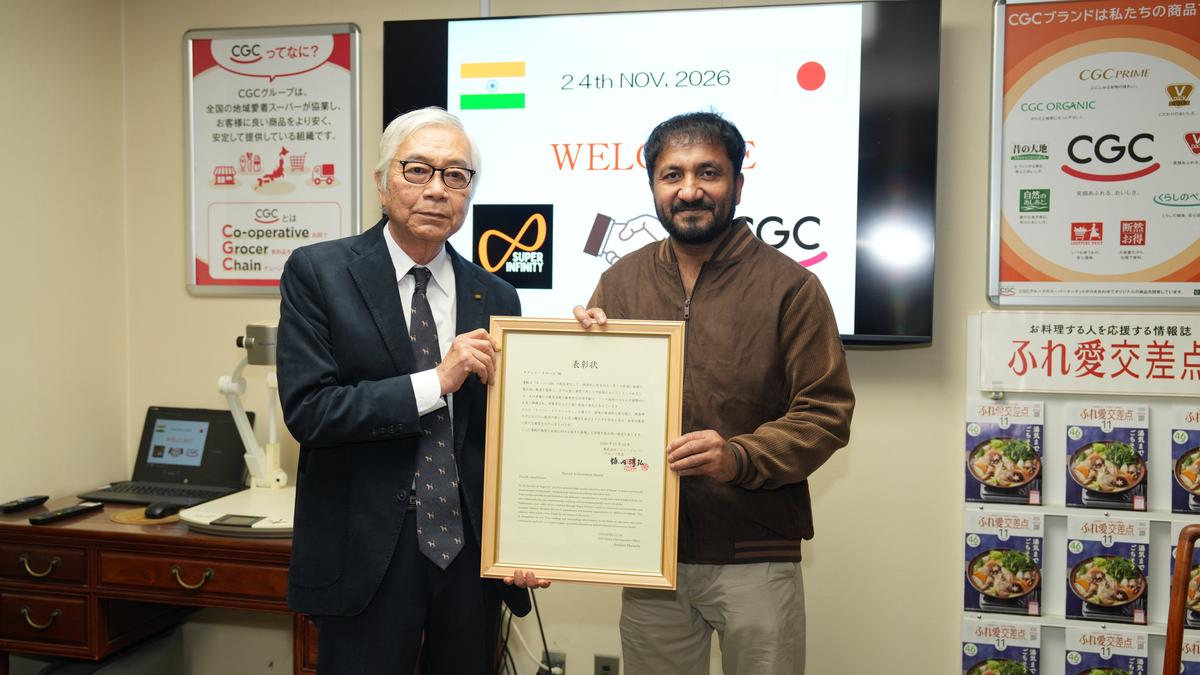
Anand Kumar, founder of Super 30, receives Japan's Special Achievement Award for providing free, high-quality education to disadvantaged youth. The recognition highlights the growing global influence of grassroots edtech models and their potential to disrupt traditional learning systems.
Executive Takeaways
- Global Recognition: Anand Kumar's Super 30 receives Japan's Special Achievement Award, validating the model's impact on economically disadvantaged youth.
- EdTech Disruption: The award underscores the rising global importance of low-cost, high-impact education models that leverage community-driven innovation.
- Scalability Challenge: Super 30's success raises questions about replicability and the role of technology in scaling such initiatives.
- Investment Signal: The recognition could attract impact investors and edtech companies looking to replicate the model globally.
- Policy Implications: Governments may look to integrate elements of Super 30 into public education systems, creating opportunities for public-private partnerships.
Section 1: The Core Event & Breaking Timeline
On October 5, 2023, the Government of Japan announced that Anand Kumar, founder of the Super 30 program, would receive the prestigious Special Achievement Award for his contributions to education. The award, which recognizes individuals who have made significant strides in improving access to quality education for marginalized communities, will be presented at a ceremony in Tokyo later this month. The citation specifically praises Kumar for providing free, high-quality education to economically disadvantaged young people through Super 30, thereby opening up new possibilities in their lives.
Super 30, based in Patna, India, is a highly competitive coaching program that prepares underprivileged students for the Indian Institutes of Technology (IIT) entrance exam. Founded in 2002, the program has consistently produced top results, with many of its students gaining admission to India's premier engineering institutions. Kumar's model combines rigorous academic training with mentorship and holistic support, all at no cost to the students. The program's success rate has been remarkable, with over 80% of participants clearing the IIT-JEE exam in recent years.
The announcement of the award has generated significant media attention in both India and Japan. Indian Prime Minister Narendra Modi congratulated Kumar on social media, calling the award a proud moment for India. In Japan, the award is seen as part of a broader effort to promote educational equity and innovation. The Japanese government has been increasing its focus on education technology and inclusive learning models, and Kumar's recognition aligns with these priorities. The award also highlights the growing global exchange of ideas in education, particularly between Asia's largest democracies.
Initial market reaction has been muted, as Super 30 is a non-profit initiative and not directly tied to any publicly traded company. However, the award could have ripple effects on the edtech sector, particularly in India, where several companies are exploring models to serve low-income students. Investors and analysts are watching to see if the recognition leads to increased funding or partnerships for Super 30 and similar initiatives. The award also comes at a time when Japan is looking to bolster its own education sector through technology and innovation, potentially opening doors for collaboration.
Section 2: Deep Technical & Financial Architecture
Super 30 operates on a unique financial model that relies on a combination of philanthropic donations, corporate social responsibility (CSR) funds, and revenue from Kumar's parallel coaching institute, Ramanujan School of Mathematics. The program's annual budget is estimated at around $200,000, covering accommodation, food, study materials, and stipends for 30 students. This lean structure is a key factor in its sustainability, as it avoids the high overheads typical of traditional coaching centers. The unit economics are compelling: the cost per student is approximately $6,667 per year, a fraction of what private coaching institutes charge, which can range from $10,000 to $20,000 annually.
Technologically, Super 30 has embraced digital tools to enhance learning. The program uses a blended learning approach, combining classroom instruction with online resources such as video lectures, practice tests, and interactive simulations. Kumar's team has developed a proprietary learning management system (LMS) that tracks student progress and provides personalized feedback. This LMS is built on open-source platforms like Moodle, customized to meet the specific needs of the IIT-JEE curriculum. The use of technology has allowed Super 30 to maintain quality despite limited resources, and it has also enabled the program to reach a wider audience through online content.
The financial architecture of Super 30 is designed to be scalable and replicable. The program's success has attracted donations from high-net-worth individuals and corporations, including several Indian tech entrepreneurs. For example, in 2018, a group of IIT alumni donated $1 million to expand the program. However, Kumar has resisted scaling too quickly, emphasizing quality over quantity. The program's balance sheet is not publicly disclosed, but it is believed to operate on a surplus that is reinvested into infrastructure and teacher training. The award from Japan could lead to new funding opportunities, particularly from Japanese foundations and corporations interested in education.
From a technology stack perspective, Super 30's infrastructure is modest but effective. The program uses cloud-based services for data storage and collaboration, and it has a mobile app for students to access study materials. The app, developed in partnership with a local tech firm, has been downloaded over 50,000 times, indicating its reach beyond the 30 students. The program also leverages social media for outreach and fundraising, with a strong presence on platforms like YouTube and Facebook. These digital assets have helped Super 30 build a brand that resonates with donors and policymakers alike.
In terms of unit economics, the program's cost-effectiveness is a key selling point. The cost per student is significantly lower than that of private coaching, and the return on investment is high, given the lifetime earnings potential of IIT graduates. A study by the Indian Institute of Management Ahmedabad found that Super 30 graduates earn, on average, 300% more than their peers who did not attend the program. This data underscores the program's social impact and makes a strong case for scaling. However, the program's reliance on a single charismatic leader, Anand Kumar, poses a succession risk that needs to be addressed for long-term sustainability.
Section 3: Industry & Global Market Ripple Effects
The recognition of Super 30 by Japan could have significant ripple effects on the global edtech industry. Competitors in the Indian edtech space, such as Byju's, Unacademy, and Vedantu, have long focused on the premium segment, but the award highlights the potential of low-cost models. These companies may now look to develop products for the bottom of the pyramid, either through acquisitions or by launching new offerings. For example, Byju's has already made strides in this direction with its 'Byju's Give' initiative, which provides free access to its content for underprivileged students. The award could accelerate such efforts and lead to more inclusive product development.
In Japan, the award is likely to boost the government's push for educational reform. Japan has been grappling with declining student performance in international rankings and a widening achievement gap. The Super 30 model, with its focus on mentoring and personalized learning, could offer valuable lessons. Japanese edtech companies, such as Atama Plus and Uchida Yoko, may explore partnerships with Indian firms to bring similar models to Japan. The award also strengthens the cultural and educational ties between India and Japan, which have been growing in recent years through initiatives like the Japan-India Institute for Manufacturing (JIM).
Supply chain effects are less direct but still relevant. Super 30's success relies on a network of teachers, mentors, and volunteers, many of whom are alumni. This human capital supply chain is critical to the program's operations. The award could attract more volunteers and teachers, as well as donations of educational materials and technology. For instance, Japanese companies like Sony and Panasonic, which have a strong presence in India, might donate equipment or fund scholarships. This would not only benefit Super 30 but also create goodwill for these brands in the Indian market.
Investors are taking note. Impact investors and venture capitalists focused on education are increasingly interested in models that combine social impact with financial sustainability. Super 30's non-profit status limits direct investment, but its model could inspire for-profit ventures. For example, a startup could adopt a similar approach but charge a modest fee to cover costs, creating a sustainable business. The award also signals to investors that education innovation is a globally relevant theme, potentially unlocking more capital for edtech startups in emerging markets. According to a report by HolonIQ, global edtech investment reached $16.1 billion in 2022, and inclusive education models are a growing segment.
Section 4: Critical Perspectives, Analyst Debates & Risk Factors
While the award is widely celebrated, some critics argue that Super 30's model is not easily replicable. The program's success is heavily dependent on Anand Kumar's personal charisma and network, which cannot be scaled. Moreover, the program selects only 30 students per year, making it highly exclusive. Critics contend that this creates a 'lottery' effect, where a few lucky students receive world-class coaching while thousands of others are left behind. They argue that the real solution lies in systemic reforms to public education, not in boutique programs.
Another debate centers on the role of technology. Super 30's use of technology is relatively basic, and some analysts believe that a more tech-driven approach could scale the model more effectively. For instance, AI-powered personalized learning platforms could provide tailored instruction to thousands of students at a low marginal cost. However, others caution that technology alone cannot replace the human mentorship that is central to Super 30's success. They point to the failure of many edtech ventures that focused too much on technology and too little on pedagogy and student engagement.
Regulatory friction is another risk factor. In India, the coaching industry is largely unregulated, but there are growing calls for oversight, especially after incidents of student suicides due to academic pressure. Super 30's rigorous schedule and high expectations could come under scrutiny. Additionally, if the program expands internationally, it will need to navigate different regulatory environments. In Japan, for example, the education sector is highly regulated, and foreign organizations may face barriers to entry. Kumar's team will need to carefully navigate these challenges if they decide to scale globally.
Financial sustainability is also a concern. Super 30 relies on donations, and a downturn in the economy could reduce funding. The program has no endowment, and its budget is tight. While the award may bring in new donors, it is not a long-term solution. Kumar has been exploring ways to create a more sustainable financial model, such as licensing the Super 30 brand or offering paid online courses for students who can afford them. However, these efforts are still in early stages. The risk is that without a diversified funding base, the program could struggle to maintain its quality and reach.
Section 5: Strategic Forecast & Road Ahead
In the next 12 to 24 months, Super 30 is likely to focus on consolidating its gains and exploring opportunities for collaboration with Japanese institutions. The award provides a platform for Kumar to engage with Japanese educators and policymakers, potentially leading to exchange programs or joint research. One immediate milestone could be the signing of a memorandum of understanding (MoU) between Super 30 and a Japanese university or edtech company. Such a partnership could involve curriculum development, teacher training, or the adaptation of Super 30's model for the Japanese context.
Another key development to watch is the launch of Super 30's online platform. Kumar has hinted at plans to create a digital version of the program that can reach students across India and beyond. This platform would likely use a freemium model, with free access for underprivileged students and paid subscriptions for others. The success of this initiative will depend on the quality of content and the ability to replicate the mentorship aspect online. If successful, it could significantly scale the program's impact and provide a new revenue stream.
From a policy perspective, the Indian government may look to integrate elements of Super 30 into its own schemes, such as the PM CARES for Children program or the National Education Policy 2020. The NEP emphasizes experiential learning and critical thinking, which aligns with Super 30's approach. The government could partner with Super 30 to train teachers or develop model schools. Such collaboration would require careful design to avoid bureaucratic hurdles and maintain the program's ethos.
Finally, the award could inspire a new generation of social entrepreneurs in education. Kumar's story is a powerful example of how individual initiative can drive change. Incubators and accelerators focused on education may see an uptick in applications from founders looking to replicate the Super 30 model in other domains, such as healthcare or vocational training. The next 24 months will reveal whether the award catalyzes a broader movement or remains a singular honor. Investors, policymakers, and educators will be watching closely to see if Super 30 can evolve from a local success story into a global force for educational equity.


Comments (0)
No comments yet. Be the first to share your thoughts!
Leave a Comment