16,000 Unsafe Eggs Seized in Kozhikode: Food Safety Alarm
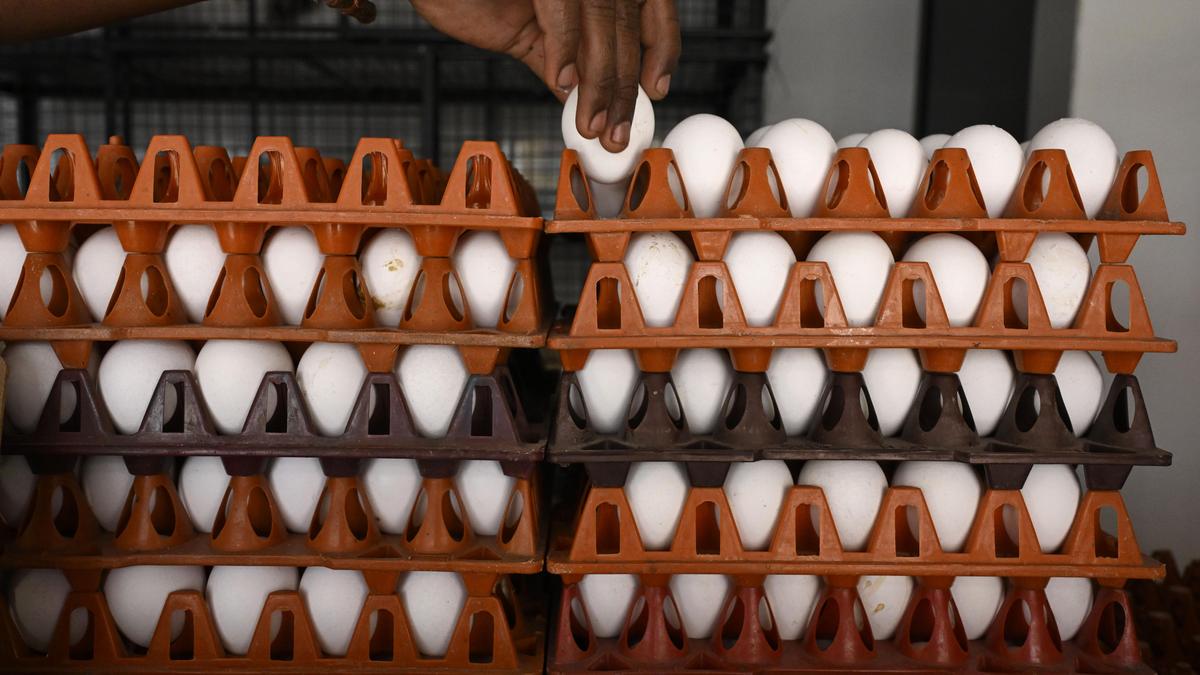
Over 16,000 unsafe eggs seized in Kozhikode after inspections at two Mavoor stalls, sparking food safety concerns and calls for stricter supply chain oversight.
Executive Takeaways
- Massive Seizure: Over 16,000 unsafe eggs were confiscated from two stalls in Mavoor, Kozhikode, following routine inspections.
- Regulatory Scrutiny: The incident highlights gaps in food safety enforcement and supply chain traceability in Kerala's poultry sector.
- Public Health Risk: Unsafe eggs can carry Salmonella and other pathogens, posing serious health threats to consumers.
- Market Impact: Local egg prices may see short-term volatility as authorities tighten inspections and vendors face penalties.
- Call for Reform: Experts urge adoption of blockchain-based traceability and stricter penalties to deter unsafe food distribution.
Section 1: The Core Event & Breaking Timeline
On Tuesday, food safety officials in Kozhikode district, Kerala, seized over 16,000 eggs from two retail stalls in Mavoor, a suburban area approximately 20 kilometers from Kozhikode city. The raid, conducted by the Kerala Food Safety Department, followed a tip-off about the sale of eggs stored under unhygienic conditions and potentially contaminated with harmful bacteria. According to officials, the eggs were stored in makeshift facilities without proper temperature control, and some were found to be cracked or leaking, indicating poor handling and transportation practices.
The inspections were part of a broader statewide drive to enforce food safety standards ahead of the monsoon season, when the risk of foodborne illnesses spikes. The seized eggs, valued at approximately ₹1.2 lakh (about $1,450), were sent for laboratory testing to confirm the presence of pathogens such as Salmonella and E. coli. Preliminary reports suggest that the eggs were sourced from poultry farms in Tamil Nadu and transported without proper refrigeration, violating FSSAI (Food Safety and Standards Authority of India) guidelines.
Local vendors expressed shock and denial, claiming ignorance of the contamination. “We buy from wholesalers who assure us of quality. How can we check every egg?” said one stall owner, who requested anonymity. The raid has sparked concerns among consumers in Kozhikode, a city already grappling with periodic food safety scares, including pesticide residues in vegetables and adulterated milk.
Market reaction was immediate: egg prices in Kozhikode’s wholesale markets dipped by 5-7% as traders feared a demand slump. Retailers reported a sharp decline in footfall, with many consumers opting for alternatives like paneer or legumes. The Kerala Poultry Farmers’ Association has called for a thorough investigation, warning that the incident could tarnish the reputation of the state’s poultry industry, which is valued at over ₹2,000 crore (approximately $240 million) annually.
Section 2: Deep Technical & Financial Architecture
The seizure underscores the complex mechanics of India’s egg supply chain, which is largely fragmented and lacks end-to-end traceability. Eggs typically travel from farms to wholesalers, then to retailers, often passing through multiple intermediaries. In Kerala, where domestic production meets only about 30% of demand, the majority of eggs are imported from neighboring states like Tamil Nadu and Karnataka. This cross-border movement introduces vulnerabilities: inconsistent cold chain infrastructure, inadequate quality checks at state borders, and poor storage at retail points.
Technically, egg safety hinges on temperature control (ideally 7-13°C), humidity management, and proper handling to prevent cracks. However, most small-scale retailers in India lack refrigerated storage, relying instead on ambient conditions. A 2022 study by the National Institute of Nutrition found that over 40% of eggs sold in urban Indian markets were stored above recommended temperatures, increasing the risk of bacterial growth. The FSSAI mandates periodic inspections, but enforcement is weak due to resource constraints: Kerala’s food safety department has only about 200 inspectors for a population of 35 million, resulting in infrequent checks.
Financially, the egg supply chain operates on thin margins. Retailers typically earn a margin of 5-10% per egg, making them reluctant to invest in cold storage. The seized eggs, if proven unsafe, could lead to penalties under the Food Safety and Standards Act, 2006, including fines up to ₹10 lakh and imprisonment. For the two Mavoor stalls, the immediate financial loss is significant: the confiscated eggs represent several weeks’ worth of inventory. Moreover, reputational damage could drive away customers permanently.
The incident also highlights the unit economics of poultry farming in Kerala. Small farmers often sell eggs to aggregators at ₹4-5 per egg, which are then sold to consumers at ₹6-7. The low margins discourage investment in quality upgrades. “The entire chain is cost-driven; safety is an afterthought,” said Dr. S. Rajendran, a food safety expert at Kerala Agricultural University. “Without a premium for safe eggs, farmers and retailers have no incentive to comply.”
Technology adoption could be a pivotal factor. Blockchain-based traceability systems, such as those piloted by FSSAI in collaboration with tech firms, can track eggs from farm to fork, enabling rapid recalls. However, adoption is nascent, and the cost of implementation (estimated at ₹2-3 per egg) remains prohibitive for small players. The government’s recent push for digitalization in agriculture, including the AgriStack initiative, may eventually trickle down to poultry, but for now, the sector remains largely manual.
Section 3: Industry & Global Market Ripple Effects
The Kozhikode seizure has sent ripples through Kerala’s poultry ecosystem and beyond. Competitors in the unorganized sector—small farms and local aggregators—may face increased scrutiny, while organized players like Suguna Foods and Venky’s could benefit from a consumer shift toward branded, certified-safe eggs. “Consumers are willing to pay a premium for safety, and this incident will accelerate that trend,” said Ramesh Babu, an analyst at a Chennai-based agri-research firm. Shares of listed poultry companies remained largely flat, but analysts expect increased demand for cold-chain logistics services.
Supply chains are already adjusting. Wholesalers in Kozhikode have started demanding quality certificates from suppliers, and some are exploring direct sourcing from farms with better storage facilities. The Kerala Poultry Farmers’ Association has announced a voluntary audit program for its members, aiming to restore consumer confidence. However, smaller farmers fear the cost of compliance could push them out of business. “We are already struggling with rising feed prices; additional audits will be the last straw,” said K. Mohanan, a farmer from Palakkad.
Globally, the incident echoes similar food safety crises, such as the 2017 egg contamination scandal in Europe, where fipronil-tainted eggs led to massive recalls and regulatory overhaul. In India, the FSSAI has been tightening norms, but enforcement remains a challenge. The European Union’s Rapid Alert System for Food and Feed (RASFF) serves as a model for cross-border coordination, something India lacks. “India needs a real-time alert system for food safety incidents to prevent recurrence,” said Dr. Rajendran.
Investors are watching closely. The incident could spur funding for agri-tech startups focused on supply chain transparency. Companies like Eggoz and FreshToHome, which emphasize quality and traceability, may see increased interest. “This is a wake-up call for the entire industry; those who invest in safety will win consumer trust,” said a venture capitalist who focuses on food tech. Meanwhile, the Kerala government’s response—whether it tightens inspections or introduces new regulations—will set a precedent for other states.
Section 4: Critical Perspectives, Analyst Debates & Risk Factors
While the seizure is being hailed as a victory for food safety, critics argue it is a symptom of systemic failures. “This is not an isolated incident; it’s a reflection of a broken system where inspections are reactive rather than proactive,” said Dr. Vandana Prasad, a public health activist. She points out that Kerala’s food safety department is underfunded and understaffed, with inspections often triggered by complaints rather than routine. The state’s budget allocation for food safety has remained stagnant at around ₹50 crore for the past three years, despite rising food imports.
Others question the timing and scale of the raid. “Why only two stalls? Unsafe eggs are likely sold everywhere. This seems like a token action to appease public concern,” said a retired food safety official who requested anonymity. He suggests that the seizure might be part of a larger political narrative, though he declined to elaborate. The Kerala government has denied any political motive, stating that the drive is part of a statewide “Safe Food” campaign.
Risk factors abound. For consumers, the immediate risk is exposure to pathogens, but the long-term risk is erosion of trust in the food system. For the industry, the risk is regulatory overreach that could stifle small businesses. “We need a balanced approach: stricter enforcement but also support for upgrading infrastructure,” said Babu. The FSSAI’s proposed amendments to the Food Safety and Standards (Licensing and Registration of Food Businesses) Regulations, which would mandate cold storage for egg retailers, are facing resistance from traders’ associations.
Analysts also debate the economic impact. Some argue that the seizure will have a negligible effect on the overall egg market, given that 16,000 eggs represent a tiny fraction of Kerala’s daily consumption of over 1 crore eggs. Others warn of a contagion effect: if consumers lose confidence, demand could drop, hurting farmers. “The market is sentiment-driven; even a small incident can cause a disproportionate reaction,” said a commodity trader in Kochi.
Section 5: Strategic Forecast & Road Ahead
In the next 12 months, expect a flurry of activity in Kerala’s food safety landscape. The state government is likely to announce new guidelines for egg storage and transportation, possibly mandating refrigerated vehicles for long-distance transport. The FSSAI may also fast-track its plan to introduce QR codes on egg cartons, enabling consumers to trace the source. Pilot projects in select districts could begin by early 2025, with full rollout by 2026.
The poultry industry will see consolidation. Small farmers unable to afford upgrades may exit, while organized players and cooperatives will invest in cold chain infrastructure. The Kerala Poultry Farmers’ Association plans to set up a centralized testing lab in Kozhikode by mid-2025, funded through a public-private partnership. “We want to assure consumers that our eggs are safe, and that requires investment,” said association president Josekutty. Meanwhile, agri-tech startups will pitch traceability solutions to state governments, with the Kerala model potentially becoming a template for others.
Consumer behavior will shift. Demand for branded, certified-safe eggs is expected to rise by 15-20% annually, according to industry estimates. Retailers will increasingly stock only eggs from suppliers who provide quality certificates. “The days of anonymous eggs are numbered,” said Babu. E-commerce platforms like BigBasket and Amazon Fresh are already promoting “safe eggs” with traceability features, and traditional retailers will be forced to follow.
What to watch: The lab test results of the seized eggs, due in two weeks, will determine the severity of penalties and the extent of the recall. The Kerala government’s budget for 2025-26, to be presented in March, will reveal whether food safety gets a funding boost. And the FSSAI’s national meeting in April will likely discuss stricter norms for egg safety, possibly setting a precedent for other perishables. As Dr. Rajendran puts it, “This incident is a wake-up call; the question is whether we will sleepwalk again.”




Comments (0)
No comments yet. Be the first to share your thoughts!
Leave a Comment