UniCredit's Bitcoin Bet: 8M Customers, 65% Cap, 100% Capital Back
UniCredit launches a six-year bitcoin certificate for 8 million Italian retail customers, offering full capital protection but capping gains at 65%. The move signals mainstream banks' cautious entry into crypto products.
Executive Takeaways
- UniCredit, one of Europe's largest banks, is offering a six-year bitcoin-linked certificate to its 8 million retail customers in Italy, with full capital protection and a 65% cap on gains.
- The product marks a significant step in traditional finance's adoption of crypto, balancing innovation with risk management.
- While the capped upside may limit returns in a bull market, the capital guarantee appeals to risk-averse investors.
- Regulatory scrutiny and market volatility remain key challenges, but UniCredit's move could spur similar offerings from peers.
- Success will depend on investor demand, bitcoin's price trajectory, and the bank's ability to manage hedging costs.
The Core Event & Breaking Timeline
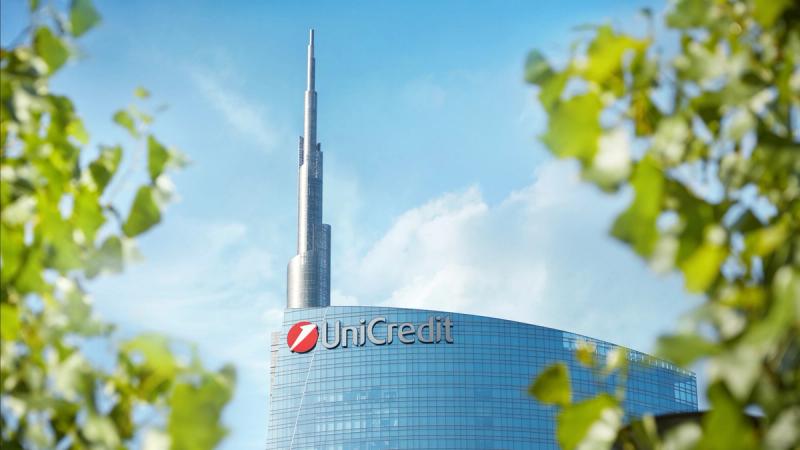
On Wednesday, UniCredit, Italy's second-largest bank, announced the launch of a six-year bitcoin-linked certificate available to its approximately 8 million retail customers in Italy. The product, which offers full capital protection at maturity, caps potential gains at 65% of bitcoin's price appreciation. This marks the first time a major European bank has offered direct exposure to bitcoin through a structured product to its retail client base, signaling a cautious but significant embrace of digital assets by traditional finance.
The announcement came via a press release from UniCredit's headquarters in Milan, with the bank positioning the certificate as a way for clients to diversify their portfolios with a regulated, capital-protected instrument. The certificate is expected to be available for subscription starting next month, with a minimum investment threshold of €1,000. UniCredit has not disclosed the total issuance size but indicated it could scale based on demand.
Market reaction was immediate and mixed. Shares of UniCredit rose 1.2% in Milan trading following the news, outperforming the broader Italian banking index, which was up 0.5%. Meanwhile, bitcoin's price saw a modest 0.8% uptick to $67,200, though analysts cautioned that the move was likely coincidental given the product's limited initial scale. The euro Stoxx banks index also edged higher, reflecting investor optimism that other banks might follow suit.
The launch is part of UniCredit's broader digital innovation strategy under CEO Andrea Orcel, who has emphasized the need for banks to adapt to changing client demands. In a statement, Orcel said, "We are committed to providing our clients with innovative investment solutions while maintaining the highest standards of risk management. This certificate allows them to participate in the potential of bitcoin without compromising their capital." The bank has been working on the product for over a year, collaborating with regulators to ensure compliance with Italian and EU financial regulations.
Deep Technical & Financial Architecture
The UniCredit bitcoin certificate is a structured product that combines a zero-coupon bond with a derivative component linked to bitcoin's price. The capital protection is achieved by investing the principal in a secure bond that guarantees return of the initial investment at maturity, while the remaining funds are used to purchase options or other derivatives that provide exposure to bitcoin. The 65% cap on gains means that if bitcoin's price increases by more than 65% over the six-year term, the investor's return is limited to that 65% (minus fees).
From a balance sheet perspective, UniCredit will likely hedge its exposure by acquiring bitcoin or related derivatives in the market, though the bank has not disclosed its hedging strategy. The product's unit economics depend on the bank's ability to earn a spread between the cost of hedging and the return paid to clients. With a 65% cap, UniCredit retains any upside beyond that threshold, which could be substantial if bitcoin's price surges. However, the bank also bears the risk of hedging costs and market volatility.
The technology stack behind the certificate involves UniCredit's existing trading and settlement infrastructure, integrated with a crypto custody solution. The bank has partnered with a third-party custodian, reportedly a regulated European digital asset platform, to hold any bitcoin or derivatives. The certificate will be issued and settled on UniCredit's proprietary platform, with blockchain-based record-keeping for transparency. Investors will receive a digital certificate that can be held in their securities accounts.
Key terms of the product include: a six-year term, full capital protection at maturity, a participation rate of up to 65% of bitcoin's price increase, and an annual management fee of 1.5%. The certificate is listed on the Italian stock exchange (Borsa Italiana) and can be traded before maturity, though liquidity may be limited. The minimum investment is €1,000, making it accessible to retail investors. The bank has set a subscription period of one month, with the possibility of early closure if demand exceeds expectations.
Comparatively, similar products in Europe include those offered by Swiss banks like Vontobel and Leonteq, which have issued bitcoin tracker certificates without capital protection. UniCredit's offering stands out for its capital guarantee, which reduces risk but also limits upside. The bank's move aligns with a broader trend of financial institutions seeking to offer crypto exposure while mitigating regulatory and reputational risks.
Industry & Global Market Ripple Effects
UniCredit's launch is likely to reverberate across the European banking sector, where peers have been hesitant to offer direct crypto products due to regulatory uncertainty and volatility. The bank's move could encourage others to follow, particularly in markets with clear regulatory frameworks like Germany and Switzerland. Already, sources suggest that at least two other Italian banks are exploring similar products, and French banks are monitoring the situation closely.
For the crypto ecosystem, UniCredit's entry represents a significant validation. It brings bitcoin exposure to a mainstream audience that may have been wary of direct crypto investments. This could drive demand for bitcoin and related services, benefiting exchanges, custodians, and infrastructure providers. However, the capped upside may limit the product's appeal to crypto enthusiasts, who might prefer direct ownership.
Competitors in the structured products space, such as Vontobel and Leonteq, may face increased competition from banks like UniCredit. These firms have long offered crypto-linked certificates, but without capital protection. UniCredit's product could attract risk-averse investors who were previously on the sidelines. In response, competitors may develop similar capital-protected offerings or enhance their existing products with additional features.
Investors, particularly retail clients, gain a new avenue for portfolio diversification with a regulated, capital-protected instrument. The product may appeal to those interested in crypto but concerned about volatility. However, the 65% cap and 1.5% annual fee mean that returns could be lower than direct bitcoin investment. Financial advisors will need to weigh these factors when recommending the product.
Critical Perspectives, Analyst Debates & Risk Factors
Analysts are divided on the merits of UniCredit's certificate. Some praise the bank for innovation and client-centricity, noting that it provides a safe entry point into crypto. "This is a smart way to introduce bitcoin to retail investors without exposing them to the risk of losing their principal," said Maria Rossi, an analyst at Equita SIM in Milan. "It aligns with UniCredit's strategy to modernize its offering and attract younger clients."
Others are more skeptical, arguing that the 65% cap is too restrictive and the fees too high. "The product is designed to protect the bank's profits more than to benefit clients," said Luca Bianchi, a professor of finance at Bocconi University. "With bitcoin's historical volatility, a 65% cap over six years could be easily exceeded, meaning investors miss out on significant gains. Plus, the 1.5% annual fee eats into returns."
Regulatory friction is another concern. While the product complies with current Italian regulations, the evolving landscape for crypto assets in the EU, particularly with the Markets in Crypto-Assets (MiCA) regulation coming into full effect, could pose challenges. UniCredit has worked with CONSOB, the Italian securities regulator, but ongoing scrutiny is likely. Additionally, the bank's hedging activities could attract attention from regulators if they involve significant bitcoin purchases.
Market volatility remains a double-edged sword. While capital protection shields investors from losses, it also means they won't benefit from bitcoin's full upside. Moreover, the bank's hedging costs could rise if volatility spikes, potentially impacting profitability. UniCredit has not disclosed its hedging costs, but analysts estimate they could be substantial. The product's success will depend on bitcoin's price performance and the bank's ability to manage these risks.
Strategic Forecast & Road Ahead
In the next 12 months, UniCredit is expected to monitor the uptake of the certificate closely and may expand the offering to other European markets if successful. The bank has hinted at plans to introduce similar products linked to other cryptocurrencies, such as ethereum, pending regulatory approval. Additionally, UniCredit may explore partnerships with crypto-native firms to enhance its digital asset capabilities.
Key milestones to watch include the subscription period's outcome, the certificate's performance relative to bitcoin, and regulatory responses. If demand is strong, UniCredit could increase the issuance size or shorten the subscription window. The bank may also consider launching a secondary market for the certificate to improve liquidity.
Competitors are likely to respond. Other Italian banks, such as Intesa Sanpaolo, may launch their own crypto-linked products, while European peers could follow suit. This could lead to a wave of similar offerings, increasing competition and potentially driving down fees. The market for crypto-structured products could grow significantly, attracting more institutional players.
Longer-term, UniCredit's move could pave the way for broader adoption of digital assets in traditional finance. If the product proves successful, it may encourage other banks to offer direct crypto trading or custody services. However, regulatory developments, particularly MiCA, will shape the pace of innovation. UniCredit's experience will serve as a case study for the industry, balancing innovation with risk management in the evolving crypto landscape.



Comments (0)
No comments yet. Be the first to share your thoughts!
Leave a Comment