Nvidia's Rally Fades as Dip Buyers Cash In: Gains Nearly Erased
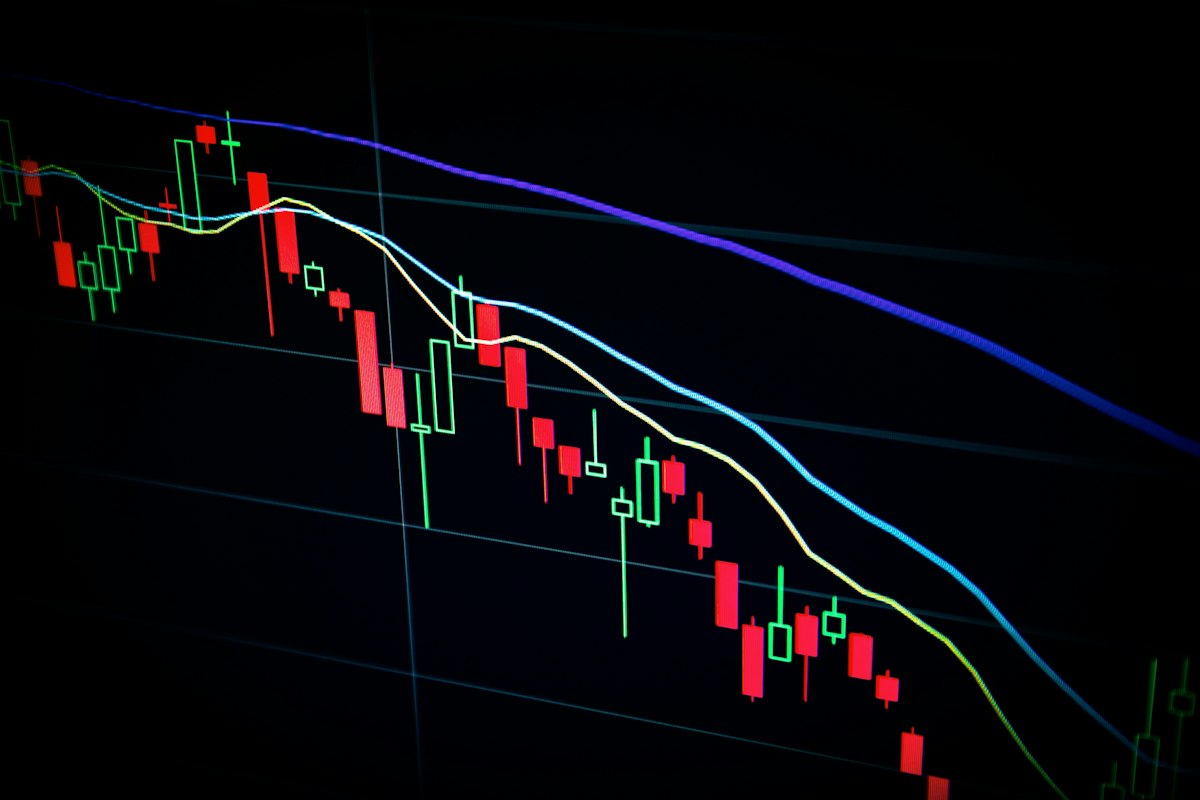
Nvidia's stock has surrendered most of Monday's rally as dip buyers cash in, with retail investors' gains from last week's dip now nearly erased, according to Vanda Research. The pullback highlights growing volatility in the AI trade and raises questions about the sustainability of retail-driven momentum.

Executive Takeaways
- Nvidia shares have given back a significant portion of Monday's rally, with retail investors' gains from last week's dip now nearly erased.
- Vanda Research data shows retail traders bought aggressively on the dip, but the subsequent bounce has faded, leaving many with little profit.
- The pullback underscores the fragility of the AI-driven rally and the influence of retail momentum in Nvidia's stock.
- Analysts remain divided on whether this is a healthy consolidation or a warning sign of broader tech sector weakness.
- Upcoming earnings and AI product announcements will be critical in determining the next leg for Nvidia and the broader market.
Section 1: The Core Event & Breaking Timeline
On Monday, Nvidia (NVDA) staged a powerful rally, surging as much as 5% intraday as dip buyers rushed in following a sharp selloff the previous week. The bounce was widely celebrated by retail investors who had bought aggressively on the dip, hoping to capitalize on the AI chipmaker's long-term growth story. However, by Tuesday's close, the stock had surrendered a large chunk of those gains, leaving many of those same retail traders with little to show for their bravery. According to data from Vanda Research, which tracks retail trading flows, the average retail buyer who purchased Nvidia shares during last week's dip is now sitting on nearly flat returns.
The sequence of events began last week when Nvidia shares tumbled more than 10% from their all-time highs amid a broader tech selloff triggered by concerns over rising interest rates and stretched valuations. Retail investors, undeterred, saw the pullback as a buying opportunity. Vanda Research noted a significant spike in retail purchases of Nvidia during the dip, with net inflows reaching levels not seen since early 2024. That buying helped stabilize the stock and set the stage for Monday's rally. But the rally proved short-lived, as institutional investors and profit-takers capitalized on the bounce to offload shares.
By Wednesday, Nvidia's stock had given back nearly all of Monday's gains, closing just above where it traded before the rally began. The reversal was swift and brutal for those who bought near the top of Monday's move. "Retail investors bought the dip last week, and they got a nice bounce on Monday, but now those gains are largely gone," said Marco Iachini, senior vice president at Vanda Research. "It's a classic case of retail chasing momentum and then getting caught when the momentum fades."
The broader market also felt the impact. The Nasdaq Composite, which had rallied alongside Nvidia on Monday, slipped on Tuesday and Wednesday as the chipmaker's reversal weighed on sentiment. Other AI-related names, including AMD, Super Micro Computer, and Broadcom, also gave back gains. The episode highlights the outsized influence Nvidia has on the market and the delicate balance between retail enthusiasm and institutional selling pressure.
Section 2: Deep Technical & Financial Architecture
Nvidia's stock is notoriously volatile, driven by a combination of fundamental growth prospects, supply chain dynamics, and speculative fervor. At the heart of the story is the company's dominant position in the market for AI accelerators, particularly its Hopper and Blackwell architectures. These GPUs are the workhorses of large language models and generative AI, and demand has outstripped supply for several quarters. Nvidia's data center revenue has exploded, growing more than 400% year-over-year in the most recent quarter, and the company has guided for continued strong growth.
However, the stock's valuation has become a point of contention. Nvidia trades at a forward price-to-earnings ratio of around 35x, which, while below its peak of over 50x in 2023, still represents a premium to the broader semiconductor sector. Bulls argue that the earnings growth justifies the multiple, with consensus estimates projecting earnings per share of $2.50 for fiscal 2025 and $3.50 for fiscal 2026. Bears counter that any slowdown in AI spending could lead to a sharp correction. The recent volatility suggests that investors are increasingly sensitive to any signs of weakening demand.
From a balance sheet perspective, Nvidia remains flush with cash. The company ended its last quarter with over $25 billion in cash and equivalents, giving it ample flexibility for R&D, acquisitions, and buybacks. Its gross margins are among the highest in the industry, hovering around 75%, thanks to its pricing power and software ecosystem (CUDA). However, the company faces rising competition from AMD's MI300 series and custom chips from hyperscalers like Google, Amazon, and Microsoft. These alternatives could erode Nvidia's market share over time, though most analysts believe Nvidia will maintain a dominant position for at least the next two years.
The unit economics of Nvidia's business are staggering. Each H100 GPU sells for around $30,000, and the company's Blackwell platform, which is just beginning to ramp, is expected to command even higher prices. The cost of goods sold is relatively low, leading to those fat margins. But the supply chain is complex, relying on TSMC for manufacturing and advanced packaging (CoWoS), and on memory suppliers like SK Hynix and Micron for HBM. Any disruption in these areas could impact Nvidia's ability to meet demand, which in turn affects revenue and stock price.
Retail investors may not fully appreciate these nuances. Vanda's data shows that retail buying tends to spike when Nvidia's stock drops sharply, often driven by headlines about AI breakthroughs or product announcements. But retail investors are also quick to take profits or cut losses, leading to amplified volatility. The recent episode is a case in point: retail bought the dip, but when the stock failed to hold its gains, many likely sold, contributing to the pullback.
Section 3: Industry & Global Market Ripple Effects
Nvidia's stock movements have far-reaching implications for the entire technology ecosystem. As the largest company by market capitalization at times, its performance can sway the S&P 500 and Nasdaq. When Nvidia sneezes, the market catches a cold. The recent pullback has weighed on other semiconductor stocks, with the Philadelphia Semiconductor Index (SOX) down nearly 3% over the past two days. Companies like AMD, Intel, and TSMC have all seen their shares dip in sympathy.
The AI supply chain is also feeling the effects. Nvidia's partners, including server manufacturers like Dell and Super Micro, and cloud providers like AWS and Azure, are closely watching the chipmaker's fortunes. A sustained decline in Nvidia's stock could signal a broader slowdown in AI infrastructure spending, which would hit these companies' revenues. However, most industry watchers believe the AI buildout is still in its early innings, with hyperscalers committed to spending tens of billions on GPUs and related hardware over the next few years.
Globally, Nvidia's dominance has caught the attention of regulators. The company is facing scrutiny in Europe and China over its market practices, and the U.S. government has imposed export restrictions on advanced AI chips to China, which could impact Nvidia's revenue. These regulatory risks are a overhang on the stock, though Nvidia has so far managed to navigate them by creating China-specific products. The recent volatility may embolden competitors and regulators alike.
Investor sentiment is also being shaped by the broader macroeconomic environment. Rising bond yields and expectations of Federal Reserve rate cuts have created a rotation out of high-growth tech stocks into value sectors. Nvidia, as a quintessential growth stock, is particularly vulnerable to this shift. The recent pullback may be a sign that investors are re-evaluating their exposure to AI-themed stocks, which have driven a significant portion of the market's gains this year.
Section 4: Critical Perspectives, Analyst Debates & Risk Factors
Wall Street is divided on what the recent price action means for Nvidia. Bulls, like Morgan Stanley's Joseph Moore, argue that the pullback is a healthy consolidation and a buying opportunity. They point to Nvidia's dominant market position, its expanding product roadmap, and the secular growth of AI as reasons to remain optimistic. "We see the recent weakness as a chance to add to positions," Moore wrote in a note to clients. "The fundamentals remain strong, and we expect Nvidia to beat and raise when it reports earnings next month."
Bears, on the other hand, see warning signs. They note that Nvidia's stock has been driven largely by multiple expansion rather than earnings growth, and that any hiccup in AI demand could lead to a sharp correction. They also point to the company's high customer concentration, with a significant portion of revenue coming from a handful of hyperscalers. If these customers slow their spending, Nvidia's growth could decelerate rapidly. "The risk-reward is not favorable here," said one hedge fund manager who requested anonymity. "The stock is priced for perfection, and any disappointment will be punished."
Retail investors, meanwhile, are caught in the middle. Many are attracted to Nvidia's story and have made it a core holding. But the recent volatility has tested their resolve. Vanda's data shows that retail investors have been net buyers of Nvidia on balance over the past month, but the pace has slowed. Some may be waiting for clearer signals before committing more capital.
Regulatory risks also loom. The U.S. government's export controls on AI chips to China have forced Nvidia to develop lower-performance variants for that market. If the restrictions tighten further, Nvidia could lose access to a significant revenue stream. Additionally, the company faces antitrust scrutiny in Europe and the U.S. over its CUDA software platform, which competitors allege is anticompetitive. These legal battles could drag on for years and create uncertainty for investors.
Section 5: Strategic Forecast & Road Ahead
Looking ahead, Nvidia's stock will likely remain volatile in the near term. The company is scheduled to report earnings next month, and investors will be scrutinizing every detail for signs of demand strength. Analysts expect revenue of around $28 billion for the quarter, up from $22 billion in the prior quarter. Any deviation from these expectations could trigger a sharp move in the stock. Beyond earnings, Nvidia's annual GTC conference in March will be a key event, where the company is expected to unveil new products and partnerships.
Over the next 12 to 24 months, Nvidia's growth trajectory will depend on several factors: the pace of AI adoption across industries, the competitive landscape, and the company's ability to execute on its roadmap. The Blackwell platform is expected to ramp significantly in the second half of this year, and early indications suggest strong demand. Nvidia is also expanding into new areas like automotive and robotics, which could provide additional growth vectors.
However, investors should be prepared for more ups and downs. The stock's high valuation leaves little room for error, and any macro shock or company-specific disappointment could lead to a sharp selloff. Retail investors, in particular, should be cautious about chasing momentum. As Vanda's Iachini noted, "Retail investors tend to buy high and sell low. It's important to have a long-term perspective and not get caught up in the daily noise."
For those looking to trade Nvidia, key levels to watch include the $800 support level (adjusted for splits) and the $1,000 resistance level. A break below $800 could signal further downside, while a break above $1,000 could reignite the rally. Ultimately, Nvidia's stock will be driven by its fundamentals, and the company remains one of the most important players in the AI revolution. But as the recent episode shows, the path will not be a straight line.



Comments (0)
No comments yet. Be the first to share your thoughts!
Leave a Comment