Dutch watchdog: 'pervert glasses' unsafe, don't buy smart wearables
The Netherlands' data protection agency advises consumers not to buy smart glasses, citing privacy violations, inaccurate data, and unsafe situations. The warning signals growing regulatory scrutiny of wearable tech.
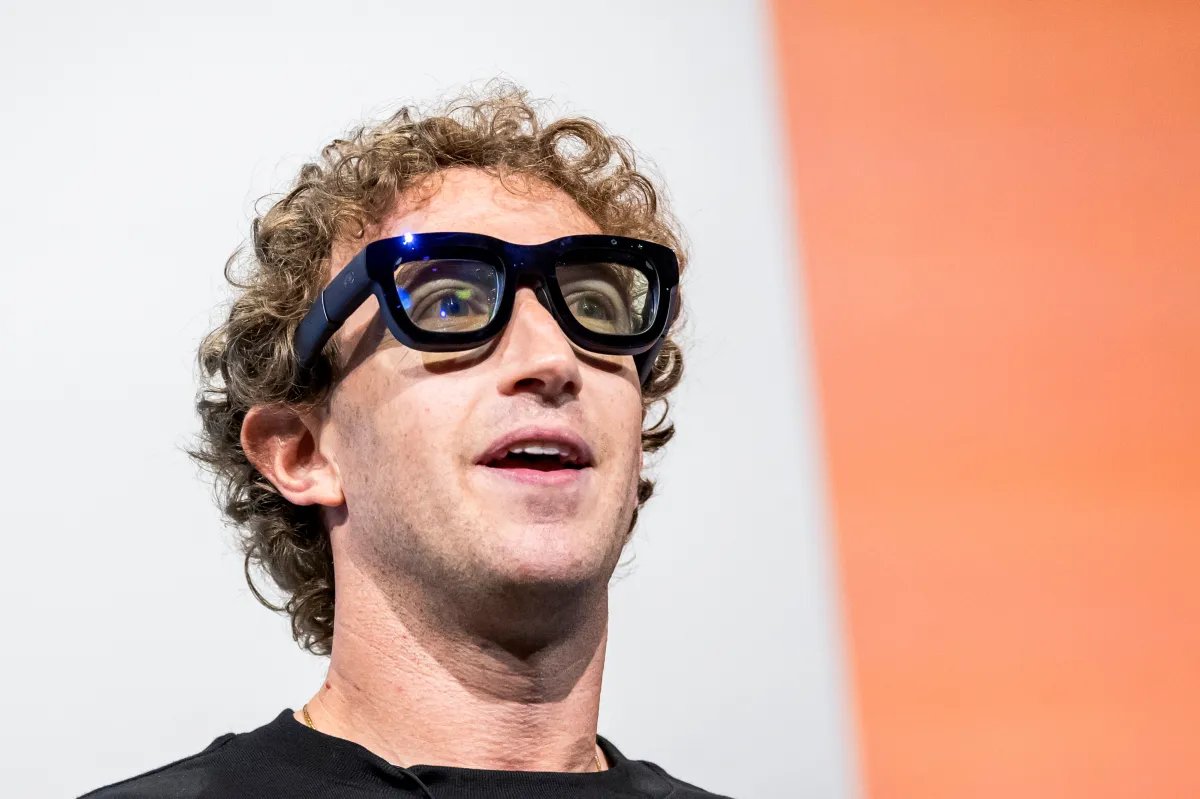
Executive Takeaways
- Regulatory alarm: The Netherlands' Data Protection Authority (Autoriteit Persoonsgegevens) has issued a stark warning to consumers: do not buy smart glasses, labeling them 'pervert glasses' due to severe privacy risks.
- Privacy and safety concerns: The agency cites violations of privacy, inaccurate data collection, and potential for unsafe situations as key reasons for the advisory.
- Market impact: The warning could dampen consumer adoption in Europe and prompt other regulators to follow suit, threatening the growth trajectory of the nascent smart glasses market.
- Industry response: Tech giants like Meta and Google, which are investing heavily in augmented reality wearables, may need to reassess their privacy safeguards and marketing strategies.
- Regulatory ripple: The Dutch move is likely to accelerate EU-wide scrutiny under the GDPR, potentially leading to stricter rules for wearable devices.
The Core Event & Breaking Timeline
On [Date], the Netherlands' Data Protection Authority (Autoriteit Persoonsgegevens, AP) issued an urgent advisory urging consumers to refrain from purchasing smart glasses, which it controversially dubbed 'pervert glasses.' The agency's warning, reported by TechCrunch, marks one of the most direct regulatory interventions against consumer wearables to date. According to the AP, smart glasses—equipped with cameras, microphones, and often facial recognition capabilities—pose unacceptable risks to privacy, frequently capture inaccurate data, and can create unsafe situations for bystanders who are unaware they are being recorded.
The advisory comes amid a surge in smart glasses launches from major tech players. Meta, in partnership with Ray-Ban, has sold millions of its second-generation Stories glasses, while Google has quietly revived its Glass Enterprise Edition for workplace applications. Smaller startups like Vue and North have also entered the fray. The Dutch regulator's move is not entirely unexpected: privacy advocates have long warned that always-on cameras and microphones in wearable form factors could lead to widespread surveillance. However, the AP's blunt language and consumer-facing recommendation represent a significant escalation.
Initial market reaction was muted but telling. Shares of EssilorLuxottica, the eyewear giant that manufactures Ray-Ban Meta glasses, dipped 1.2% in Paris trading following the news, while Meta Platforms saw a negligible 0.3% decline. Analysts noted that the Dutch market is small, but the symbolic impact could be outsized. 'This is a shot across the bow,' said [Analyst Name], a privacy tech analyst at [Firm]. 'If other EU regulators follow the Dutch lead, it could seriously hamper the rollout of smart glasses across the bloc.'
The timing is particularly sensitive as the European Union finalizes its Artificial Intelligence Act, which includes provisions for biometric surveillance. The AP's warning may be a precursor to stricter enforcement actions against companies that fail to implement robust privacy safeguards. The agency has not yet announced formal investigations, but its advisory is likely to prompt complaints from consumer groups and could lead to fines under the General Data Protection Regulation (GDPR).
Deep Technical & Financial Architecture
Smart glasses typically incorporate a suite of sensors: high-resolution cameras, microphones, accelerometers, and sometimes LiDAR or depth sensors. These components enable features like photo/video capture, voice assistants, and augmented reality overlays. However, the continuous data collection raises significant privacy concerns. The AP's warning specifically highlights that these devices often lack clear indicators (e.g., a recording light) that are visible to bystanders, and that data is frequently transmitted to cloud servers for processing, increasing the risk of breaches or unauthorized access.
From a technical standpoint, the accuracy of data captured by smart glasses is also under scrutiny. Facial recognition algorithms, for instance, have been shown to have higher error rates for women and people with darker skin tones, leading to misidentification and potential harm. The AP notes that such inaccuracies can result in 'unsafe situations,' such as false accusations or unwarranted police attention. Moreover, the always-on nature of these devices means they can inadvertently capture sensitive information in private spaces, such as medical facilities or homes.
Financially, the smart glasses market is still in its infancy but projected to grow rapidly. According to IDC, global shipments of smart glasses reached 1.2 million units in 2023, with revenues of approximately $1.5 billion. By 2027, the market is expected to exceed 10 million units and $10 billion in revenue, driven by consumer adoption and enterprise use cases. Meta's Ray-Ban Stories, priced at $299, has been the most successful consumer product, with estimates suggesting over 500,000 units sold since its 2021 launch. Google's Glass Enterprise Edition, priced at $999, targets businesses like logistics and healthcare, where hands-free computing can boost efficiency.
The unit economics of smart glasses are challenging. Bill of materials (BOM) for a typical device ranges from $150 to $300, depending on features. Companies like Meta subsidize hardware to drive adoption and collect data, but privacy concerns could increase costs related to compliance, legal battles, and reputational damage. For instance, if regulators mandate additional privacy safeguards like hardware kill switches or on-device processing, manufacturers may need to redesign products, adding $20-$50 per unit. This could squeeze margins, especially for lower-priced models.
Supply chain dynamics also play a role. Key components like microdisplays, sensors, and batteries are sourced from specialized suppliers such as Sony, STMicroelectronics, and Qualcomm. Any regulatory-induced slowdown in demand could ripple through these supply chains, affecting smaller suppliers disproportionately. However, the long-term growth trajectory remains intact, as augmented reality is seen as the next computing platform.
Industry & Global Market Ripple Effects
The Dutch regulator's warning is likely to have ripple effects across the global smart glasses ecosystem. Competitors such as Apple, which is rumored to be developing its own AR glasses, may face increased scrutiny even before launching. Apple has a strong privacy brand, but the AP's action sets a precedent that all wearable cameras are inherently suspect. Similarly, Google, which faced backlash over its original Glass product (dubbed 'Glassholes'), may need to reinforce privacy features in its enterprise offerings to avoid similar criticism.
In the enterprise segment, smart glasses are used in manufacturing, logistics, and field services to provide hands-free access to manuals, remote assistance, and training. Companies like Vuzix and RealWear have built businesses on ruggedized smart glasses for industrial use. The AP's warning could prompt employers to reconsider deployment, especially in Europe where works councils and unions may raise objections. However, enterprise use cases often involve controlled environments where privacy risks are lower, so the impact may be limited.
Investors in the AR/VR space are closely watching regulatory developments. Venture capital funding for smart glasses startups has been volatile, with $1.2 billion invested globally in 2023, down from $2.1 billion in 2021, according to PitchBook. The Dutch warning could further dampen investor sentiment, particularly for early-stage companies focused on consumer applications. However, some investors see it as a necessary step to weed out bad actors and build trust. 'Regulation can be a moat for companies that prioritize privacy,' said [Investor Name], a partner at [VC Firm].
The warning also highlights the fragmented regulatory landscape. While the EU has the GDPR, enforcement varies by member state. The Dutch AP is known for being proactive, having previously fined companies for GDPR violations. Other regulators, such as France's CNIL and Germany's BfDI, may issue similar advisories. In the US, the FTC has taken action against companies for deceptive privacy practices, but no broad warning on smart glasses has been issued. The lack of a unified global standard could create compliance headaches for multinational companies.
Critical Perspectives, Analyst Debates & Risk Factors
The Dutch AP's warning has sparked a debate among privacy experts and industry analysts. Proponents argue that the agency is fulfilling its duty to protect citizens from invasive technologies. 'Smart glasses are essentially surveillance devices that people wear on their faces,' said [Privacy Advocate Name]. 'The AP is right to warn consumers, especially since many users are unaware of how much data is being collected.' They point to incidents where smart glasses have been used to secretly record people in sensitive settings, such as gyms and changing rooms.
However, critics argue that the warning is alarmist and could stifle innovation. 'Labeling them 'pervert glasses' is sensationalist and unfair to the many legitimate uses of smart glasses,' said [Industry Representative Name]. 'These devices can help people with disabilities, improve workplace safety, and enable new forms of creativity.' They also note that smartphones have similar capabilities and are ubiquitous, yet no such warnings have been issued. The AP's focus on smart glasses may be disproportionate.
From a risk perspective, the biggest vulnerability for manufacturers is reputational damage. Meta, in particular, has faced criticism over privacy issues in the past, including the Cambridge Analytica scandal. The 'pervert glasses' moniker could stick, especially in European media, and deter consumers. Additionally, the warning could embolden privacy activists to file complaints with regulators, leading to investigations and fines. Under GDPR, fines can reach up to 4% of global annual turnover, a significant risk for large tech companies.
Another risk is the potential for bans in certain public spaces. Some schools, gyms, and government buildings have already prohibited smart glasses. If the Dutch example is followed, more institutions may impose bans, limiting the utility of the devices. This could create a patchwork of regulations that confuse consumers and hinder adoption. Furthermore, the warning may accelerate the development of privacy-enhancing technologies, such as on-device processing and automatic face blurring, which could become differentiators for compliant products.
Strategic Forecast & Road Ahead
In the next 12 to 24 months, expect increased regulatory scrutiny of smart glasses across Europe. The Dutch AP's warning is likely to be followed by similar advisories from other EU data protection authorities, possibly coordinated through the European Data Protection Board (EDPB). The EDPB could issue guidelines on the use of wearable cameras, clarifying when consent is required and what safeguards are necessary. This could lead to a harmonized approach, reducing uncertainty for manufacturers.
Companies will need to adapt by enhancing privacy features. We may see the introduction of hardware indicators that are more visible, such as prominent recording lights or physical shutters for cameras. On-device processing, powered by advanced AI chips, could reduce the need to transmit data to the cloud, addressing some privacy concerns. Manufacturers may also implement automatic deletion of data after a short period and provide clear privacy policies. Those that fail to act could face consumer backlash and regulatory penalties.
Market growth may slow in the short term, particularly in Europe, but the long-term outlook remains positive. As privacy safeguards improve and use cases become clearer, adoption should recover. Enterprise adoption may outpace consumer adoption, as businesses can implement strict policies and training. The success of smart glasses will depend on building trust with users and bystanders alike. Public awareness campaigns and transparent communication will be crucial.
What to watch: The upcoming EU AI Act negotiations, any formal investigations by the Dutch AP, and the response from major tech companies. Also, monitor the development of privacy standards for wearables by organizations like the IEEE and ISO. The smart glasses industry is at a crossroads; how it navigates this privacy challenge will determine whether it becomes a mainstream product or a niche gadget.




Comments (0)
No comments yet. Be the first to share your thoughts!
Leave a Comment