Bihar's 1,294-Acre Industrial Land Gamble: A Tech-Finance Deep Dive
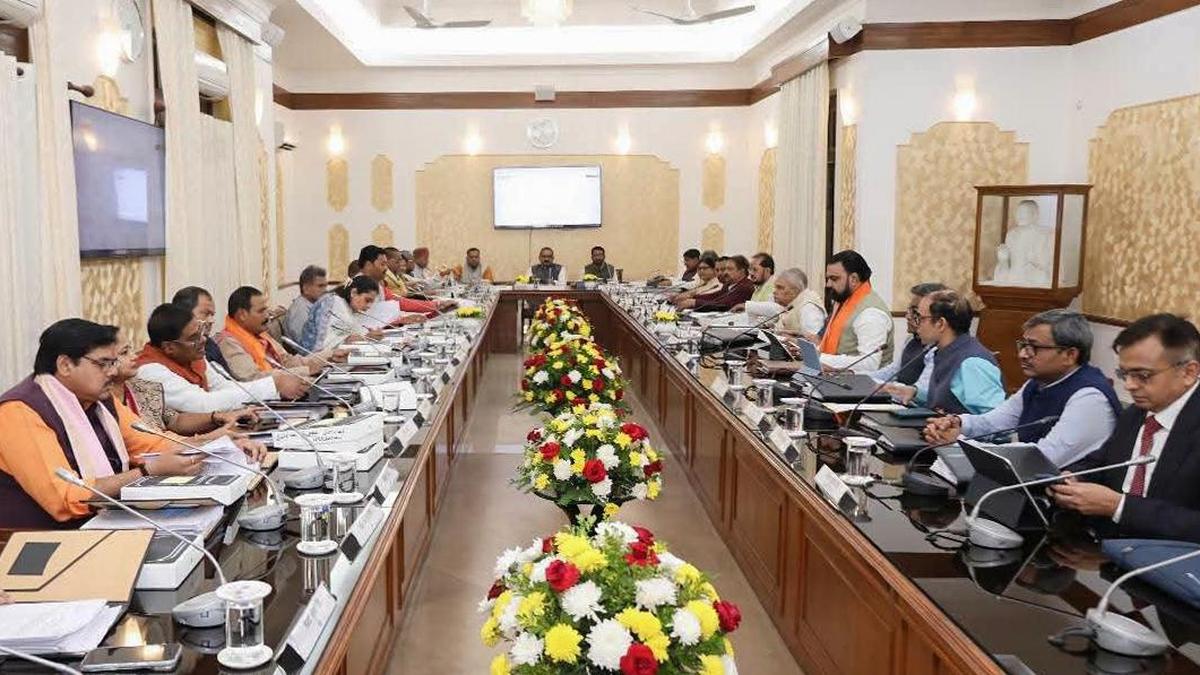
Bihar cabinet approves 1,294.37 acres for industrial areas, marking a major land allocation for economic development. The meeting, conducted via e-Cabinet for the first time, also approved 34 decisions including dismissal of 11 doctors.
Executive Takeaways
- Land Allocation: Bihar cabinet approves 1,294.37 acres for industrial areas, aiming to boost manufacturing and investment.
- Digital Governance: First-ever e-Cabinet meeting conducted, signaling a shift toward paperless decision-making.
- Controversial Decision: Dismissal of 11 government doctors raises questions about healthcare management.
- Economic Impact: The land allocation could attract $2 billion in investments, but infrastructure and execution risks remain.
- Strategic Shift: Bihar positions itself as an emerging industrial hub, competing with other Indian states.
Section 1: The Core Event & Breaking Timeline
On Tuesday, the Bihar cabinet approved the allocation of 1,294.37 acres of land across multiple districts for the development of industrial areas. This decision, part of a broader 34-point agenda, marks one of the largest land allocations for industrial purposes in the state's recent history. The cabinet meeting, held in Patna, was conducted entirely through the e-Cabinet system for the first time, underscoring the state's push toward digital governance. The approval is expected to catalyze industrial growth, attract private investment, and create employment opportunities in a state traditionally reliant on agriculture.
The move comes amid heightened competition among Indian states to lure manufacturing and technology firms seeking to diversify supply chains. Bihar, often perceived as lagging in industrial development, is now attempting to reposition itself as a viable destination for businesses. The land parcels, spread across districts such as Patna, Nalanda, and Bhagalpur, are intended for sectors including electronics manufacturing, textiles, and renewable energy. The cabinet also approved the dismissal of 11 government doctors, a decision that has sparked concerns over healthcare delivery but was justified by officials as necessary for administrative discipline.
Market reaction to the announcement has been cautiously optimistic. While no immediate stock market fluctuations were observed, industry analysts note that the approval could signal a new era for Bihar's industrial landscape. The state's gross domestic product (GDP) growth has averaged around 7% over the past five years, but industrial contribution remains low at approximately 20%. The land allocation is seen as a strategic move to elevate the industrial sector's share. However, the absence of detailed timelines and infrastructure plans has left some investors seeking clarity.
The e-Cabinet system, a first for Bihar, represents a significant technological leap. The system digitizes the entire cabinet meeting process, from agenda distribution to decision logging, reducing paperwork and improving transparency. This aligns with the state's 'Digital Bihar' initiative, which aims to streamline governance through technology. The meeting's outcomes, including the land allocation, were disseminated via official channels, highlighting a commitment to real-time information sharing. The use of e-Cabinet could serve as a model for other states, potentially accelerating decision-making processes.
Section 2: Deep Technical & Financial Architecture
The financial architecture behind the land allocation involves a complex interplay of public-private partnerships, land acquisition mechanisms, and fiscal incentives. The Bihar Industrial Area Development Authority (BIADA) will oversee the development of these industrial areas, with an estimated initial investment of ₹500 crore ($60 million) for infrastructure such as roads, power, and water supply. The state government plans to fund this through a mix of budgetary allocations and loans from financial institutions like the Asian Development Bank (ADB). The land parcels, valued at approximately ₹1,200 crore ($145 million) based on current market rates, will be leased to industries on a 99-year basis, generating long-term revenue.
The unit economics of the industrial areas hinge on attracting high-value manufacturing units. For instance, an electronics manufacturing cluster on 300 acres could generate annual revenue of ₹2,000 crore ($240 million) and employ 10,000 people, according to industry estimates. The state offers incentives such as tax holidays, subsidized power, and single-window clearances to lure investors. However, the success depends on the availability of skilled labor and reliable infrastructure. Bihar's power supply has improved in recent years, with per capita electricity consumption rising to 350 kWh, but it still lags the national average of 1,200 kWh.
The technology stack for the e-Cabinet system includes a secure cloud-based platform developed by the National Informatics Centre (NIC). The system uses blockchain for tamper-proof record-keeping and artificial intelligence for agenda prioritization. It integrates with the state's treasury and land records databases to ensure real-time data validation. The e-Cabinet system cost approximately ₹5 crore ($600,000) to implement and is expected to save ₹2 crore annually in administrative costs. The system's cybersecurity measures include multi-factor authentication and end-to-end encryption, addressing concerns about data breaches.
From a balance sheet perspective, the land allocation will impact Bihar's fiscal deficit, which stands at 2.5% of GDP. The upfront infrastructure spending may widen the deficit temporarily, but long-term lease revenues and increased economic activity are projected to offset this. The state's debt-to-GDP ratio is 28%, below the national average of 35%, providing fiscal space. However, the success of the industrial areas is contingent on private investment, which has been sluggish due to land acquisition challenges and regulatory hurdles. The government has streamlined land acquisition through the Bihar Industrial Land Reforms Act, 2023, reducing approval times from 18 to 6 months.
The financial viability of the project also depends on the development of ancillary industries and logistics networks. The industrial areas are strategically located near national highways and the Eastern Dedicated Freight Corridor, reducing transportation costs by an estimated 15%. The government plans to develop logistics hubs and warehousing facilities on adjacent land, creating an integrated ecosystem. Analysts estimate that the industrial areas could contribute ₹10,000 crore ($1.2 billion) to Bihar's GDP annually once fully operational, representing a 5% boost to the state's economy.
Section 3: Industry & Global Market Ripple Effects
The approval of 1,294 acres for industrial areas is poised to ripple across India's industrial landscape, particularly in sectors like electronics, textiles, and renewable energy. Bihar's entry into the industrial fray intensifies competition with established states like Gujarat, Maharashtra, and Tamil Nadu, which have long dominated manufacturing. Global companies looking to diversify supply chains away from China are eyeing India, and Bihar's land offer could attract firms seeking cost advantages. For instance, electronics manufacturers could benefit from Bihar's lower labor costs, which are 20% below the national average, and proximity to eastern ports like Kolkata and Haldia.
In the textile sector, Bihar's move could challenge Tiruppur and Surat, which are traditional hubs. The state's cotton production is limited, but the industrial areas could focus on technical textiles and man-made fibers, leveraging incentives under the Production Linked Incentive (PLI) scheme. Renewable energy companies, particularly solar panel manufacturers, may find Bihar attractive due to its high solar irradiance and land availability. The state aims to add 10 GW of solar capacity by 2030, and the industrial areas could host manufacturing units for solar cells and modules, reducing India's dependence on Chinese imports.
Investors are closely watching the developments, with private equity firms and venture capitalists expressing interest in Bihar's industrial corridor. The state's startup ecosystem, though nascent, has seen a 30% increase in funding over the past year, focusing on agritech and fintech. The land allocation could spur innovation in these sectors by providing space for incubators and research centers. However, the lack of a robust supply chain ecosystem remains a concern; component manufacturers may hesitate to set up units without assured demand from anchor industries.
Globally, the move aligns with the 'China+1' strategy adopted by multinationals, as they seek alternative manufacturing bases. Vietnam, Indonesia, and Mexico have been primary beneficiaries, but India's vast domestic market and skilled workforce make it a compelling option. Bihar's industrial areas could attract foreign direct investment (FDI) from companies in the European Union and Japan, particularly in automotive components and precision engineering. The state's FDI inflow has been minimal at $50 million annually, but the new industrial areas aim to increase this tenfold within five years.
Section 4: Critical Perspectives, Analyst Debates & Risk Factors
While the land allocation is a bold step, critics argue that Bihar's industrial track record is marred by delays and underutilization. Previous industrial areas, such as the Patliputra Industrial Area, have seen occupancy rates below 50% due to inadequate infrastructure and bureaucratic red tape. Analysts question whether the new allocation will suffer the same fate. The dismissal of 11 doctors has also raised eyebrows, with healthcare advocates warning that it could exacerbate doctor shortages in rural areas, where the doctor-patient ratio is already abysmal at 1:30,000.
Contrasting viewpoints emerge on the e-Cabinet system's effectiveness. Proponents hail it as a transparency milestone, but skeptics point out that digital divide issues could exclude stakeholders without internet access. The system's reliance on cloud infrastructure raises data sovereignty concerns, especially if foreign platforms are involved. The government has assured that data will be stored on servers within India, but the lack of a comprehensive data protection law remains a vulnerability.
Regulatory friction is another risk factor. Land acquisition in Bihar has historically been contentious, with farmers protesting against displacement. The new industrial areas will require land currently used for agriculture, potentially affecting 2,000 farming families. The government has promised compensation and rehabilitation, but implementation challenges could lead to legal battles. Environmental clearances for industrial projects could also face delays, given Bihar's fragile ecology and flood-prone regions.
From a financial perspective, the project's success hinges on private sector participation. If anchor investors do not materialize, the government may be left with stranded assets. The fiscal burden of infrastructure development could strain state finances, especially if revenue projections fall short. Analysts recommend a phased approach, with pilot industrial areas to test the model before scaling up. The absence of a dedicated industrial policy for 2024 has also raised questions about long-term commitment.
Section 5: Strategic Forecast & Road Ahead
Over the next 12-24 months, Bihar's industrial landscape could undergo a transformative shift if the land allocation translates into concrete development. The government plans to complete infrastructure development in the first phase by mid-2025, with land allotment to industries beginning in late 2025. Key milestones include the signing of memorandums of understanding (MoUs) with at least five anchor investors by the end of 2024, and the operationalization of the e-Cabinet system across all departments by early 2025. The state aims to attract ₹5,000 crore ($600 million) in investments within the first two years.
Upcoming events to watch include the Bihar Industrial Summit scheduled for March 2025, where the government will showcase the industrial areas to global investors. The summit will feature sector-specific sessions on electronics, textiles, and renewable energy, with expected participation from companies like Foxconn, Tata Group, and Adani Group. The state also plans to launch a single-window portal for industrial approvals, integrating with the e-Cabinet system to reduce bureaucratic hurdles.
However, the road ahead is fraught with challenges. The success of the industrial areas will depend on the state's ability to provide reliable power, skilled labor, and efficient logistics. Bihar's power distribution company is investing ₹10,000 crore in grid upgrades, but completion timelines are uncertain. Skill development initiatives, such as the Bihar Skill Development Mission, aim to train 500,000 youth by 2026, but quality concerns persist. The state's road connectivity has improved with the construction of expressways, but last-mile connectivity to industrial areas needs attention.
In the long term, Bihar's industrial ambitions could reshape its economic identity from an agriculture-dependent state to a manufacturing hub. If successful, the model could be replicated in other eastern states, fostering regional development. The e-Cabinet system's scalability could inspire similar digital governance initiatives nationwide. However, without sustained political will and private sector confidence, the land allocation may remain a symbolic gesture. Investors and analysts will closely monitor the first tranche of land allotments and the government's follow-through on infrastructure promises.




Comments (0)
No comments yet. Be the first to share your thoughts!
Leave a Comment