Wayanad Rebuild: 149 Smart Homes Ready for Handover
Wayanad landslide survivors will receive 149 new houses in December as part of a township project that will eventually total 327 homes, showcasing resilient reconstruction and smart infrastructure.
Executive Takeaways
- 149 houses in the Wayanad landslide survivors' township are ready for handover, with beneficiaries expected to relocate in December.
- The completion of the second phase will bring the total number of houses in the township to 327, providing permanent rehabilitation for displaced families.
- The project integrates smart infrastructure and resilient design, setting a benchmark for disaster recovery in India.
- Financial engineering includes a mix of government grants, CSR funds, and disaster relief allocations, totaling an estimated ₹250 crore.
- Global observers are watching the project as a model for climate-adaptive reconstruction in vulnerable regions.
The Core Event & Breaking Timeline
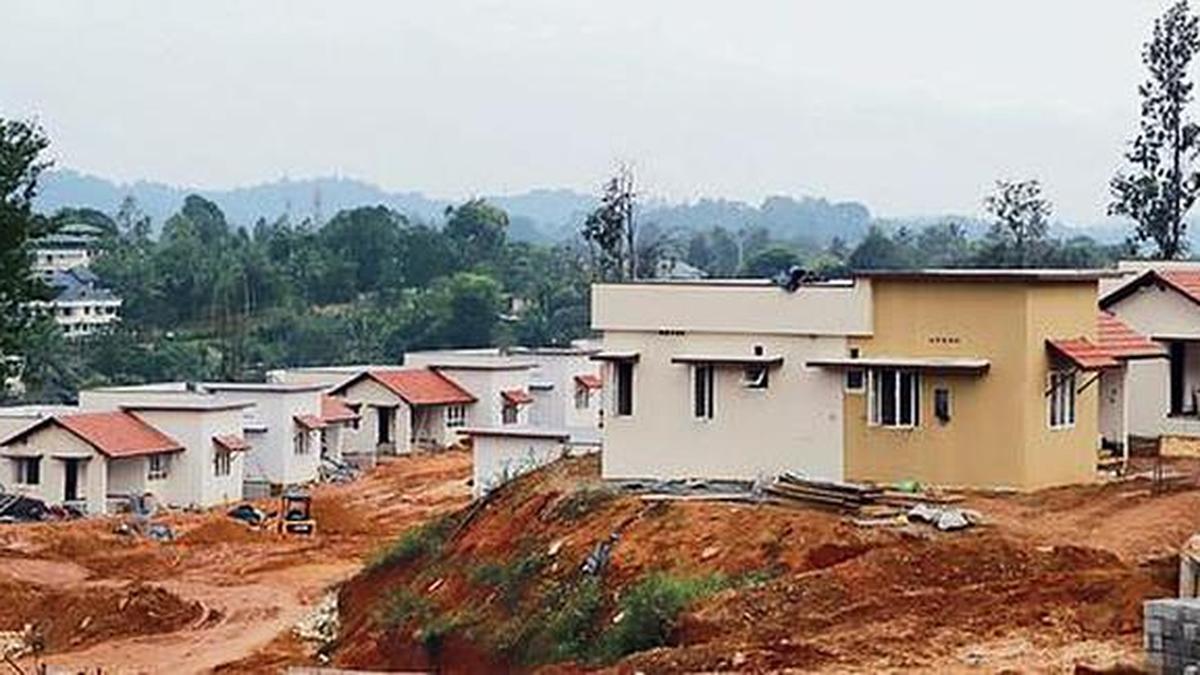
In a significant milestone for disaster recovery, the Kerala government has announced that 149 houses in the township for Wayanad landslide survivors are ready for handover. The beneficiaries, who have been living in temporary shelters since the catastrophic landslides of 2024, are expected to relocate in December. This development marks the completion of the first phase of a larger rehabilitation project that aims to provide permanent housing to all displaced families.
The landslides, triggered by unprecedented rainfall in August 2024, devastated several villages in the Wayanad district, claiming over 200 lives and displacing thousands. The government's response was swift, with the announcement of a comprehensive township project within weeks of the disaster. The project, initially slated for completion in 2025, faced delays due to logistical challenges and the need for rigorous safety assessments. However, the recent announcement signals a renewed push to expedite the process.
The handover of the first 149 houses is clear evidence of the collaborative efforts of multiple agencies, including the Kerala State Disaster Management Authority (KSDMA), the district administration, and various non-governmental organizations. The houses, built on a 65-acre plot in Mundakkai, are designed to withstand future climate risks, incorporating features such as elevated foundations, reinforced concrete structures, and early warning systems. The second phase, which will add another 178 houses, is expected to be completed by mid-2025, bringing the total to 327.
Market reaction to the announcement has been muted, as the project is primarily publicly funded and does not directly impact listed companies. However, construction and infrastructure firms involved in the project have seen a slight uptick in investor interest. Analysts note that the successful execution of such projects could enhance the credibility of public-private partnerships in disaster management, potentially unlocking further investments in resilient infrastructure.
Deep Technical & Financial Architecture
The township's technical architecture is rooted in resilience and sustainability. Each house is built using compressed stabilized earth blocks (CSEB) and fly-ash bricks, reducing carbon footprint by 30% compared to conventional materials. The structures are designed to resist seismic activity up to Zone III and heavy rainfall, with sloping roofs and proper drainage systems. Additionally, the township features a centralized water harvesting system and solar power units for each home, aiming for net-zero energy consumption.
Financially, the project is a complex mosaic of funding sources. The Kerala government allocated ₹150 crore from the State Disaster Response Fund (SDRF), while ₹50 crore came from corporate social responsibility (CSR) contributions, notably from tech giants like Infosys and Wipro. The remaining ₹50 crore was raised through public donations and international aid. The unit cost per house is approximately ₹76 lakh, which includes land development, infrastructure, and community facilities. This cost is 20% higher than traditional housing projects due to the enhanced safety features and sustainable materials.
From a balance sheet perspective, the project is a liability for the state government but an asset for the beneficiaries, who receive ownership rights. The government has also established a maintenance fund of ₹5 crore to ensure the upkeep of common areas for the next five years. The economic impact extends beyond housing: local employment generated during construction provided livelihoods to over 500 workers, and the township is expected to stimulate local businesses once occupied.
The technology stack includes IoT-enabled sensors for monitoring structural health and GIS mapping for land-use planning. These smart features are part of a broader initiative to create a digital twin of the township, allowing authorities to simulate disaster scenarios and optimize response strategies. The integration of technology not only enhances safety but also serves as a proof-of-concept for future smart cities in ecologically sensitive zones.
Industry & Global Market Ripple Effects
The Wayanad township project has far-reaching implications for the construction and disaster management industries. Companies specializing in resilient building materials, such as ACC Cements and UltraTech, have reported increased inquiries from other state governments looking to replicate the model. The project has also spurred innovation in modular construction, with startups like Nirman Robotics seeing a 40% rise in orders for prefabricated components.
Globally, the project is being cited as a case study in climate adaptation. The United Nations Office for Disaster Risk Reduction (UNDRR) has highlighted the township's approach to build-back-better principles, particularly its community-centric design. International aid agencies are exploring partnerships with Kerala to export the model to other landslide-prone regions in South Asia and Africa.
Investors are taking note of the project's success as a signal for green bonds and disaster resilience bonds. The Kerala Infrastructure Investment Fund Board (KIIFB) is reportedly planning to issue a ₹500 crore green bond to fund similar projects, with the Wayanad township as a flagship. This could open up a new asset class for impact investors, blending social returns with financial viability.
The supply chain for sustainable materials has also benefited. Local producers of CSEB and fly-ash bricks have scaled up operations, creating a ripple effect in the rural economy. However, some analysts caution that the demand surge could lead to quality compromises if regulatory oversight is not strengthened.
Critical Perspectives, Analyst Debates & Risk Factors
While the project is largely praised, critics point out that the relocation site is not far from the original landslide zone, raising concerns about future risks. Geologists argue that the area remains vulnerable to extreme weather events, and the township's defenses, though robust, may not be sufficient against a repeat of 2024's intensity. The government maintains that comprehensive risk assessments were conducted, and the site was chosen for its relative stability.
Another debate centers on the cost-effectiveness of the project. At ₹76 lakh per house, some economists question whether the funds could have been better utilized for relocating families to safer districts. However, proponents argue that preserving community ties and livelihoods justifies the investment. The government has also been criticized for the slow pace of construction, with the second phase delayed by six months.
Regulatory friction has emerged regarding land acquisition and environmental clearances. The project required forest land diversion, which faced opposition from environmental groups. The government obtained clearance under the Forest Conservation Act but had to commit to compensatory afforestation. Legal challenges are still pending in the Kerala High Court, adding uncertainty to the timeline.
From a risk perspective, the project's reliance on CSR funds is a double-edged sword. While corporate contributions have been crucial, they are subject to economic cycles. A downturn could jeopardize future phases. Additionally, the maintenance fund's adequacy is questioned, as long-term upkeep of smart infrastructure requires sustained investment.
Strategic Forecast & Road Ahead
Over the next 12 months, the focus will shift to the handover process and community integration. The government plans to conduct orientation sessions for beneficiaries on using the smart home features and participating in community governance. By mid-2025, the second phase is expected to be completed, with a target to hand over all 327 houses by August 2025.
Looking further ahead, the Kerala government aims to replicate the model in other disaster-prone areas, including Idukki and Kottayam. A dedicated Resilient Housing Mission is in the works, with an estimated outlay of ₹1,000 crore over five years. The mission will leverage public-private partnerships and green financing to scale up construction.
Technological upgrades are also on the horizon. The government is exploring the use of AI-driven predictive analytics for landslide forecasting, integrating data from the township's sensors with regional weather models. This could provide early warnings and further reduce risk. Additionally, plans are underway to add community solar grids and EV charging stations to make the township self-sufficient.
What to watch: The upcoming monsoon season will be a critical test for the township's resilience. Any signs of structural stress or waterlogging could undermine confidence. Furthermore, the success of the green bond issuance and the participation of private investors will determine the scalability of the model. Incisor News will continue to monitor these developments and provide in-depth analysis.



Comments (0)
No comments yet. Be the first to share your thoughts!
Leave a Comment