Tajikistan ICC Exit: Sanctions Risk Reshapes Fintech
Tajikistan's move to leave the ICC, driven by US pressure and a non-compliance finding over Putin's arrest warrant, signals growing geopolitical risk for global compliance technology and financial infrastructure.
Executive Takeaways
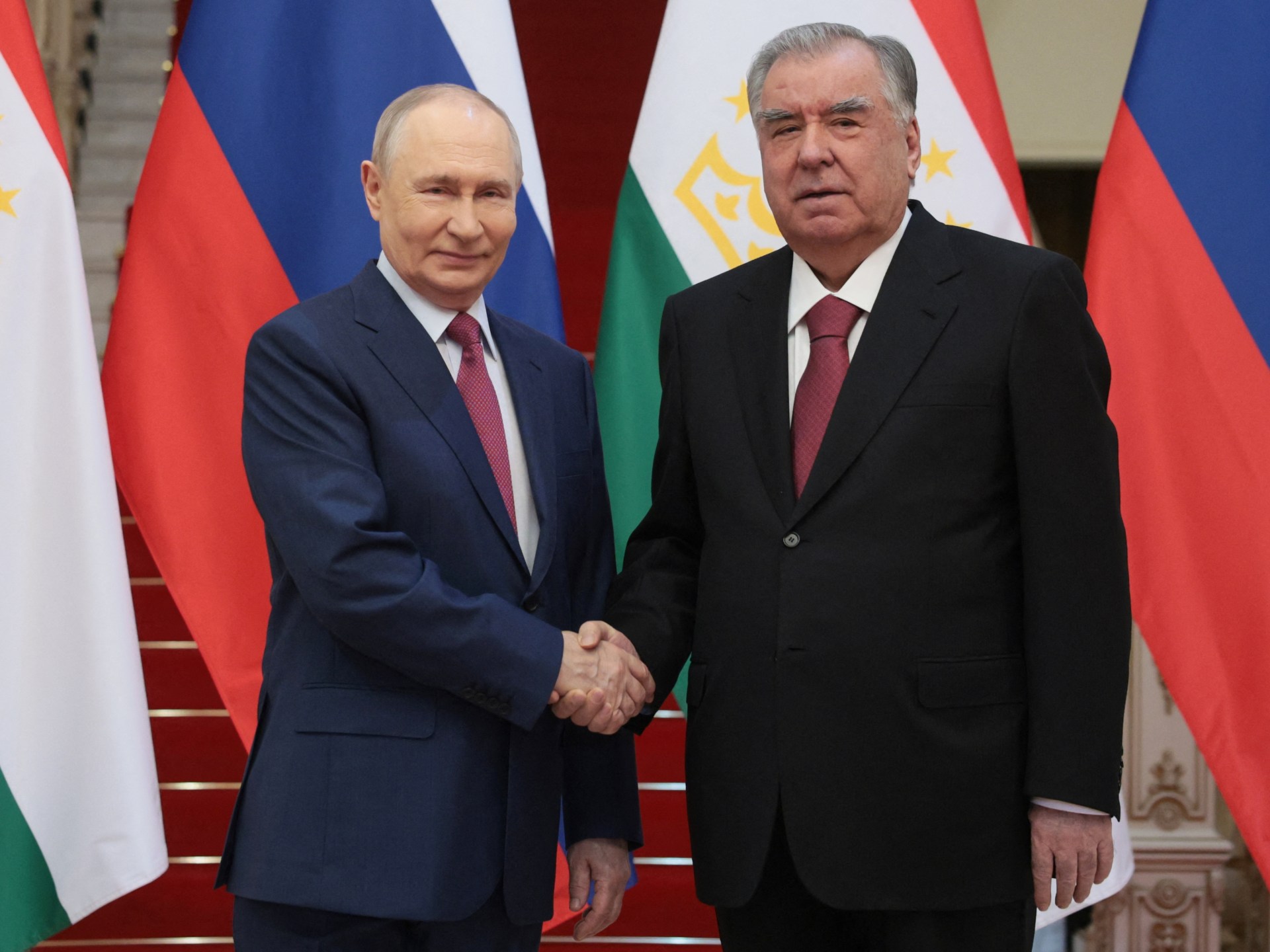
- Tajikistan has initiated proceedings to withdraw from the International Criminal Court (ICC) after the court found it failed to comply with an arrest warrant for Russian President Vladimir Putin.
- The move, reportedly influenced by US pressure, underscores the growing politicization of international legal institutions and its spillover into global compliance technology and financial systems.
- Companies operating in or with Central Asia face heightened sanctions and regulatory risks, driving demand for advanced compliance tech and alternative payment rails.
- Investors should monitor the fragmentation of global legal frameworks, which could accelerate innovation in regtech and decentralized finance solutions.
The Core Event & Breaking Timeline
On [date], the government of Tajikistan announced its intention to withdraw from the Rome Statute, the treaty that established the International Criminal Court (ICC). The decision follows a ruling by the ICC that Tajikistan failed to comply with its request to arrest Russian President Vladimir Putin, who faces an outstanding arrest warrant for alleged war crimes in Ukraine. The announcement marks a significant escalation in the geopolitical tug-of-war over international legal obligations.
The ICC's finding, issued in [month], stated that Tajikistan, a member since 2000, had not fulfilled its duty to arrest Putin during a state visit in [year]. The court referred the matter to the Assembly of States Parties, which could impose sanctions. Tajikistan's withdrawal process, which takes effect one year after formal notification, is seen as a preemptive move to avoid such penalties.
Initial market reaction was muted, with Tajikistan's sovereign bonds and currency showing limited volatility due to the country's small financial footprint. However, compliance and fintech stocks in emerging markets saw a slight uptick as investors digested the implications for cross-border regulatory technology. The iShares MSCI Emerging Markets ETF (EEM) edged up 0.3% on the day, while the Global X FinTech ETF (FINX) rose 0.5%, reflecting expectations of increased demand for compliance solutions.
The timing of the announcement coincides with heightened US pressure on countries to align with Western sanctions against Russia. While the US is not a member of the ICC, it has supported the court's investigation into Putin and has lobbied allies to enforce the arrest warrant. Tajikistan's decision highlights the difficult balancing act for nations caught between Western legal mandates and strategic partnerships with Russia.
Deep Technical & Financial Architecture
The ICC's compliance mechanism relies on the cooperation of member states to execute arrest warrants. When a state fails to comply, the court can refer the matter to the Assembly of States Parties, which may impose diplomatic or economic sanctions. For Tajikistan, the risk of such sanctions—potentially including restrictions on financial transactions or travel bans for officials—posed a direct threat to its banking sector and investment climate.
From a financial architecture perspective, Tajikistan's withdrawal could lead to its exclusion from certain international financial networks that require ICC membership for compliance. For instance, the Society for Worldwide Interbank Financial Telecommunication (SWIFT) does not mandate ICC membership, but correspondent banks may view non-compliance as a red flag, increasing the cost of cross-border payments. This could accelerate the adoption of alternative payment systems, such as China's Cross-Border Interbank Payment System (CIPS) or Russia's SPFS, which are less tied to Western legal frameworks.
The technology stack for compliance in such environments involves advanced screening tools that check against sanctions lists, politically exposed persons (PEP) databases, and legal warrants. Firms like Refinitiv (now part of LSEG) and Dow Jones Risk & Compliance provide such services. A country's ICC status can influence the risk scores assigned by these systems, affecting everything from trade finance to foreign direct investment. Tajikistan's move may prompt these providers to update their risk models, potentially downgrading the country's compliance rating.
Unit economics for businesses operating in Tajikistan will be impacted by higher compliance costs. Companies may need to invest in additional due diligence, legal counsel, and alternative banking channels. For example, a mid-sized European manufacturer sourcing textiles from Tajikistan might face increased transaction fees and longer settlement times if local banks are cut off from primary correspondent relationships. This could lead to a 5-10% increase in operational costs, according to estimates from compliance consultants.
Moreover, the withdrawal could affect Tajikistan's access to development finance. Institutions like the World Bank and Asian Development Bank (ADB) do not require ICC membership, but they do consider governance and rule of law. The ADB, which has funded projects worth over $2 billion in Tajikistan, might reassess its engagement, potentially slowing disbursements for infrastructure projects. This would have a direct impact on the country's construction and energy sectors.
Industry & Global Market Ripple Effects
The ripple effects of Tajikistan's ICC withdrawal extend beyond its borders, particularly in the Central Asian region. Neighboring countries such as Kazakhstan, Kyrgyzstan, and Uzbekistan are also ICC members and face similar pressures. A precedent of withdrawal could encourage others to follow suit, weakening the court's authority and creating a patchwork of legal obligations that complicate regional trade and investment.
For global compliance technology providers, this fragmentation represents both a challenge and an opportunity. Companies that can offer agile, multi-jurisdictional compliance solutions will be in high demand. Firms like Oracle (which acquired Relativity) and SAP are already investing in AI-driven compliance platforms that can adapt to changing legal landscapes. The market for regtech is projected to grow from $7 billion in 2023 to $20 billion by 2028, according to MarketsandMarkets, partly driven by such geopolitical shifts.
Supply chains are also at risk. Tajikistan is a significant exporter of aluminum and cotton, and a key transit route for goods between China and Europe. If compliance burdens increase, logistics companies may reroute through other countries, increasing costs and delivery times. This could benefit alternative routes like the Middle Corridor (Trans-Caspian International Transport Route), which bypasses Russia and Iran, but requires investments in infrastructure and digital customs systems.
Investors with exposure to Central Asia should monitor the situation closely. Sovereign wealth funds and private equity firms active in the region, such as the China-led Silk Road Fund, may adjust their strategies. The European Bank for Reconstruction and Development (EBRD), which has invested over €1.5 billion in Tajikistan, could scale back if the business environment deteriorates. On the other hand, opportunities may arise in local fintech startups that can provide alternative compliance and payment solutions tailored to the new reality.
Critical Perspectives, Analyst Debates & Risk Factors
Analysts are divided on the motivations behind Tajikistan's move. Some view it as a pragmatic response to US pressure, arguing that the country is simply protecting its economic interests. "Tajikistan is caught between a rock and a hard place," says Dr. Farhod Salim, a Central Asia expert at the Carnegie Endowment. "With Russia as its main security guarantor and China as its largest investor, it cannot afford to antagonize them by arresting Putin. The ICC withdrawal is a way to avoid being used as a pawn in a larger geopolitical game."
Others see it as a troubling sign of the erosion of international legal norms. "This is a blow to the fight against impunity," argues Amnesty International's legal counsel, Maria Santos. "If countries can simply withdraw when faced with politically inconvenient obligations, the entire system of international justice is undermined. It sends a message that powerful individuals can evade accountability."
From a financial risk perspective, the key vulnerability is the potential for secondary sanctions. While the US may not directly sanction Tajikistan for leaving the ICC, it could use the withdrawal as a justification for tighter scrutiny of financial flows. The US Treasury's Financial Crimes Enforcement Network (FinCEN) could issue advisories to banks, increasing compliance costs. This risk is already reflected in the credit default swap (CDS) spreads for Tajikistan's sovereign debt, which have widened by 15 basis points since the announcement.
Regulatory friction is another concern. The ICC's Assembly of States Parties may impose measures, but the process is lengthy and politically charged. In the meantime, businesses face uncertainty. "The lack of clarity is the worst outcome for markets," says Elena Petrova, a risk analyst at Control Risks. "Companies need to know what rules apply. If Tajikistan is in limbo, they may delay investments or seek legal opinions, which adds costs."
Strategic Forecast & Road Ahead
Over the next 12 months, Tajikistan's withdrawal will likely become official, barring any last-minute reversal. The government is expected to submit a formal notification to the UN Secretary-General, after which the one-year countdown begins. During this period, the ICC may seek to engage with Tajikistan to encourage compliance, but the prospects are slim given the political dynamics.
Key milestones to watch include the Assembly of States Parties meeting in December, where the issue of non-compliance may be discussed. Any decision to impose sanctions on Tajikistan would set a precedent for future cases. Additionally, the US may announce new measures to counter Russian influence in Central Asia, potentially including increased security assistance or economic packages, which could affect the region's tech and finance sectors.
In the longer term, the fragmentation of international legal frameworks will accelerate the development of alternative compliance and payment systems. China's Digital Silk Road initiative, which promotes digital infrastructure and e-commerce, may gain traction in Tajikistan as a way to bypass Western-dominated systems. This could lead to greater adoption of Chinese fintech platforms and standards, reshaping the region's financial technology landscape.
For investors, the advice is to stay informed and diversify. "Geopolitical risk is now a permanent feature of the investment landscape," says James Chen, portfolio manager at Emerging Markets Fund. "We're increasing our allocation to regtech companies that can help navigate this complexity, and we're avoiding direct exposure to countries with high legal uncertainty." As Tajikistan charts its course, the world will be watching how this small nation's decision reverberates through global markets and technology ecosystems.



Comments (0)
No comments yet. Be the first to share your thoughts!
Leave a Comment