Jensen Huang Returns as Nvidia CEO Amid Scandal: What's Next?
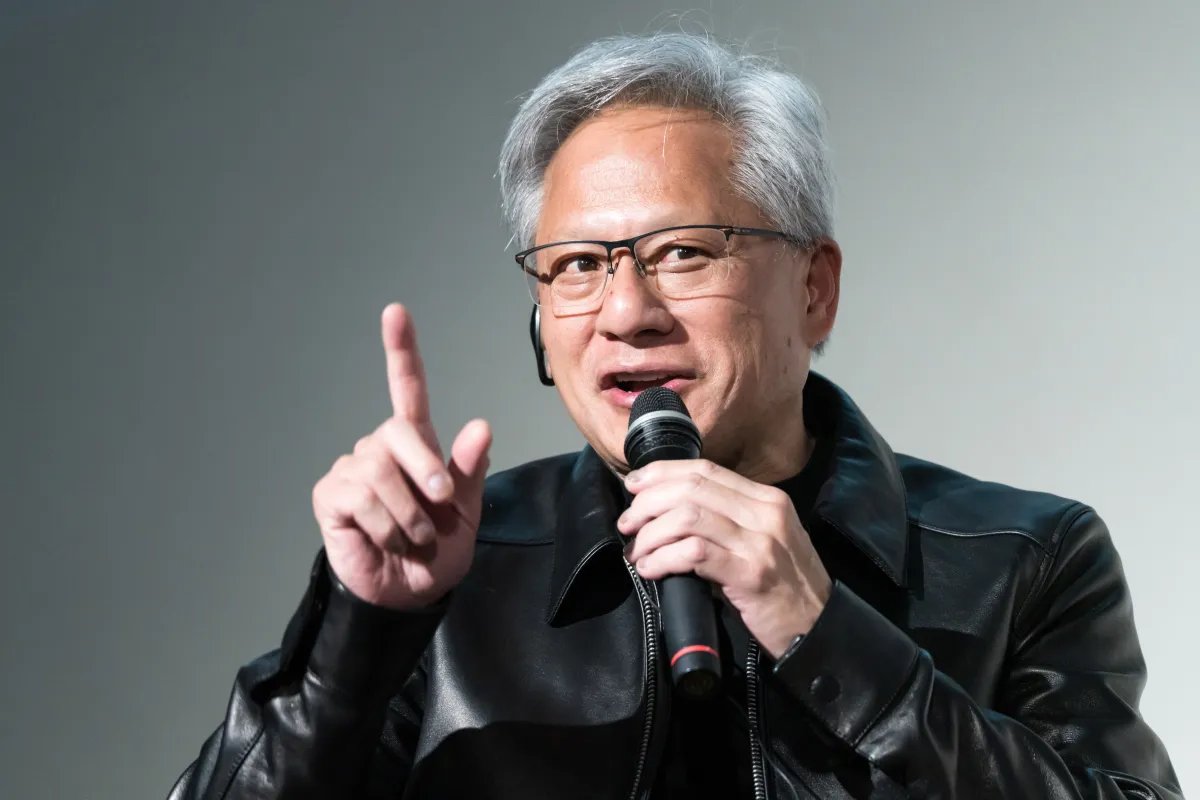
Jensen Huang returns as Nvidia CEO after resigning over multiple affairs, including one with a subordinate and another with a woman tied to Chinese intelligence. The shock comeback raises questions about corporate governance and the AI industry's reliance on Nvidia.
Executive Takeaways
- Jensen Huang has returned as CEO of Nvidia after resigning amid revelations of multiple affairs, including one with a subordinate and another with a woman linked to Chinese intelligence services.
- The abrupt resignation and equally sudden return have raised serious questions about corporate governance, board oversight, and risk management at one of the world's most valuable companies.
- Nvidia's AI infrastructure underpins much of the global AI industry, making leadership stability critical for investors, partners, and the broader tech ecosystem.
- Markets reacted with volatility as investors weighed the implications for Nvidia's operations, strategic direction, and reputation.
- Analysts are divided on whether Huang's return restores confidence or signals deeper governance issues that could haunt the company.
The Core Event & Breaking Timeline
In a stunning turn of events that few in Silicon Valley saw coming, Jensen Huang, the long-time CEO of Nvidia, resigned from his position on Monday morning following revelations of multiple extramarital affairs. According to sources close to the situation, the affairs included one with a subordinate at Nvidia and another with a woman who has been linked to Chinese intelligence services. The news sent shockwaves through the technology and financial worlds, as Huang is widely regarded as the architect of Nvidia's dominance in the AI chip market.
The resignation was announced via a terse press release from Nvidia's board of directors, which stated that Huang had stepped down "to address personal matters" and that the board had accepted his resignation effective immediately. However, within hours, reports emerged that Huang had already returned to the CEO role, reportedly after an emergency board meeting and intense lobbying by major shareholders. The sequence of events—resignation and return within a single day—has left many observers bewildered and concerned about the company's leadership stability.
Nvidia's stock, which had been trading near all-time highs, plunged as much as 12% in pre-market trading on the news of Huang's initial resignation, before recovering some losses after his return was confirmed. By the closing bell, the stock was down 5.6%, reflecting lingering uncertainty. The volatility wiped out approximately $150 billion in market capitalization at its lowest point, underscoring how much of Nvidia's valuation is tied to Huang's leadership.
The timeline of events is murky, but sources indicate that the board became aware of the affairs late last week and confronted Huang over the weekend. The affair with the subordinate, which allegedly occurred several years ago, raised immediate concerns about violations of company policy and potential legal liability. The second affair, with a woman reportedly connected to Chinese intelligence, has triggered national security concerns given Nvidia's critical role in supplying AI chips used in defense and sensitive applications. The FBI and the Committee on Foreign Investment in the United States (CFIUS) are reportedly examining the matter.
Deep Technical & Financial Architecture
Nvidia's financial architecture is intricately tied to its technological leadership in GPUs and AI accelerators. The company's data center segment, which includes its A100 and H100 GPUs, generated over $15 billion in revenue in the most recent quarter, accounting for more than 80% of total sales. These chips are the backbone of AI training and inference workloads for hyperscalers like Amazon Web Services, Microsoft Azure, and Google Cloud, as well as for thousands of enterprises and startups.
The unit economics of Nvidia's business are enviable: gross margins exceed 60%, and operating margins are above 30%. However, this profitability hinges on maintaining technological superiority and customer trust. The leadership turmoil threatens both. If customers perceive instability, they may accelerate diversification efforts toward AMD, Intel, or custom silicon from cloud providers. Already, Google has been deploying its TPU chips for internal AI workloads, and Amazon has been developing its own AI chips.
On the balance sheet, Nvidia holds approximately $25 billion in cash and short-term investments, giving it a cushion to weather short-term disruptions. However, the company's debt load of around $10 billion is manageable but not trivial. More importantly, the company's supply chain is heavily dependent on Taiwan Semiconductor Manufacturing Company (TSMC) for advanced chip fabrication. Any hint of instability at Nvidia could affect its priority allocation at TSMC, especially as competitors like AMD vie for the same capacity.
The technology stack that Nvidia has built—CUDA, cuDNN, TensorRT, and its DGX systems—creates a moat that is difficult to replicate. Developers are deeply entrenched in Nvidia's ecosystem, and switching costs are high. However, the moat is not impenetrable. Open-source alternatives like ROCm from AMD and OneAPI from Intel are gaining traction, and the industry's shift toward open standards could erode Nvidia's advantage over time.
Investors are also scrutinizing the company's governance structure. Nvidia's board has historically been criticized for being too closely aligned with Huang, who also served as president and a director. The board's rapid reversal on Huang's resignation—accepting it and then reinstating him within hours—has raised questions about its independence and decision-making process. Corporate governance experts argue that such volatility at the top can have lasting effects on employee morale, customer confidence, and shareholder trust.
Industry & Global Market Ripple Effects
The ripple effects of Huang's resignation and return are being felt across the AI industry. Nvidia's GPUs are the de facto standard for AI training, and any disruption to the company's operations could delay projects at thousands of companies. Startups that rely on Nvidia's hardware for their AI models are particularly vulnerable, as they often lack the resources to quickly switch to alternative suppliers.
Competitors are already seizing the opportunity. AMD, which has been gaining ground with its MI300 series of AI accelerators, saw its stock rise 3% on the news. Intel, which is ramping up its Gaudi AI chips, also saw a modest uptick. Cloud providers are likely to accelerate their custom chip efforts to reduce dependence on Nvidia. For instance, Microsoft has been developing its own AI chips, and Meta has been working on custom silicon for its data centers.
In the supply chain, TSMC and other partners are monitoring the situation closely. Nvidia is one of TSMC's largest customers, and any reduction in orders could impact TSMC's revenue. However, TSMC's diversified customer base and strong demand for advanced nodes may cushion the blow. Memory suppliers like SK Hynix and Micron, which provide HBM chips for Nvidia's GPUs, are also watching for signs of demand fluctuations.
Globally, the news has raised concerns about the concentration risk in the AI supply chain. Governments and enterprises are increasingly aware that a single company's turmoil can have outsized effects. The European Union, which has been drafting regulations for AI, may use this incident to argue for greater diversification and resilience in critical technology supply chains. In China, where Nvidia's chips are highly sought after despite export restrictions, the news has sparked discussions about accelerating domestic AI chip development.
Critical Perspectives, Analyst Debates & Risk Factors
Analysts are sharply divided on the implications of Huang's return. Some argue that his quick reinstatement demonstrates the board's confidence in his leadership and the lack of a viable successor. "Jensen is Nvidia," said one long-time industry analyst. "The company's strategy, culture, and technological vision are all intertwined with him. Removing him would be like removing the engine from a car." This view holds that the market's initial negative reaction was overdone and that Huang's return restores stability.
Others are more skeptical. Corporate governance experts point out that the board's rapid flip-flop suggests a lack of proper process and raises questions about how the affairs were handled. "If the board truly believed the affairs were a fireable offense, they should have stuck with the resignation," said a professor of business ethics. "The fact that they reversed course so quickly suggests that either the initial resignation was a knee-jerk reaction or that external pressures—perhaps from major shareholders—overrode sound governance."
The national security angle is particularly troubling. The affair with a woman linked to Chinese intelligence has prompted calls for a thorough investigation. Nvidia's chips are used in sensitive applications, including military systems and intelligence gathering. If Huang was compromised, even unwittingly, it could have severe implications for national security. The FBI's involvement adds a layer of complexity that could linger for months.
Regulatory friction is another risk factor. The U.S. government has been tightening export controls on advanced AI chips to China, and Nvidia has been caught in the middle. The company has been designing chips specifically for the Chinese market to comply with regulations, but the scandal could make it harder for Nvidia to navigate the political landscape. Lawmakers may call for stricter oversight of the company, and the incident could be used as ammunition in the ongoing tech war between the U.S. and China.
Strategic Forecast & Road Ahead
In the next 12 to 24 months, Nvidia's priority will be to stabilize its leadership and restore investor confidence. The board is likely to announce a succession plan and perhaps appoint a lead independent director to strengthen governance. Huang will need to address the allegations head-on and demonstrate that he can continue to lead effectively. Transparency will be key: the company may need to disclose more about its internal investigation and any remedial actions taken.
On the technology front, Nvidia is expected to launch its next-generation Blackwell GPUs later this year, which are anticipated to deliver significant performance improvements for AI workloads. The success of this launch will be crucial for maintaining Nvidia's technological lead. The company is also investing in software and services to lock in customers, including its AI Enterprise suite and Omniverse platform.
Investors will be watching for signs of customer attrition. If major cloud providers or enterprises announce plans to diversify their AI chip suppliers, that could be a red flag. Conversely, if Nvidia announces new large-scale deals, it would signal that customers are sticking with the company. The company's quarterly earnings report, due in a few weeks, will be the first real test of market confidence.
Regulatory and legal developments will also be in focus. The FBI investigation into the affair with the Chinese-linked woman could result in charges or other actions. Additionally, shareholders may file lawsuits alleging breach of fiduciary duty by the board. Nvidia's legal team will be busy. Overall, the road ahead is fraught with challenges, but Nvidia's technological leadership and the insatiable demand for AI compute give it a strong foundation. The question is whether Huang's return will be enough to steady the ship or whether the scandal will leave a lasting scar.



Comments (0)
No comments yet. Be the first to share your thoughts!
Leave a Comment