How Andhra Pradesh Avoided a Bigger Cyclone Disaster | the Hindu Editorial
The successful handling of Cyclones Arnab and Murasu demonstrated the benefits of improved forecasting, technology-driven governance and coordinated disaster response. Stakeholders assess operational and strategic impacts following recent development...

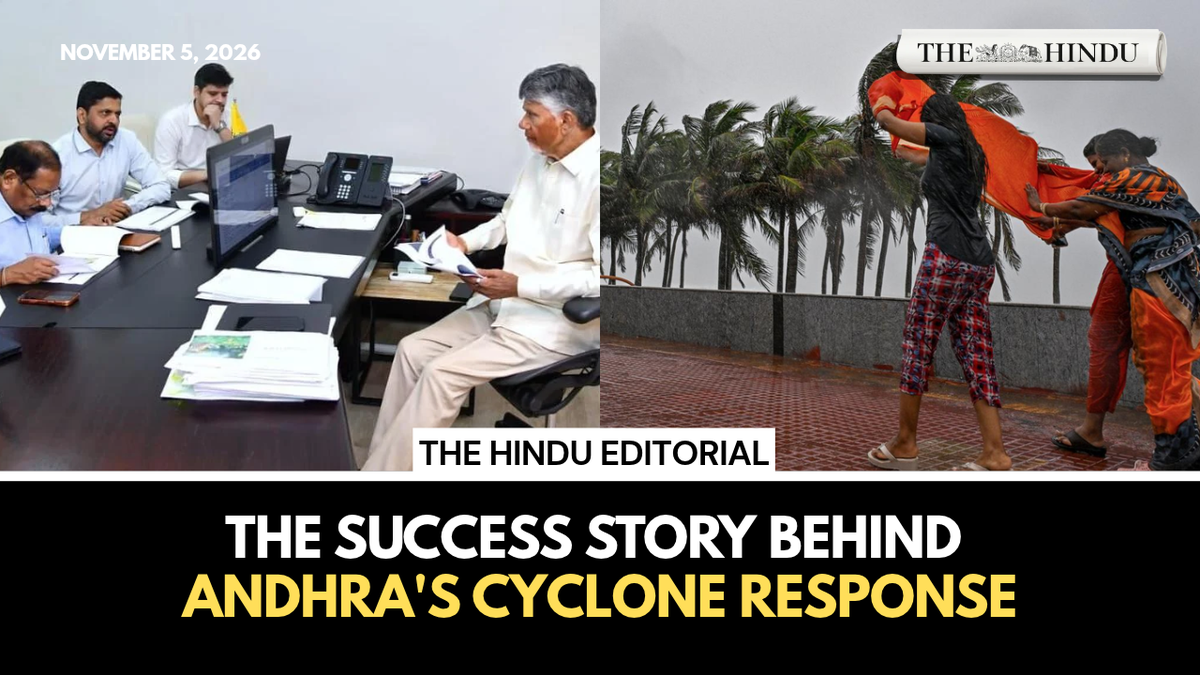
The ongoing evolution of the World environment marked another decisive turn today. The successful handling of Cyclones Arnab and Murasu demonstrated the benefits of improved forecasting, technology-driven governance and coordinated disaster response. According to latest observations, participants are closely evaluating both immediate and forward-looking repercussions.
Executive Key Takeaways
- Primary Signal: The successful handling of Cyclones Arnab and Murasu demonstrated the benefits of improved forecasting, technology-driven governance and coordinated disaster response.
- Contextual Driver: Stakeholders assess operational and strategic impacts following recent developments.
- Strategic Outlook: Market and policy watchers anticipate critical regulatory and macroeconomic responses.
The successful handling of Cyclones Arnab and Murasu demonstrated the benefits of improved forecasting, technology-driven governance and coordinated disaster response.
Market & Strategic Implications
Beyond immediate headlines, market participants are weighing secondary effects. The intersection of capital allocations, regulatory scrutiny, and shifting macroeconomic postures continues to elevate risk sensitivity across comparable assets and jurisdictions.
As further clarity emerges in upcoming briefings, institutional observers emphasize unit economics, policy enforcement, and counterparty exposure as primary barometers for long-term trajectory.
Jaison M K is the Founder and Senior Tech Analyst at Incisor News. With an extensive background in digital media architecture, cloud computing, and semiconductor supply chains, he oversees editorial standards and directs technical reporting on sovereign silicon, artificial intelligence infrastructure, and the digital economy. Direct inquiries: jaison@incisornews.tech



Comments (0)
No comments yet. Be the first to share your thoughts!
Leave a Comment