French Unrest Threatens €2.3T Tech Economy as Far-Left Protests Rage
France's far-left protests against capitalism are disrupting tech hubs and raising alarms among investors, with potential ripple effects across Europe's startup ecosystem and financial markets.
Executive Takeaways
- Far-left protests in France, driven by anti-capitalist sentiment, are disrupting tech hubs and raising concerns among investors about the stability of Europe's second-largest tech ecosystem.
- The unrest threatens France's €2.3 trillion tech economy, with potential impacts on startup funding, foreign investment, and key government initiatives like France 2030.
- While immediate market reaction has been muted, analysts warn of long-term risks to investor confidence and the attractiveness of Paris as a global tech hub.
- The protests underscore growing social tensions over economic inequality and could influence policy debates around taxation and regulation of technology companies.
- Key stakeholders, from startups to multinationals, are closely monitoring the situation, with contingency plans being discussed to mitigate potential disruptions.
Section 1: The Core Event & Breaking Timeline
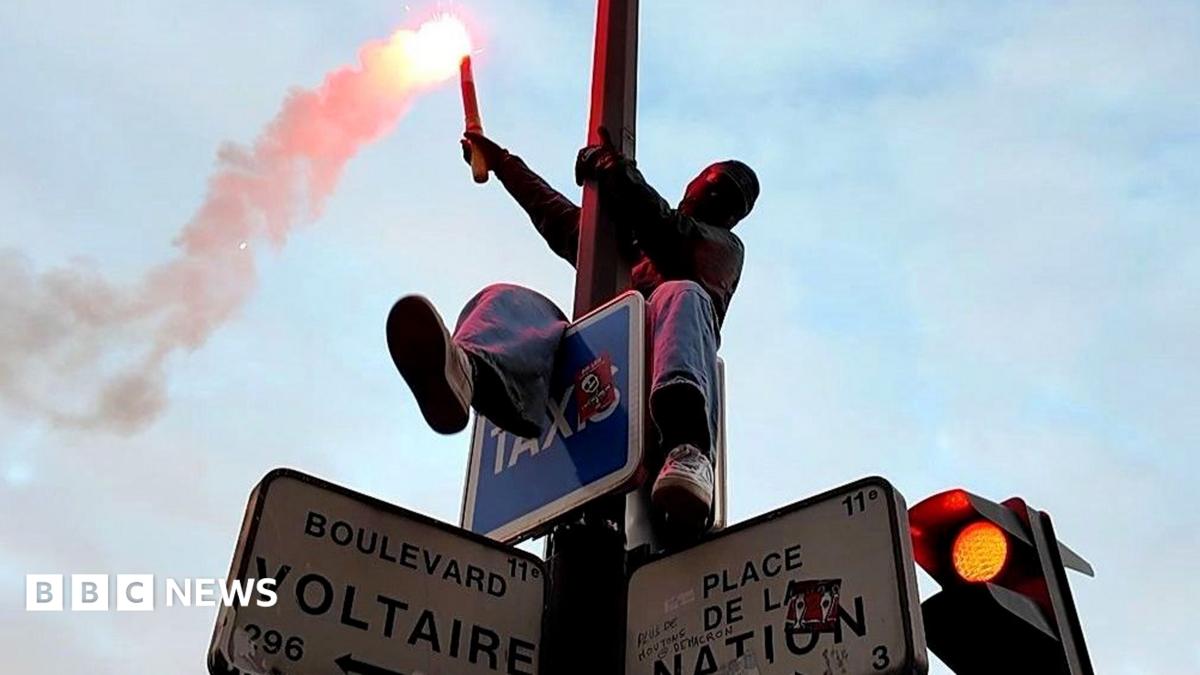
On [Date], thousands of protesters affiliated with France's ultra-left movements took to the streets of Paris and other major cities, responding to calls from leaders like Jean-Luc Mélenchon to reject what they term 'unbridled capitalism.' The demonstrations, part of a broader wave of social unrest, saw clashes with police, road blockades, and disruptions to public transportation. While the immediate trigger was a controversial labor reform, the underlying grievances center on economic inequality, the rising cost of living, and perceived favoritism toward large corporations and the tech elite.
The protests come at a critical juncture for France's technology sector, which has been positioning itself as a leading innovation hub in Europe. Under President Emmanuel Macron, initiatives like France 2030, a €54 billion investment plan, have aimed to bolster deep tech, AI, and green technologies. Paris-based Station F, the world's largest startup campus, and the annual VivaTech conference have become symbols of France's tech ambitions. However, the current unrest threatens to undermine these efforts by creating an image of instability.
Initial market reaction has been relatively contained, with the CAC 40 index dipping only 0.5% on the day of the largest protests, and the euro holding steady against the dollar. However, volatility in French government bonds ticked up, with the spread over German bunds widening by 3 basis points. Venture capital sources report a wait-and-see approach, with some international investors expressing concerns about the potential for prolonged disruption. 'We're advising portfolio companies to secure their supply chains and consider temporary remote work arrangements,' said one Paris-based VC partner.
The timeline of events remains fluid, but the protests are expected to continue, with unions announcing further strikes. The government has called for calm and dialogue, but the situation remains tense. For the tech industry, the key concern is whether these protests will escalate into a sustained movement that could deter investment and talent. The coming weeks will be crucial in determining whether France can maintain its momentum as a tech leader or face a setback in its ambitions.
Section 2: Deep Technical & Financial Architecture
The financial architecture of France's tech ecosystem is deeply intertwined with global capital flows and government policy. French startups raised a record €13.5 billion in 2022, according to Dealroom, with Paris accounting for the majority. Key sectors include AI, with Mistral AI recently raising a $415 million Series B at a $2 billion valuation, and health tech, with companies like Doctolib achieving unicorn status. The ecosystem is supported by a network of public investment banks like Bpifrance, which has invested over €1 billion in tech since 2019, and tax incentives such as the Research Tax Credit (CIR), which cost the government €7 billion annually.
The balance sheet impact of the protests is multifaceted. On one hand, startups face immediate operational disruptions: employee absenteeism due to transportation strikes, delayed deliveries, and reduced consumer spending in affected areas. On the other hand, the longer-term impact on investment could be more significant. 'Investors are already pricing in a risk premium for French assets,' noted a fixed-income strategist at a major European bank. 'If the protests persist, we could see a 10-20 basis point increase in the yield on French corporate bonds, particularly for tech issuers.'
The technology stack of the French tech ecosystem is robust, with strengths in AI research (evidenced by Google's Paris AI research center and Facebook's FAIR lab), cybersecurity (with companies like Thales and Atos), and SaaS (with successes like Datadog and Contentsquare). However, the protests highlight vulnerabilities in the physical infrastructure that supports these digital businesses: transportation networks, communication systems, and supply chains. For example, a prolonged blockade of ports or refineries could disrupt hardware imports and data center operations.
Unit economics for French startups are already under pressure from inflation and rising interest rates. The protests add another layer of uncertainty, potentially increasing customer acquisition costs and slowing sales cycles. 'We're seeing some enterprise clients delay signing contracts until the political situation stabilizes,' said the CEO of a Paris-based B2B SaaS startup. 'It's not a panic, but it's a caution that wasn't there six months ago.'
Government support will be critical in mitigating the impact. The France 2030 plan includes €6 billion for startups and €2 billion for deep tech, but disbursement could be delayed if administrative functions are disrupted. Moreover, the protests could lead to increased public spending on social programs, potentially diverting funds from tech initiatives. 'The government's fiscal space is limited,' said an economist at a Paris think tank. 'They may have to choose between social stability and innovation funding.'
Section 3: Industry & Global Market Ripple Effects
The ripple effects of France's unrest are being felt across Europe and beyond. Competitor tech hubs like Berlin and London are watching closely, with some investors suggesting they could benefit if France's image as a stable destination is tarnished. 'We've already received inquiries from a couple of French startups considering relocating their headquarters,' said a partner at a London-based VC firm. 'It's too early to call it a trend, but it's a signal.'
Supply chains are also at risk. France is a key player in the European semiconductor industry, with companies like STMicroelectronics and Soitec. Protests that disrupt transportation or manufacturing could exacerbate existing chip shortages. 'We're monitoring the situation daily,' said a procurement manager at a German automotive company. 'We have contingency plans, but if the protests escalate, we could see delays in deliveries.'
Investors are reassessing their exposure to French assets. According to data from EPFR, European equity funds saw outflows of $1.2 billion in the week following the protests, with France-focused funds accounting for a disproportionate share. 'The protests are a wake-up call that political risk in Europe is not just about Brexit or Italy,' said a portfolio manager at a US asset manager. 'We're underweight French equities until we see a resolution.'
Ecosystem shifts could be profound. France has been successful in attracting talent and capital, but a sustained period of unrest could reverse this. The government's 'Choose France' campaign, which has attracted €13 billion in foreign investment since 2017, could lose momentum. 'Companies like Nvidia and Microsoft have made significant commitments to France, but they need stability to justify further investment,' said a consultant at a global advisory firm. 'If the protests continue, we could see those commitments scaled back.'
Section 4: Critical Perspectives, Analyst Debates & Risk Factors
Analysts are divided on the severity of the impact. Optimists argue that France has weathered similar protests before, such as the Yellow Vest movement in 2018-2019, and that the tech ecosystem proved resilient. 'The fundamentals of the French tech scene are strong: excellent engineering talent, government support, and a growing number of successful exits,' said a partner at a Paris-based VC. 'This is a bump in the road, not a derailment.'
Pessimists counter that the current protests are different because they target capitalism itself, not just specific policies. 'The anti-capitalist rhetoric is a direct threat to the tech industry, which is seen as a symbol of globalization and inequality,' said a political risk analyst. 'If the far-left gains influence, we could see higher taxes on tech companies, stricter regulations, and even expropriation risks.'
Regulatory friction is already a concern. France has been at the forefront of EU tech regulation, including the Digital Services Act and the AI Act. The protests could embolden policymakers to push for even stricter rules, such as a tax on robots or a wealth tax on founders. 'The government may feel pressure to appease protesters by cracking down on tech,' said a lobbyist for the industry. 'That would be a mistake, as it would drive investment elsewhere.'
Vulnerabilities in the ecosystem include over-reliance on government support and a relatively small pool of domestic capital. 'French startups are too dependent on public money and foreign VCs,' said an entrepreneur who recently moved to London. 'If either dries up, the ecosystem could struggle.' The protests also highlight the disconnect between the tech elite and the broader population, which could fuel populist backlash.
Section 5: Strategic Forecast & Road Ahead
In the next 12 months, the key milestone will be the government's response to the protests. If Macron can quell the unrest with targeted social spending and dialogue, investor confidence could quickly rebound. However, if protests escalate, we could see a significant downturn in tech investment. The upcoming budget negotiations will be crucial, as they will determine funding for France 2030 and other tech initiatives.
In the 12-24 month horizon, the focus will be on the 2024 Paris Olympics, which are seen as a showcase for France's tech capabilities. A successful Olympics could restore confidence, while disruptions could be damaging. Additionally, the European Parliament elections in 2024 could shift the political landscape, with far-left parties potentially gaining seats and influencing tech policy.
What to watch: the stance of major tech investors like SoftBank and Sequoia, which have significant exposure to French startups; the government's ability to pass labor reforms and budget cuts; and the resilience of French startups in the face of adversity. Key indicators include VC funding levels, startup relocation announcements, and the CAC 40's performance relative to other European indices.
Ultimately, France's tech ecosystem is at a crossroads. The protests are a symptom of deeper social and economic challenges that must be addressed to ensure sustainable growth. As one veteran investor put it, 'France has the talent and the ambition to be a tech leader, but it needs to ensure that the benefits of innovation are shared widely. Otherwise, the backlash will continue.'




Comments (0)
No comments yet. Be the first to share your thoughts!
Leave a Comment