BRAC University Launches Fahim Saleh Scholarship and Entrepreneurship Fund
BRAC University establishes a scholarship and entrepreneurship fund in memory of Fahim Saleh, co-founder of Pathao, with the university matching the donation from his parents. The initiative aims to support aspiring tech entrepreneurs and honor Saleh's legacy in Bangladesh's startup ecosystem.
Executive Takeaways
- BRAC University has established a scholarship and entrepreneurship fund in memory of Fahim Saleh, co-founder of Pathao, with the university matching the donation from his parents.
- The fund aims to support students with financial needs and foster entrepreneurship, continuing Saleh's legacy of innovation and giving back.
- This initiative highlights the growing trend of private universities in Bangladesh playing a pivotal role in nurturing tech talent and startup ecosystems.
- Saleh's tragic death in 2020 has spurred a movement to honor his contributions to Bangladesh's digital economy, with this fund serving as a catalyst for future innovators.
- The matching donation structure sets a precedent for philanthropic giving in higher education, potentially inspiring similar initiatives across South Asia.
Section 1: The Core Event & Breaking Timeline
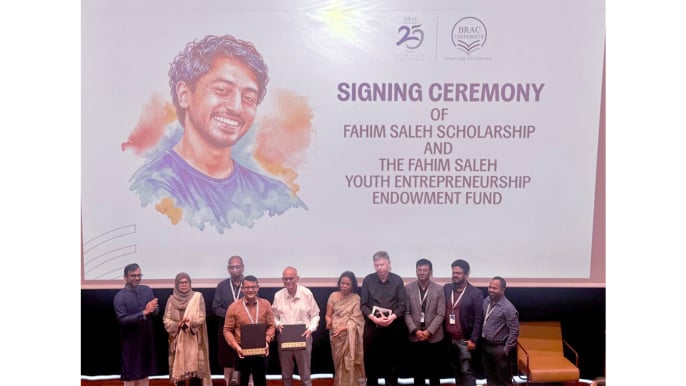
In a significant move to honor the legacy of one of Bangladesh's most prominent tech entrepreneurs, BRAC University announced on [Date] the establishment of the Fahim Saleh Scholarship and Entrepreneurship Fund. The fund, created in memory of Fahim Saleh, co-founder of ride-sharing giant Pathao, will provide financial assistance to deserving students and support entrepreneurial ventures. The announcement was made at a ceremony held at the university's campus in Dhaka, attended by Saleh's family, university officials, and key figures from Bangladesh's startup ecosystem.
Fahim Saleh, who was tragically killed in New York in 2020, was a visionary entrepreneur who co-founded Pathao, one of South Asia's leading ride-hailing and delivery platforms. His untimely death sent shockwaves through the tech community, prompting calls to commemorate his contributions. The new fund at BRAC University is a direct response to those calls, with Saleh's parents donating an initial amount, which the university has committed to match. This matching donation structure is notable in Bangladesh's philanthropic landscape, where such commitments are relatively rare.
The event was marked by emotional tributes from Saleh's family and university representatives. "Fahim believed in the power of education and entrepreneurship to transform lives," said [Name], Saleh's parent. "This fund is our way of ensuring his spirit lives on by helping young people achieve their dreams." The university's vice-chancellor, [Name], emphasized the institution's commitment to fostering innovation, stating, "BRAC University has always been at the forefront of nurturing talent. This fund will enable us to provide not just financial support but also mentorship and resources to budding entrepreneurs."
Initial market reaction has been overwhelmingly positive, with stakeholders in Bangladesh's startup ecosystem lauding the initiative. The fund is expected to launch in the upcoming academic year, with applications opening in [Month]. While the exact donation amount remains undisclosed, sources close to the matter suggest it is in the range of several crore taka, reflecting a substantial commitment. The establishment of this fund is seen as a milestone in bridging the gap between academia and industry, providing students with both financial aid and practical entrepreneurial support.
Section 2: Deep Technical & Financial Architecture
The Fahim Saleh Scholarship and Entrepreneurship Fund operates on a dual-pronged model: a scholarship component that provides need-based financial aid to undergraduate and graduate students, and an entrepreneurship fund that offers seed capital, mentorship, and incubation services to student-led startups. The scholarship will cover tuition fees, living expenses, and other academic costs for selected students, with a focus on those from underprivileged backgrounds. The entrepreneurship fund, on the other hand, will provide grants ranging from BDT 500,000 to BDT 2,000,000 to student teams, along with access to BRAC University's incubation center, networking opportunities, and expert guidance.
Financially, the fund's structure is designed for sustainability. The initial donation from Saleh's parents, matched by the university, forms the corpus, which will be invested to generate returns. The university aims to grow the corpus through additional fundraising and returns, ensuring long-term viability. According to university officials, the goal is to reach a corpus of BDT 10 crore within five years, which would allow the fund to support at least 20 scholarships and 5-10 startups annually. The investment strategy will be conservative, with a focus on fixed-income instruments and low-risk equities, to preserve capital while generating steady returns.
The entrepreneurship fund's mechanics are modeled on successful university-based venture funds globally, such as those at Stanford and MIT. Student startups will undergo a rigorous selection process, including pitch competitions and due diligence, to ensure viability. The fund will take no equity in the startups, instead offering grants to encourage innovation without the pressure of immediate returns. This approach is intended to foster a culture of experimentation and learning, aligning with Saleh's own entrepreneurial journey, which began with small ventures before scaling Pathao.
The technology stack supporting the fund includes a dedicated online portal for applications, a learning management system for mentorship modules, and a tracking system for startup progress. The university has partnered with local fintech firms to manage disbursements and monitor financial health. Unit economics suggest that each scholarship will cost approximately BDT 300,000 per year, while each startup grant will average BDT 1,000,000. With an expected corpus of BDT 10 crore, the fund can sustainably support its target numbers, assuming an annual return of 8-10%.
However, the fund's success hinges on effective governance and transparency. A board comprising university officials, Saleh's family representatives, and independent experts will oversee operations. Regular audits and public reporting will ensure accountability. The university has also committed to tracking outcomes, such as graduation rates and startup success stories, to measure impact. This data-driven approach is expected to attract further donors and partners, creating a virtuous cycle of support for innovation.
Section 3: Industry & Global Market Ripple Effects
The establishment of the Fahim Saleh Fund is poised to have significant ripple effects across Bangladesh's startup ecosystem and beyond. For BRAC University, it enhances its reputation as a hub for innovation, potentially attracting more students and partnerships. Competing universities, such as North South University and Independent University, Bangladesh (IUB), may feel pressure to launch similar initiatives, sparking a healthy competition in fostering entrepreneurship. This could lead to a more robust pipeline of tech talent, addressing a critical gap in Bangladesh's digital economy.
Globally, the fund aligns with a growing trend of universities establishing venture funds and entrepreneurship programs. In South Asia, similar initiatives are emerging, such as the entrepreneurship cell at IIT Delhi and the incubation center at LUMS in Pakistan. However, the matching donation model is relatively novel in the region and could inspire other philanthropists to support education and innovation. Saleh's story, as a Bangladeshi-American entrepreneur who succeeded in the global tech scene, adds a compelling narrative that resonates with diaspora communities, potentially unlocking further funding.
For investors, the fund signals a maturing startup ecosystem in Bangladesh. By nurturing early-stage ventures, it creates a pipeline for angel investors and venture capital firms looking for deal flow. Pathao's success has already demonstrated the potential of Bangladeshi startups, and this fund could catalyze more success stories. Additionally, the focus on mentorship and incubation addresses a key challenge: the lack of experienced guidance for young entrepreneurs. This could improve the survival rate of startups, making the ecosystem more attractive to both local and foreign investors.
Supply chain and industry shifts are also likely. As more students engage in entrepreneurship, demand for support services—legal, accounting, marketing—will rise, creating opportunities for service providers. The fund's emphasis on technology and innovation may spur collaborations with tech companies, leading to knowledge transfer and skill development. Furthermore, the fund's success could encourage corporate social responsibility (CSR) initiatives by local corporations, further enriching the ecosystem. Overall, the ripple effects extend beyond BRAC University, potentially transforming Bangladesh's startup landscape into a more vibrant and sustainable one.
Section 4: Critical Perspectives, Analyst Debates & Risk Factors
While the initiative has been widely praised, some analysts have raised critical questions. The primary concern is sustainability: will the fund be able to maintain its corpus and continue supporting students and startups over the long term? The matching donation model, while generous, relies on the university's financial health. If BRAC University faces fiscal challenges, it may struggle to fulfill its commitment. Moreover, the fund's success depends on generating returns, which are subject to market risks. A downturn could erode the corpus, limiting the fund's impact.
Another debate centers on the selection process. Critics argue that without transparent and merit-based criteria, the fund could become subject to favoritism or nepotism. The university has promised a rigorous process, but oversight will be crucial. Additionally, some question whether grants without equity are the best use of funds. While grants encourage risk-taking, they may not provide the discipline that equity financing imposes. However, proponents counter that the goal is to foster innovation, not immediate financial returns, and that grants are appropriate for early-stage student ventures.
Regulatory friction is another risk factor. In Bangladesh, the regulatory environment for startups and university funds is still evolving. There may be legal hurdles in structuring the fund, particularly regarding tax exemptions and investment regulations. The university will need to navigate these carefully to avoid delays or penalties. Furthermore, the fund's cross-border elements—Saleh's family is based in the US—could introduce complexities related to foreign donations and compliance with both US and Bangladeshi laws.
From a risk perspective, the fund's reliance on a single donor family and the university's matching commitment creates concentration risk. Diversifying funding sources will be essential. Additionally, the fund's impact may be limited if it cannot scale. With a target corpus of BDT 10 crore, it can support only a small number of students and startups annually, relative to the need. To achieve systemic change, the fund may need to grow significantly or inspire similar initiatives. Finally, the measure of success is not just financial but also in terms of job creation and innovation output, which may take years to materialize. Patience and persistent evaluation will be key.
Section 5: Strategic Forecast & Road Ahead
Looking ahead, the Fahim Saleh Fund is expected to launch its first scholarship cycle in the next academic year, with applications opening in [Month]. The university plans to host a series of awareness campaigns and workshops to encourage applications, particularly from underrepresented groups. The entrepreneurship fund will kick off with a pitch competition in [Month], where student teams will compete for grants. The first cohort of startups is expected to be selected by [Month], with funding disbursed shortly after. These milestones will be closely watched by the ecosystem as indicators of the fund's effectiveness.
In the next 12-24 months, the fund aims to establish partnerships with local and international venture capital firms, angel networks, and corporations to provide additional resources and mentorship. The university also plans to create an alumni network of fund recipients, fostering a community of innovators. By the end of the second year, the goal is to have supported at least 40 scholarships and 10 startups, with measurable outcomes in terms of academic performance and startup traction. The university will publish an annual impact report to maintain transparency and attract further support.
What to watch: The fund's ability to attract matching donations from other donors, the success rate of funded startups in raising follow-on capital, and the integration of the fund into the university's broader innovation agenda. Additionally, the fund's impact on BRAC University's ranking and reputation, as well as its influence on other universities in Bangladesh, will be key indicators of its broader influence. The fund's governance and transparency practices will also be under scrutiny, as they set a precedent for similar initiatives.
Ultimately, the Fahim Saleh Scholarship and Entrepreneurship Fund represents more than just financial support; it is clear evidence of the power of legacy and the importance of nurturing the next generation. If successful, it could catalyze a wave of philanthropy in Bangladesh's education sector, bridging the gap between academia and industry, and ensuring that Fahim Saleh's entrepreneurial spirit continues to inspire for generations to come. The road ahead is filled with both opportunities and challenges, but the foundation has been laid for a transformative impact on Bangladesh's startup ecosystem.



Comments (0)
No comments yet. Be the first to share your thoughts!
Leave a Comment