AI Trade Never Died: Bitcoin's Silent Bear Grip Tightens
Tech stocks surge on AI optimism, but bitcoin remains near bear-market lows, highlighting a growing decoupling between traditional tech and crypto markets. Traders see room for recovery, yet bitcoin's participation is notably absent.
Executive Takeaways
- Tech stocks rallied on Monday driven by AI enthusiasm, but the momentum faded by Tuesday, leaving bitcoin near bear-market lows.
- Bitcoin's lack of participation in the AI-driven tech rally underscores a growing decoupling between crypto and traditional tech sectors.
- Analysts point to regulatory uncertainty, liquidity constraints, and shifting investor focus as key factors suppressing bitcoin's recovery.
- Despite the gloom, some traders see potential for a market recovery if macroeconomic conditions improve and institutional adoption accelerates.
- Key upcoming catalysts include Federal Reserve policy decisions, bitcoin halving, and advancements in AI-crypto integration.
The Core Event & Breaking Timeline
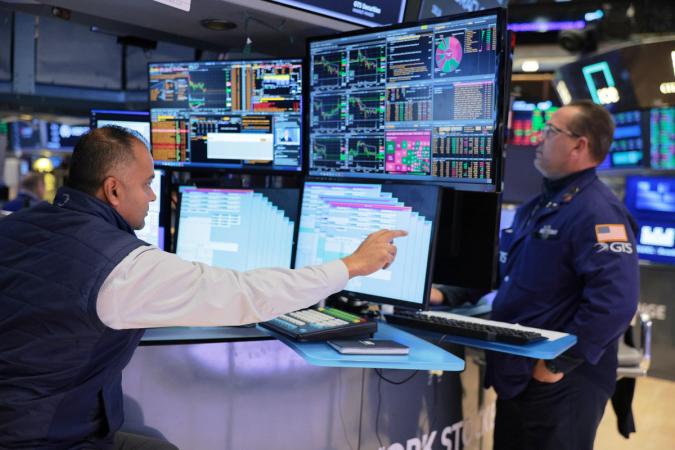
On Monday, a wave of optimism swept through technology stocks, fueled by breakthroughs in artificial intelligence (AI) and strong earnings from major tech firms. The Nasdaq Composite surged 2.5%, with AI-centric companies like Nvidia and Microsoft leading the charge. However, by Tuesday, the enthusiasm had waned, and the tech-heavy index gave back some gains. Meanwhile, bitcoin, the world's largest cryptocurrency, remained stubbornly near its bear-market lows, trading around $26,000—a far cry from its all-time high of nearly $69,000 in November 2021.
The divergence between tech stocks and bitcoin was stark. While the AI trade appeared alive and well, bitcoin's lack of participation raised questions about its role as a risk asset and its correlation with traditional markets. The crypto market's total capitalization hovered around $1.1 trillion, down from a peak of $3 trillion, according to CoinGecko data. Trading volumes remained subdued, and volatility metrics suggested a sense of apathy among investors.
The initial market reaction to Monday's tech rally was muted in crypto circles. Bitcoin briefly touched $26,500 before retreating, while altcoins like Ethereum and Solana saw modest gains but failed to sustain them. The Crypto Fear & Greed Index, a measure of market sentiment, remained in the 'Fear' zone, indicating cautious optimism. Traders pointed to a lack of fresh capital inflows and lingering regulatory pressures as key deterrents.
Tuesday's fade in tech stocks further complicated the narrative. As the Nasdaq slipped 0.8%, bitcoin mirrored the move, dropping 1.2% to $25,800. The synchronized decline highlighted bitcoin's sensitivity to broader market sentiment, even as it failed to capitalize on the previous day's rally. Market participants are now left wondering whether the AI trade can sustain its momentum and whether bitcoin will ever rejoin the party.
Deep Technical & Financial Architecture
The decoupling between AI stocks and bitcoin can be traced to fundamental differences in their underlying value propositions. AI companies like Nvidia and Microsoft are generating tangible revenue from AI products and services, with Nvidia's data center revenue alone hitting $15 billion in the last quarter. In contrast, bitcoin's value is largely driven by speculation, network effects, and its perceived store-of-value properties. The cryptocurrency lacks cash flows, making it more susceptible to sentiment swings and liquidity conditions.
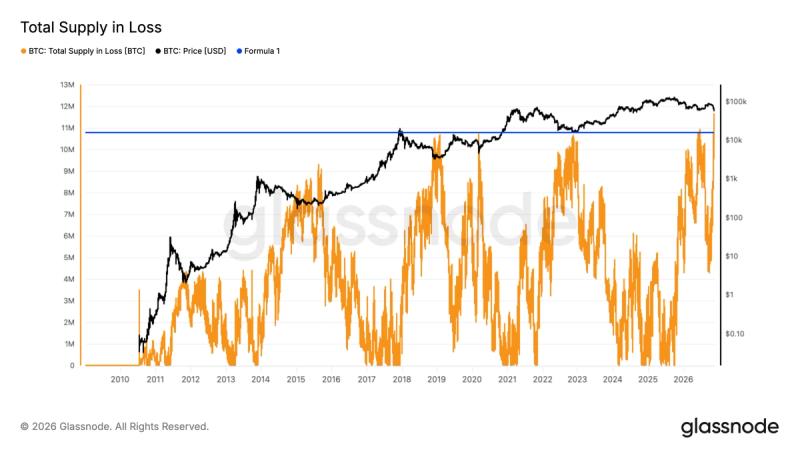
On the technical front, bitcoin's price action has been constrained by a series of lower highs and lower lows since its peak. The 50-day and 200-day moving averages have formed a 'death cross'—a bearish signal—and the Relative Strength Index (RSI) hovers around 40, indicating weak momentum. On-chain data from Glassnode shows that long-term holders are accumulating, but short-term holders are capitulating, creating a supply overhang. The number of active addresses has declined by 15% year-to-date, reflecting reduced network activity.
From a balance sheet perspective, publicly traded bitcoin miners are feeling the pinch. Companies like Marathon Digital and Riot Platforms have seen their stock prices plummet alongside bitcoin, with many forced to sell their bitcoin holdings to stay afloat. Mining profitability, measured by hash price, has fallen to all-time lows, squeezing margins. The upcoming halving in 2024, which will cut block rewards from 6.25 to 3.125 BTC, is expected to further strain miners unless bitcoin's price recovers.
The unit economics of bitcoin mining are brutal at current prices. With an average cost of production estimated at $30,000 per BTC, many miners are operating at a loss. This has led to a wave of consolidation and bankruptcies, with companies like Core Scientific filing for Chapter 11 in December 2022. The hash rate, however, continues to hit new highs, as miners deploy more efficient equipment to maintain market share, exacerbating the profitability crunch.
In contrast, AI companies are enjoying robust unit economics. Nvidia's gross margins exceed 70%, and demand for its GPUs outstrips supply. The AI infrastructure buildout is driving a multi-year capex cycle, with cloud providers like AWS, Azure, and Google Cloud investing billions in data centers. This fundamental strength underpins the AI trade and explains why investors are willing to pay premium valuations for AI stocks while shunning bitcoin.
Industry & Global Market Ripple Effects
The ripple effects of bitcoin's stagnation are being felt across the crypto ecosystem. Crypto exchanges like Coinbase and Binance have reported declining trading volumes, impacting their revenue. Coinbase's stock is down 80% from its IPO price, and the company has resorted to layoffs to cut costs. Venture capital funding for crypto startups has dried up, with Q2 2023 seeing the lowest quarterly funding since 2020, according to PitchBook data.
In the traditional finance world, the AI boom is reshaping investment strategies. Asset managers are reallocating capital from crypto to AI-focused funds, with AI ETFs seeing record inflows. BlackRock's iShares Exponential Technologies ETF, which holds AI stocks, has outperformed bitcoin by a wide margin this year. The shift is also evident in corporate treasuries: companies like MicroStrategy, which holds over 150,000 BTC, have seen their stock underperform the Nasdaq, prompting questions about the wisdom of bitcoin as a treasury reserve asset.
Globally, regulatory developments are adding to the uncertainty. The U.S. Securities and Exchange Commission (SEC) has delayed decisions on several spot bitcoin ETF applications, including those from BlackRock and Fidelity, citing the need for further review. The lack of a clear regulatory framework in the U.S. has pushed some crypto businesses to relocate to jurisdictions with more favorable rules, such as Singapore and the UAE. This regulatory friction is a drag on institutional adoption.
Supply chain dynamics also play a role. The AI boom has led to a shortage of advanced semiconductors, benefiting chipmakers like TSMC and Samsung. Bitcoin mining, on the other hand, relies on older-generation chips, which are in oversupply, leading to falling prices for mining rigs. The divergence in semiconductor demand underscores the different trajectories of the two industries.
Critical Perspectives, Analyst Debates & Risk Factors
Analysts are divided on bitcoin's prospects. Bulls argue that the cryptocurrency is undervalued and due for a rebound, citing historical cycles and the upcoming halving. They point to the growing adoption of bitcoin by institutional investors and the potential approval of a spot ETF as catalysts. Cathie Wood of Ark Invest has reiterated her $1.5 million price target for bitcoin by 2030, arguing that it will capture a share of the global monetary system.
Bears, however, remain skeptical. They highlight the lack of regulatory clarity, the risk of further contagion from bankruptcies in the crypto lending space, and the possibility of a global recession that could dampen risk appetite. JPMorgan analysts have warned that bitcoin's price could fall to $20,000 if the halving does not lead to a supply shock. They also note that the AI trade is diverting attention and capital away from crypto.
Regulatory friction is a major risk factor. The SEC's lawsuits against Binance and Coinbase have created a cloud of uncertainty, and the outcome could set precedents for the entire industry. In Europe, the Markets in Crypto-Assets (MiCA) regulation is set to take effect in 2024, which could provide clarity but also impose compliance burdens. The global regulatory landscape remains fragmented, making it difficult for institutional investors to navigate.
Another vulnerability is the concentration of bitcoin ownership. A small number of addresses control a large portion of the supply, raising concerns about market manipulation. According to Chainalysis, the top 1% of addresses hold 90% of bitcoin supply. This concentration could lead to price volatility if large holders decide to sell. Additionally, the rise of decentralized finance (DeFi) and stablecoins presents both opportunities and risks, with regulators scrutinizing their potential impact on financial stability.
Strategic Forecast & Road Ahead
Looking ahead, the next 12-24 months will be pivotal for bitcoin. The halving in April 2024 is a key milestone that historically has preceded bull runs. However, this time may be different due to the macroeconomic environment and the AI-driven rotation. Traders will be watching for signs of a supply squeeze and increased demand from institutional investors. The approval of a spot bitcoin ETF in the U.S. could be a pivotal factor, potentially unlocking billions in new capital.
On the macroeconomic front, the Federal Reserve's monetary policy will be crucial. If the Fed pivots to rate cuts in 2024, risk assets like bitcoin could benefit. However, if inflation remains stubborn and rates stay higher for longer, bitcoin may continue to struggle. The correlation between bitcoin and tech stocks has been inconsistent, but a sustained tech rally could eventually lift crypto sentiment.
Technological developments in the crypto space, such as the growth of Layer 2 solutions and the integration of AI with blockchain, could drive innovation and adoption. Projects like Fetch.ai and SingularityNET are exploring the intersection of AI and crypto, potentially creating new use cases. However, these are early-stage and may not impact bitcoin directly.
What to watch: the SEC's decisions on ETF applications, the Fed's policy meetings, bitcoin's price action around the halving, and the performance of AI stocks as a proxy for risk appetite. Additionally, regulatory developments in major markets like the U.S., EU, and Asia will shape the industry's future. For now, bitcoin remains in a holding pattern, waiting for a catalyst to break out of its bear-market blues.


Comments (0)
No comments yet. Be the first to share your thoughts!
Leave a Comment