Stubble Fires Return: Why Delhi's Air Crisis Won't End
Stubble burning in India continues unabated due to a complex mix of legal, technological, and economic factors, including the paddy-wheat cycle, assured procurement, and a narrow window between crops. A lasting solution requires stronger incentives for diversification, better residue management, and more reliable measurement of burning.
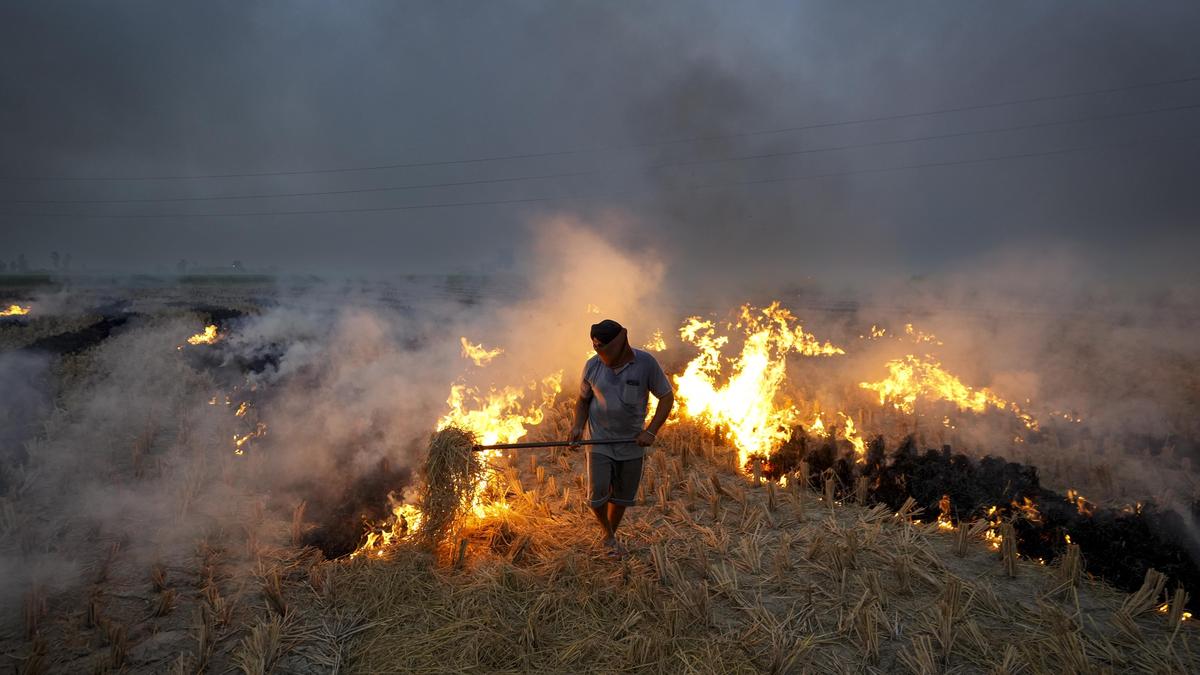
Stubble burning, a major contributor to air pollution in northern India, persists despite efforts to curb it, according to a report by The Hindu. The practice, which involves setting fire to crop residue after harvest, is driven by a combination of legal, technological, and economic factors, including the paddy-wheat cycle, assured procurement, and a narrow window between crops.
The paddy-wheat cycle, a dominant cropping pattern in states like Punjab and Haryana, leaves farmers with little time to clear fields between the rice harvest and wheat sowing. Assured procurement of paddy at minimum support prices encourages farmers to grow water-intensive rice, while the lack of affordable alternatives for residue management forces them to burn stubble. Legal restrictions and technological solutions like the Happy Seeder have had limited success due to high costs and logistical challenges.
Environmentalists and experts argue that a lasting solution requires stronger incentives for crop diversification, better residue management, and more reliable measurement of burning. As winter approaches, the recurring smog in Delhi and other cities highlights the urgent need for coordinated action. The government must address the root causes to prevent a public health crisis.




Comments (0)
No comments yet. Be the first to share your thoughts!
Leave a Comment