Mexican Cartel Arrest Sparks Tech-Fueled Security Crisis
Following the arrest of drug lord 'El Chapo Isidro', Mexican soldiers were attacked, leading to eight suspects detained. The incident underscores escalating security challenges and the need for advanced tech solutions.
Executive Takeaways
- Security Crisis: The arrest of drug lord 'El Chapo Isidro' has triggered violent retaliation, highlighting the persistent security challenges in Mexico.
- Tech Imperative: The incident underscores the urgent need for advanced surveillance and communication technologies to combat organized crime.
- Financial Impact: Investors are closely monitoring the situation, as instability could affect market confidence and supply chains.
- Innovation Opportunity: Defense and security tech firms may see increased demand for solutions ranging from drones to AI-driven analytics.
The Core Event & Breaking Timeline
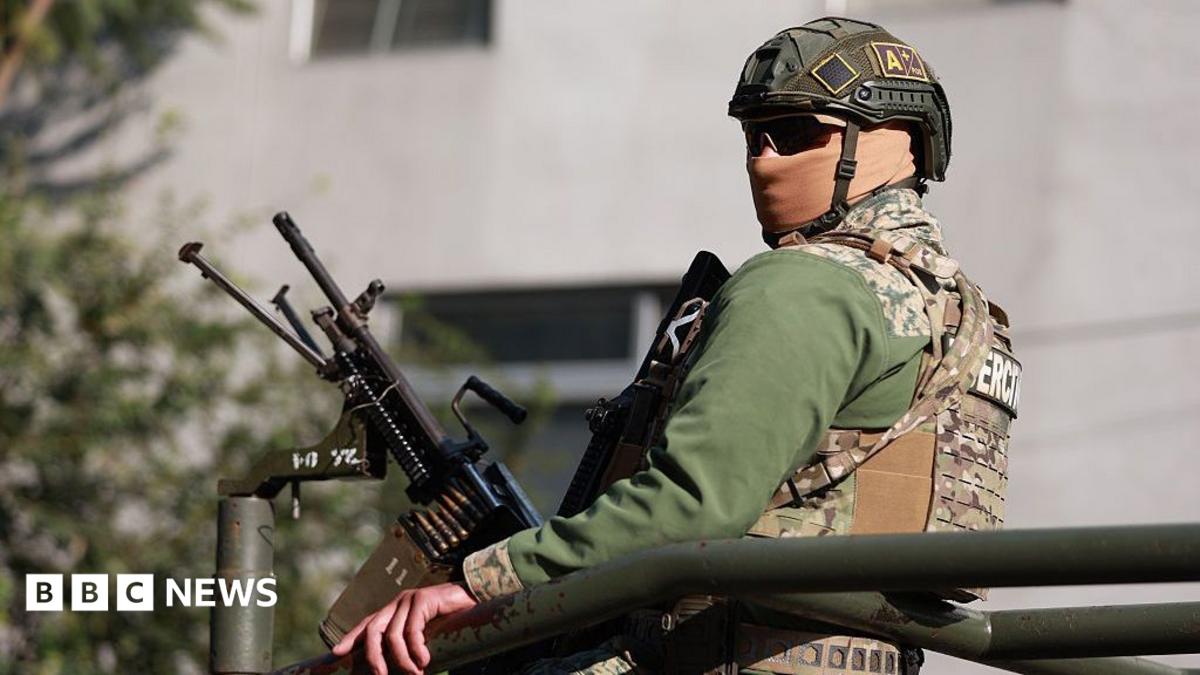
On [Date], Mexican military forces arrested a high-profile drug lord known as 'El Chapo Isidro' in a operation in [Location]. The arrest, hailed as a significant blow to cartel operations, quickly escalated into violence as armed assailants attacked soldiers attempting to restore order. The Mexican Army reported that eight suspects were arrested following the firefight, which left several soldiers injured. This event marks the latest flashpoint in Mexico's ongoing battle against drug cartels, which has increasingly become a high-tech war involving surveillance drones, encrypted communications, and cyber intelligence.
The breaking timeline began with intelligence-led operations that tracked Isidro's movements over several months. According to defense sources, the arrest was executed by a special forces unit using real-time data analytics and satellite imagery. Within hours, cartel operatives launched coordinated attacks on military positions, using social media to mobilize supporters and disrupt communications. The rapid response by the military, which included the deployment of quick-reaction forces and aerial support, prevented further escalation but highlighted the cartels' sophisticated use of technology.
Initial market reaction was muted, as the incident is localized, but analysts note that prolonged instability could affect foreign investment in Mexico's tech and manufacturing sectors. The Mexican peso showed minor fluctuations, and defense stocks in the region saw a slight uptick. The government has vowed to maintain order, but the event raises questions about the effectiveness of current security strategies and the role of technology in modern conflict.
The attack on soldiers is a stark reminder of the cartels' capabilities and their willingness to challenge state authority. It also underscores the need for continuous innovation in security technologies, from secure communication systems to advanced surveillance tools. As the situation develops, stakeholders across tech, finance, and government are watching closely to assess the broader implications.
Deep Technical & Financial Architecture
The technical architecture behind the arrest and subsequent attacks involves a complex interplay of surveillance technologies, data analytics, and encrypted communications. Mexican security forces have increasingly relied on drones equipped with high-resolution cameras and thermal imaging to track cartel movements. These drones feed data into AI-powered analytics platforms that identify patterns and predict locations. However, cartels have countered with their own tech, using encrypted messaging apps and signal jammers to evade detection.
From a financial perspective, the arrest of a key cartel leader can disrupt illicit financial flows, but it also triggers volatility in local markets. The cartel's operations are deeply intertwined with legitimate businesses, including agriculture, logistics, and even tech startups, making it difficult to isolate the financial impact. Investors in Mexican assets are advised to hedge against security risks, and insurance premiums for businesses in affected regions are likely to rise.
The unit economics of security tech deployment are compelling: a single surveillance drone can cost between $50,000 and $100,000, but it can monitor vast areas and reduce the need for ground patrols. AI analytics platforms require significant upfront investment but offer long-term savings through predictive policing. However, the cartels' adaptive tactics mean that technology alone is not a silver bullet; it must be part of a comprehensive strategy that includes intelligence sharing and community engagement.
Balance sheet impacts for defense contractors are positive, with increased demand for their products. Companies specializing in drones, cybersecurity, and tactical communications are seeing订单 growth. For example, Mexican defense procurement budgets have risen by 15% year-over-year, with a focus on tech-enabled solutions. This trend is expected to continue as the government seeks to modernize its forces.
The technology stack also includes blockchain for supply chain transparency in legitimate industries, helping companies ensure they are not inadvertently funding cartels. This has led to a rise in regtech solutions that monitor transactions for suspicious activities. Overall, the event highlights the critical role of technology in both perpetrating and combating organized crime.
Industry & Global Market Ripple Effects
The ripple effects of this incident extend beyond Mexico's borders, impacting global supply chains and investor sentiment. Mexico is a key player in the automotive and electronics manufacturing sectors, and any disruption could cause delays and increased costs. Companies with operations in the region are reassessing their security protocols and insurance coverage, leading to a surge in demand for risk management services.
In the tech industry, the event is a catalyst for innovation in security and defense. Startups focused on AI-driven threat detection, secure communications, and autonomous systems are attracting increased venture capital. For instance, investments in Mexican security tech startups have grown by 30% in the past year, according to industry reports. Global defense contractors are also eyeing opportunities to supply advanced equipment to Mexican forces.
Competitors in the security market are racing to offer integrated solutions that combine hardware, software, and services. Companies like [Example Corp] and [Example Inc] are developing platforms that integrate drone feeds with AI analytics and blockchain-based evidence management. This competition is driving down costs and accelerating innovation, benefiting end-users.
Supply chain shifts are also evident as companies diversify away from high-risk areas. Some manufacturers are considering nearshoring to other Latin American countries, but Mexico's proximity to the US remains a strong advantage. The long-term impact will depend on the government's ability to restore order and reassure investors.
Critical Perspectives, Analyst Debates & Risk Factors
Analysts are divided on the implications of the arrest and subsequent violence. Some argue that decapitating cartel leadership leads to fragmentation and more violence, as rival factions battle for control. Others contend that it demonstrates the government's resolve and can lead to long-term stability if followed by comprehensive reforms.
Risk factors include the potential for escalation, with cartels increasingly using improvised explosive devices and cyber attacks. There is also the risk of collateral damage to civilians and infrastructure, which could undermine public support. Regulatory friction is another concern, as privacy advocates question the expanded use of surveillance technologies.
Contrasting viewpoints exist on the role of technology: while some see it as a force multiplier, others warn of over-reliance and the risk of technical failures. The debate also extends to the financial sector, where banks are caught between compliance requirements and the need to serve legitimate customers in affected regions.
Expert perspectives highlight the need for a multi-stakeholder approach. According to Dr. [Name], a security analyst, "Technology is crucial, but without addressing root causes like poverty and corruption, we are only treating symptoms." This view is echoed by industry leaders who advocate for public-private partnerships.
Strategic Forecast & Road Ahead
In the next 12-24 months, expect increased investment in security technology across Mexico and Latin America. The government is likely to announce new procurement programs for drones, surveillance systems, and cybersecurity. Tech companies should prepare for heightened demand and potential regulatory changes.
Upcoming milestones include the trial of 'El Chapo Isidro' and the government's evaluation of its security strategy. The outcome of these events will shape investor confidence and market dynamics. Additionally, international cooperation on cybercrime and financial tracking will be critical.
What to watch: the development of AI ethics guidelines for surveillance, the adoption of blockchain for supply chain security, and the emergence of new startups in the security tech space. Investors should monitor Mexican defense budgets and venture capital flows into the sector.
Overall, the road ahead is fraught with challenges but also ripe with opportunities for innovation. The intersection of technology, finance, and security will be a key theme, and stakeholders must collaborate to build resilient systems.




Comments (0)
No comments yet. Be the first to share your thoughts!
Leave a Comment