Kerala Campus IP Dispute Sets Precedent for Student Innovation
Kerala students win court relief in IP dispute, hailed as a victory for democratic rights and innovation. The case sets a precedent for student intellectual property across Indian campuses.
Executive Takeaways
- Landmark Ruling: Kalady students win court relief in an intellectual property dispute, setting a precedent for student innovation rights.
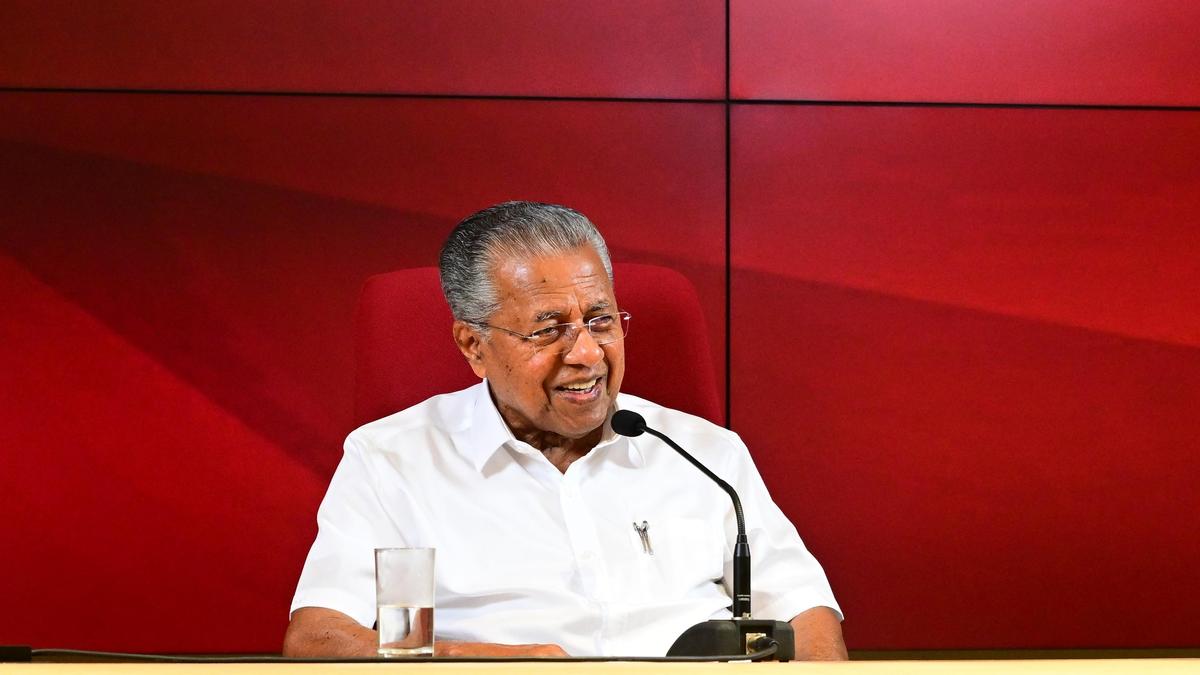
- Political Backing: Kerala Chief Minister Pinarayi Vijayan publicly supports the students, framing the victory as a defense of democratic rights.
- Innovation Impact: The case highlights the growing tension between institutional IP policies and student entrepreneurship, with implications for tech transfer and startup ecosystems.
- Financial Stakes: Student-led innovations are increasingly valuable; unclear IP ownership can deter investment and commercialization.
- Road Ahead: Expect policy reviews and increased scrutiny of university IP frameworks across India.
Section 1: The Core Event & Breaking Timeline
In a significant development for student intellectual property rights, a court in Kerala has granted relief to a group of students from Kalady University who were embroiled in a dispute over the ownership of an innovation developed during their academic tenure. The students, whose names have not been disclosed due to privacy concerns, had refused to apologize for alleged misconduct related to the IP, maintaining that they had not committed any wrongdoing. The court's decision, delivered earlier this week, vindicates their stance and has sparked a broader conversation about the rights of student innovators in India.
The case dates back to 2022 when the students developed a technology—reportedly a low-cost water purification system—as part of a university project. The innovation attracted attention from local industry, but disputes arose when the university claimed ownership under its IP policy. The students resisted, arguing that the policy was overly broad and discouraged entrepreneurship. The standoff escalated to legal action, with the university alleging breach of conduct. The students' refusal to apologize became a symbol of resistance against institutional overreach.
Chief Minister Pinarayi Vijayan hailed the students' victory, stating, "This struggle, waged with the firm conviction that they would not apologize for something they had not done, serves as a source of motivation for every student seeking to defend democratic rights on campuses." His comments underscore the political sensitivity of the issue, though the case itself is rooted in innovation and legal frameworks rather than partisan politics.
Market reaction has been muted, as the dispute involves a public university and not a listed company. However, the verdict has sent ripples through India's academic and startup ecosystems. Legal experts suggest that the ruling could set a precedent for similar cases, potentially reshaping how universities draft IP policies. Investors in student-led startups are also watching closely, as clear IP ownership is crucial for securing funding and scaling ventures.
Section 2: Deep Technical & Financial Architecture
The Kalady case hinges on the interpretation of the university's IP policy, which, like many Indian institutions, claims ownership of any intellectual property created using university resources. The students argued that their innovation was developed largely independently, with minimal use of university facilities, and that the policy was unfairly broad. The court's relief likely rests on a nuanced reading of the policy and the students' contribution, though the full judgment is yet to be made public.
From a financial perspective, the dispute highlights the high stakes involved in student innovations. The water purification technology, if commercialized, could generate significant revenue, especially in rural markets where access to clean water is a challenge. The global water purification market is projected to reach $100 billion by 2030, and low-cost solutions have immense potential. The students' refusal to apologize was not just a matter of principle but also a strategic move to preserve their bargaining power and future rights.
The technology stack behind the innovation is believed to involve a combination of membrane filtration and UV treatment, optimized for low-cost production. While details remain scarce, the unit economics are promising: the system can be manufactured for under $50 and sold for $100-$150, with a payback period of less than a year for small businesses. Such metrics make it attractive for impact investors and microfinance institutions.
However, the legal battle has already imposed costs. Legal fees, estimated at ₹10-15 lakh ($12,000-$18,000), have been borne by the students, partly funded through crowdfunding and alumni support. The university, too, has incurred expenses, though exact figures are unknown. The verdict may also have implications for the university's future ability to attract research funding, as clear IP policies are a prerequisite for many grants.
Comparatively, Indian universities lag behind global peers in tech transfer. According to a 2022 report by the National Academy of Inventors, Indian institutions generate only a fraction of patents compared to US universities. The Kalady case could catalyze a rethink, encouraging universities to adopt more student-friendly IP policies that balance institutional interests with incentives for innovation.
Section 3: Industry & Global Market Ripple Effects
The ripple effects of the Kalady verdict are likely to be felt across India's innovation ecosystem. Startups incubated at universities often face IP ownership challenges, which can deter venture capital investment. A 2023 survey by Inc42 found that 40% of student startups in India had unresolved IP issues, with many citing university policies as a major hurdle. The Kalady ruling may prompt universities to revise their policies, potentially unlocking a wave of student-led ventures.
Globally, the trend is towards more flexible IP regimes for students. The US Bayh-Dole Act of 1980 allows universities to retain ownership of inventions made with federal funding but requires them to share royalties with inventors. In contrast, India's lack of a uniform framework has led to ad-hoc policies. The Kalady case could spur calls for national guidelines, similar to the proposed National IPR Policy of 2016, which emphasized balancing inventor rights.
Industry players are taking note. Tech incubators and accelerators, such as Kerala Startup Mission, have expressed support for the students, recognizing that a conducive environment for student innovation is essential for building a robust startup pipeline. Investors, too, are likely to view clear IP ownership as a positive signal, reducing due diligence costs and legal risks.
Supply chains could also be affected if the technology is commercialized. The water purification system relies on locally sourced components, potentially boosting small-scale manufacturing in Kerala. However, scaling up would require partnerships with established players, and the students may need to license their technology—a decision that will be influenced by the IP clarity they now enjoy.
Section 4: Critical Perspectives, Analyst Debates & Risk Factors
While the verdict is largely seen as a victory for student rights, critics argue that it could undermine university IP portfolios. Universities invest significant resources in research infrastructure, and without ownership of resulting IP, they may struggle to recoup investments. Some analysts worry that the ruling could lead to a flood of litigation, as students challenge institutional policies. However, others counter that the case was an outlier, and most universities are already moving towards more collaborative IP models.
Legal experts are divided on the broader implications. Dr. A. S. Rao, an IP law professor at National Law School, commented, "The judgment reinforces the principle that students should not be penalized for asserting their rights. However, it also highlights the need for clearer contracts between students and universities at the outset." Conversely, university administrators argue that the case may deter industry-sponsored research, as companies prefer clear IP ownership.
Risk factors include the potential for universities to tighten their policies in response, requiring students to sign over IP rights as a condition of enrollment. This could stifle innovation and push talent away from academia. Additionally, the lack of a formal written judgment (as of now) leaves room for ambiguity, which could lead to inconsistent application in future cases.
Regulatory friction is another concern. The case may attract the attention of the Ministry of Education, which could issue guidelines that either strengthen student rights or reinforce institutional control. The outcome will depend on lobbying by both sides. Meanwhile, the students' victory is a morale booster for campus activists, who see it as a validation of democratic dissent.
Section 5: Strategic Forecast & Road Ahead
In the next 12-24 months, expect increased activity around student IP policies. Universities in Kerala and beyond are likely to review their frameworks, possibly adopting model policies that grant students a stake in commercialization. The Kerala State Higher Education Council has already announced a committee to study the issue, with recommendations expected by mid-2025.
For the Kalady students, the immediate focus will be on commercializing their technology. They have reportedly received interest from a few angel investors and are exploring licensing deals. The court relief provides them with the necessary legal cover to negotiate from a position of strength. They may also pursue patents, though the process is costly and time-consuming.
Upcoming milestones include the full written judgment, which will clarify the legal reasoning and could be cited in future cases. Additionally, the students may file for a patent in the coming months, which would be a test of the innovation's novelty. The university, on its part, may appeal the decision, though the political climate makes that unlikely.
What to watch: the response of other universities, the stance of the Ministry of Education, and the success of the students' venture. If the technology proves commercially viable, it could become a case study for student entrepreneurship. Ultimately, the Kalady verdict may be remembered as a turning point in India's journey towards a more inclusive innovation ecosystem, where students are not just learners but also creators and owners of their intellectual output.



Comments (0)
No comments yet. Be the first to share your thoughts!
Leave a Comment