X-Planes at a Crossroads: Are $1B Experimental Jets Obsolete in the Drone Era?
The BBC examines the future of America's X-plane projects, which have historically pioneered aerospace breakthroughs, in an era dominated by cheap, expendable drones. The analysis questions whether these costly experimental aircraft remain relevant as military and commercial focus shifts toward unmanned systems.
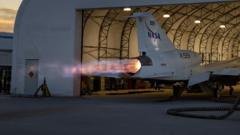
As the United States military and aerospace industry pivot toward inexpensive, expendable drones, questions are mounting over the future of the nation's storied X-plane program. The BBC reported on the shifting landscape, asking where America's X-plane projects fit in an era of cheap drones. For decades, X-planes—experimental aircraft like the X-1 that broke the sound barrier and the X-15 that reached the edge of space—have served as testbeds for cutting-edge aviation technology, often at costs exceeding hundreds of millions of dollars per vehicle.
But the rise of low-cost unmanned aerial systems (UAS), which can be produced for as little as a few thousand dollars and deployed in swarms, has prompted a strategic reassessment. Defense analysts note that recent conflicts, from Ukraine to the Middle East, have demonstrated the outsized impact of cheap drones on the battlefield, often outperforming far more expensive manned platforms. While X-planes have historically driven breakthroughs in stealth, materials science, and propulsion, critics argue that the rapid iteration cycles of drone technology—where software upgrades can be pushed in weeks—stand in stark contrast to the decade-long development timelines of traditional experimental aircraft. Official statements from agencies like NASA and DARPA emphasize that X-planes remain vital for high-risk, high-reward research that drones cannot yet replicate, such as hypersonic flight and advanced aerodynamics.
Nevertheless, the debate signals a broader transformation in aerospace priorities. As the Pentagon increasingly invests in autonomous systems and attritable aircraft, the X-plane program may need to adapt by integrating unmanned technologies or focusing on niche capabilities. Global reactions are mixed: while some allies view the shift as a cost-effective path forward, others worry about ceding technological leadership. Next steps likely include a review of future X-plane funding and a potential pivot toward hybrid manned-unmanned testbeds, with key decisions expected in upcoming budget cycles.




Comments (0)
No comments yet. Be the first to share your thoughts!
Leave a Comment