Robots Trained in Virtual Worlds: The Simulation Revolution Reshaping Automation
Training systems that allow robots to negotiate the real world are becoming increasingly sophisticated, according to BBC World Business. The development highlights a growing industry shift toward using virtual simulations to teach robots complex physical tasks before real-world deployment. This approach promises to accelerate automation across manufacturing, logistics, and services while reducing costly real-world trial and error.
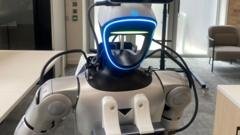
Robotics developers are increasingly turning to virtual worlds to train machines for real-world tasks, according to a report from BBC World Business. The dispatch highlights that training systems enabling robots to negotiate physical environments are becoming more sophisticated, marking a significant step forward in how autonomous machines acquire new skills. While the report did not specify particular companies or locations, the trend reflects a broader industry push toward simulation-based learning.
The core idea is simple but powerful: instead of exposing robots to costly and potentially dangerous real-world trial and error, engineers create detailed digital replicas of factories, warehouses, and streets where robots can practice millions of scenarios in a fraction of the time. This approach, often called sim-to-real transfer, leverages advances in physics engines, 3D rendering, and machine learning to close the gap between virtual training and physical performance. Industry experts say such systems can dramatically cut development costs and speed up deployment, though challenges remain in ensuring that skills learned in simulation translate reliably to unpredictable real environments.
The implications for global industries are substantial. More capable and adaptable robots could soon transform manufacturing, logistics, healthcare, and domestic services, potentially displacing some jobs while creating new ones in robot maintenance and oversight. As the technology matures, regulators and ethicists will need to address safety, accountability, and workforce transition. Next steps likely include wider adoption of simulation platforms by major robotics firms and increased investment in AI research to make virtual training even more realistic and efficient.



Comments (0)
No comments yet. Be the first to share your thoughts!
Leave a Comment