Giving Filipino women a path into technology
A woman’s career choices can depend on more than her ambitions and abilities. Family responsibilities, the cost of training and the need to earn a living can narrow the opportunities available to her. For FTW Foundation co-founder Cara Wilson-Ferrari, that gap…
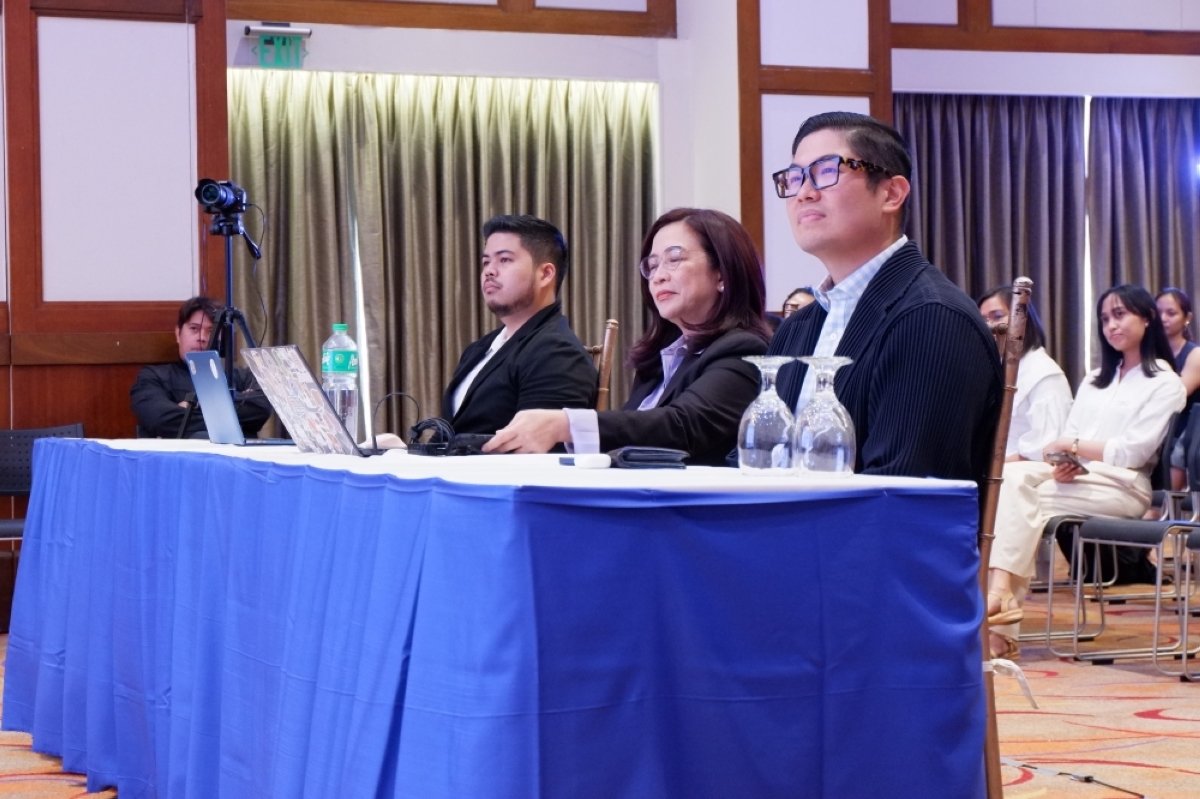
A woman’s career choices can depend on more than her ambitions and abilities. Family responsibilities, the cost of training and the need to earn a living can narrow the opportunities available to her. For FTW Foundation co-founder Cara Wilson-Ferrari, that gap between what Filipino women can do and the opportunities open to them became impossible to ignore while she was living abroad. Wilson-Ferrari lived in Italy for 30 years. After becoming a mother, she found herself thinking more deeply about the Filipinas she met there, particularly those who had left their children in the Philippines to work and provide for their families. She admired not only their willingness to make that sacrifice, but also their professionalism in jobs that are generally physically and emotionally demanding, such as caring for someone else’s children far from their own. “While I was there, I met so many Filipinas that I was so impressed by because, in the meantime, I had become a mother. And I thought to myself, how difficult it is to have a child and then leave your child to someone else. You don’t know if they’re sick. You don’t know if they need you. Then you have to take care of somebody else’s children. And they do it all with such grace, such professionalism, kindness,” Wilson-Ferrari told The Sunday Times Magazine. The experience left her thinking about what the Philippines was losing when women had to leave home simply to find better-paying opportunities, as well as the personal cost paid by families separated for years at a time. “So I said, these women are strong. What a shame that these strong, talented women have to leave the country just to provide a better future for their families. So I thought, I want to be part of a solution one day that gives them more opportunities here, so they don’t have to always break up their families,” she said. That ambition took shape in 2018 when Wilson-Ferrari co-founded FTW Foundation, or For the Women, to offer women free training for careers in technology. For FTW, completing a course is only part of the journey. Its aim is to help scholars turn their training into employment. The Sunday Times Magazine saw that connection during a visit to Accenture in Bonifacio Global City, one of the foundation’s partners, where scholars were undergoing the Accenture x FTW Data Engineering Scholarship Program. The training prepares scholars for a Databricks certification, and successful students are expected to gain opportunities in the technology sector. From marketing to mission Wilson-Ferrari’s path to the foundation began in marketing and advertising, followed by work for ABS-CBN in Italy and years as a full-time mother. With her two sons now in their late 20s, she decided to return to the Philippines sometime in 2015 and 2016. She also wanted to be closer to her mother, who is now 95. At this crossroads, motherhood had given her a different perspective on the choices women make, while her work at an educational startup helped her see how technology could open doors that had previously been hard to reach. “I realized education and technology were the great democratizers. Technology allows you access to a lot of things and speeds up the educational process a lot. It [also had to do with the] in-demand jobs,” Wilson-Ferrari said. When she began considering a training program, artificial intelligence (AI) had yet to dominate conversations about work. But the need to help people develop new skills was already clear to her. “AI wasn’t even a buzzword yet. But upskilling was. For years, government has been saying upskilling is needed. And they were. It became something people talk about, but now it’s become urgent because of the dawn of AI,” she said. The question was how to give women a practical route into technology when the cost of training or a lack of experience might otherwise hold them back. “I thought, these are the kind of people I’d like to help. People who will take an opportunity and not waste it. It’s difficult to have a short solution for someone who’s not convinced. You need to get people who really want it,” she said. Wilson-Ferrari believed many Filipino women already had the determination to make that transition. What they needed was a chance to try. “And I knew that women in the Philippines are usually very determined and hardworking to keep the family together and all that. They just need the opportunity,” she said. Looking for grit That philosophy helped in part to guide FTW in selecting its scholars, with the foundation looking beyond academic credentials and technology experience to identify women who are prepared to pursue an intensive career transition. “The best women we could find should have these qualities: aptitude, financial need and, most importantly, [the right] attitude. We take those kinds of women and train them in very specific profiles that are high demand, low supply,” Wilson-Ferrari said. FTW runs its training as a boot camp, allowing scholars to develop specialized skills in a relatively short period, then move into the workplace without spending years pursuing another degree. The foundation began with around 500 applicants, but interest has since grown into the thousands, largely through word of mouth and the testimonies of women who have already completed the program. “We have many companies who’ve employed from our graduates. And then our graduates, in turn, recommend that they hire also for their team. So they also donate; they become big sisters. And they can also become employers themselves because they become team leads in their businesses,” Wilson-Ferrari said. The graduates, she added, have also earned a particular reputation among some employers for the persistence that FTW seeks to identify from the beginning. “And they’ve said to me, ‘Our bosses say, parang iba yung mga FTW girls, parang mas pursigido [the FTW girls seem different; they are more determined]’,” she said. “They don’t give up so easily. And I think it’s partly due to the fact that we select them to be that way.” ‘Be bold and find your tribe’ FTW’s training is not only about learning technical skills. For Wilson-Ferrari, it is also important to build a community of women who can encourage one another, share what they have learned and make the journey into a new career less daunting. “So the two things I teach my scholars are be bold and find your tribe. And when you find your tribe, you have to find people that can help you in different ways,” she explained. The very principle, after all, applied to building the foundation itself, where co-founders and board members contribute in areas ranging from finance and networking to operations and government relations. Wison-Ferrari’s original plan was to build a coding school after returning to the Philippines, but a meeting with co-founders Paco Caparas and Derya Tanghe changed the project’s direction. “They told me that the data science course is expensive. So they said the best graduates of their course were women who had to borrow money to do the course,” Wilson-Ferrari recalled. The new information immediately suggested a different model, one in which women could access the same quality of training without taking on the financial burden that had prevented many from participating. “We want to help because we’ve noticed the successful ones were those women who were in debt just to finish the course. So we said, what if we can offer it to them for free?” Wilson-Ferrari said. Michelle Alarcon later joined the team and took responsibility for designing the curriculum as FTW’s training evolved. Free does not mean less The move to make the program free is central to FTW’s mission because Wilson-Ferrari believes the women who need the opportunity most should not be excluded by the cost of acquiring the skills. At the same time, she knows a program meant to change someone’s livelihood must deliver training of real value. “We are not big, so our funds are limited. But we do not scrimp on quality — the quality of what we teach and the community that we build,” she said. That community and the scholars’ bonds develop during the 14-week program, when participants meet in person every Saturday. Wilson-Ferrari said the time they spend together helps them form relationships that last beyond graduation and support them through the uncertainty of changing careers. The teacher who decided to try Jinia Gonzales knows what that uncertainty feels like. She had taught English and research to senior high school students for about eight years before making the move into data. A friend told her about FTW in 2022, but at first Gonzales could not picture herself in a technology program. “Most of my friends are actually graduates or scholars of FTW. They’re actually the ones who encouraged me to apply as well,” she said. She joined a group of eight teachers who moved into data, six of whom, like her, transitioned from senior high school teaching. For Gonzales, the strongest reason to apply was at home. “I might say because of my daughters. I do have two daughters. During my application with FTW, honestly, my family was not that okay,” she said. She had long wanted to ensure she could provide for her children, especially amid difficult circumstances, and afford them opportunities she never had. “I needed to make sure that my daughters would grow up [well] even if their dad wasn’t there. I had to make sure that I would be able to support them in whatever means that I can give. So that really inspired me to transition--because of my daughters. I want to give them a better life. I want to make sure that they have proper education,” she said. The decision was still accompanied by considerable doubt, particularly once she encountered the technical side of the program. “For three weeks, I was asking myself, is my decision right? Because it was really difficult,” Gonzales said. Luckily, her teaching experience had made her comfortable communicating with others. Programming was another matter and extra challenging. But rather than avoiding what she found difficult, her fellow scholars were there to cheer her on and take them on. “Whenever there are coding assignments, which I really wasn’t confident about, they pushed me. I kept on practicing, and because of my groupmates, I got through it.” After eventually becoming a data analyst, Gonzales immediately saw the difference in what she could provide for her daughters. “So maybe the biggest thing that really changed in my life was our finances. I was able to send my girls to private school,” she said. Moreover, she could now enroll and engage her daughters in activities they had once asked to join, but Gonzales could not afford. Besides improving family finances, Gonzales also gained confidence in what she could learn and do, so much so that after completing the program, she stayed involved with FTW to help train other women. “This is my way of giving back. But this is also my way of thanking FTW. Because they did not just change my life personally, but the future of my daughters,” Gonzales said. “That’s why I recommend FTW not just because they can change lives financially, but also women’s belief in themselves. You think this is all you can do, but you can do more as long as you believe in yourself and you believe in the people who support you,” she added. A foundation that keeps evolving After seven years as FTW’s executive director, Wilson-Ferrari is now president of the board of trustees, while Tina Bautista, who previously headed operations, became executive director in January. For Wilson-Ferrari, the transition is part of making sure the organization continues to bring in fresh ideas, particularly as technology changes at a pace that makes it difficult for any one person or team to remain static. “I think that I have been doing it for seven years, so it’s really important to have a succession plan. Also, as AI keeps technology changing so quickly, it’s better to always have new perspectives, young people. It shouldn’t always be the same person running the show,” she said. The co-founder admitted the foundation’s challenge now is partly keeping the programs running and partly finding enough partners to expand them. “Of course, fundraising is one of the most challenging things for a nonprofit. When we can find enough sponsors, we could even do two or three courses a year,” Wilson-Ferrari said. FTW has worked with sponsors and partners including Accenture, Insular Foundation, Lazada, GCash and PLDT Smart, with different organizations supporting the foundation through sponsorship, donations or employment opportunities. For Wilson-Ferrari, however, the most important partnerships are those that genuinely share the foundation’s purpose rather than simply treating social impact as another corporate requirement. “I think that it’s important that your partners are not just doing it to tick a box. That they really walk the talk,” she said. Measuring what matters Another promise that FTW makes to its scholars is that their connection doesn’t end with graduation. The foundation follows up after they complete the program and find employment, tracking salary increases and promotions, as well as indicators of how their lives have improved. Wilson-Ferrari is particularly interested in the forms of empowerment that cannot always be captured by a salary figure. “We try to define what that empowerment is,” she said, adding that it can even be found in the smaller changes, like when a graduate becomes someone others can look up to. That is one reason alumni who return to support new scholars mean so much to her and the foundation. “We love it when [our graduates] who have succeeded come back and get in contact with the women who were them at one point in their lives,” Wilson-Ferrari said. “For me personally, if I could hear those happy stories of women telling us that FTW really changed their life for the better, that to me is success,” she said. Asked what else she envisions, Wilson-Ferrari said she hopes more FTW graduates will eventually be hired across Philippine companies and remote workplaces, creating an alumni network that newer scholars can turn to when they need advice or support. “I’d like to tell all partners out there that if you want to support a foundation that can really give you measurable impact, there’s FTW. We’re not just talking about these buzzwords,” Wilson-Ferrari said. “You heard Jinia; I didn’t prompt her. So, her story is real. These are real women whose lives improved.” A can-do attitude To give more women the same chance, Wilson-Ferrari reiterated FTW’s need for continued support through partners and funding. “We can’t do it alone. We really need a lot of help,” she said. The reason why she keeps going, though, goes back to the women she met decades ago in Italy and the question she asked herself after seeing what they were capable of amid their difficult sacrifices for their families. “The reason why I decided to come back and live in the Philippines after many years of living abroad is because I believe so much in the heart and soul of Filipinos, especially Filipino women,” Wilson-Ferrari said. It is the very reason she believes and wants more women to be Jinia Gonzaleses, who struggled and conquered Python and SQL. She would like to push more women to overcome the fear that they cannot transition into data and technology. “If everyone has a story like Jinia--that ‘I thought I couldn’t do it, and now I tried, and now I can do it’--then the sky is the limit for them. What a wonderful future that would be. Of course, we have so many other issues we have to deal with. But if your attitude is a can-do attitude, then you can achieve so much more,” she ended.
Original Source: NewsData.io Wire (Global, Business, Tech)


Comments (0)
No comments yet. Be the first to share your thoughts!
Leave a Comment