Ghost Particles Breakthrough Wins Physics Nobel
Belgian physicist Prof Francis Halzen has been awarded the Nobel Prize in Physics for his pioneering work on the IceCube Neutrino Observatory, which detects elusive 'ghost particles' from space. The award recognizes decades of research that opened a new window on the universe through neutrino astronomy.
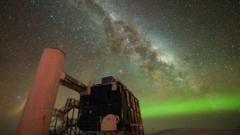
Belgian physicist Prof Francis Halzen has won the Nobel Prize in Physics for his pioneering work on the IceCube Neutrino Observatory, a massive detector buried deep in Antarctic ice that captures elusive 'ghost particles' from space. The award, announced on Tuesday, recognizes Halzen's decades-long effort to turn a cubic kilometer of polar ice into a telescope for neutrinos—particles that rarely interact with matter and can travel billions of light-years unimpeded.
Halzen, a professor at the University of Wisconsin–Madison, conceived the IceCube project in the 1990s and led its construction, which was completed in 2010 at a cost of about $279 million. The observatory consists of 5,160 optical sensors embedded in a cubic kilometer of ice at the South Pole, detecting the faint blue light emitted when neutrinos collide with ice molecules. In 2013, IceCube made headlines by detecting the first high-energy cosmic neutrinos from outside our solar system, opening a new field of neutrino astronomy. 'This is a recognition of the entire IceCube collaboration,' Halzen said in a statement. 'We built a new window on the universe.'
The Nobel Prize in Physics, awarded by the Royal Swedish Academy of Sciences, comes with a gold medal and 11 million Swedish kronor (about $1 million). Halzen shares the prize with two other scientists whose work contributed to neutrino research. The discovery has profound implications for understanding cosmic phenomena such as supernovae, black holes, and dark matter. Global reactions poured in, with the European Physical Society calling it 'a triumph for international collaboration.' Next steps include expanding IceCube with the planned IceCube-Gen2, which will increase the detector's volume tenfold and further illuminate the universe's most violent events.

Comments (0)
No comments yet. Be the first to share your thoughts!
Leave a Comment