From Kannur to the Arctic: Indian Researcher Tracks Toxic Pollutants in Svalbard's Melting Ice
Manoj Panayamthatta Rayaroth, a researcher from GITAM University, participated in the Indian Arctic Expedition 2026-27, collecting fjord water and glacier meltwater in Svalbard to study how organic pollutants transform in ice and reach the sea. The study aims to understand the transport and fate of contaminants in Arctic environments, with implications for global pollution monitoring and climate change research.
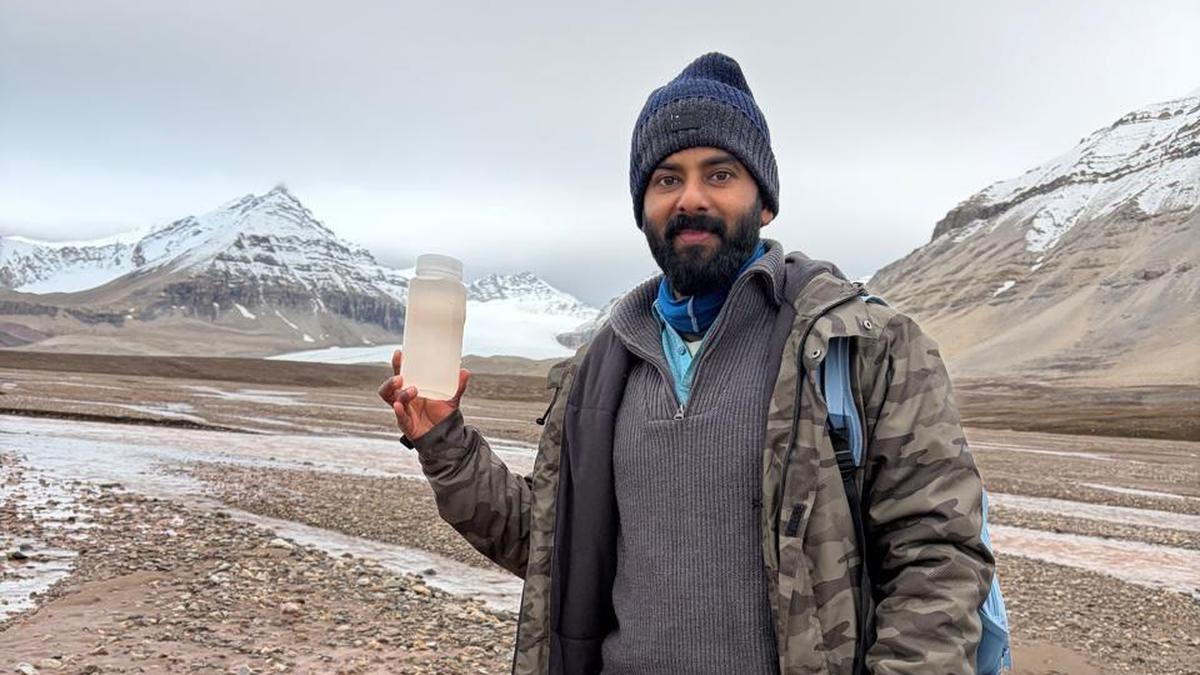
Manoj Panayamthatta Rayaroth, a researcher from GITAM University in India, has returned from the Indian Arctic Expedition 2026-27 after conducting fieldwork in Svalbard, Norway. From Kannur to Ny-Alesund, Rayaroth collected fjord water and glacier meltwater samples to investigate how organic pollutants undergo transformation in ice and eventually reach the sea.
The Indian Arctic Expedition, part of India's polar research program under the Ministry of Earth Sciences, focuses on studying the Arctic's role in global climate change and pollutant dynamics. Rayaroth's work specifically examines the chemical fate of organic contaminants, which can accumulate in ice and be released into marine ecosystems as glaciers melt. This research is crucial for understanding the long-range transport of pollutants to pristine Arctic environments and their potential impact on wildlife and human populations.
The findings from this study could inform international efforts to monitor and mitigate pollution in the Arctic, a region warming at twice the global average. As climate change accelerates ice melt, the release of stored pollutants poses emerging risks. Rayaroth's research adds to India's growing contributions to Arctic science and highlights the importance of global collaboration in addressing environmental challenges. Next steps include laboratory analysis of the samples and publication of results, which may guide future policy on persistent organic pollutants.



Comments (0)
No comments yet. Be the first to share your thoughts!
Leave a Comment