China's Mengxiang Drills Deep: South China Sea Basalt Cores Shatter National Depth Record
China's deep-ocean drilling ship Mengxiang has completed its first expedition in the South China Sea, setting a national depth record and retrieving basalt core samples that could unlock the region's tectonic history. The 30-day mission, organized by the China Geological Survey, tested the operational capabilities of the world's most powerful deep-ocean drilling vessel. The samples are expected to provide valuable insights into the geological evolution of the contested maritime area.
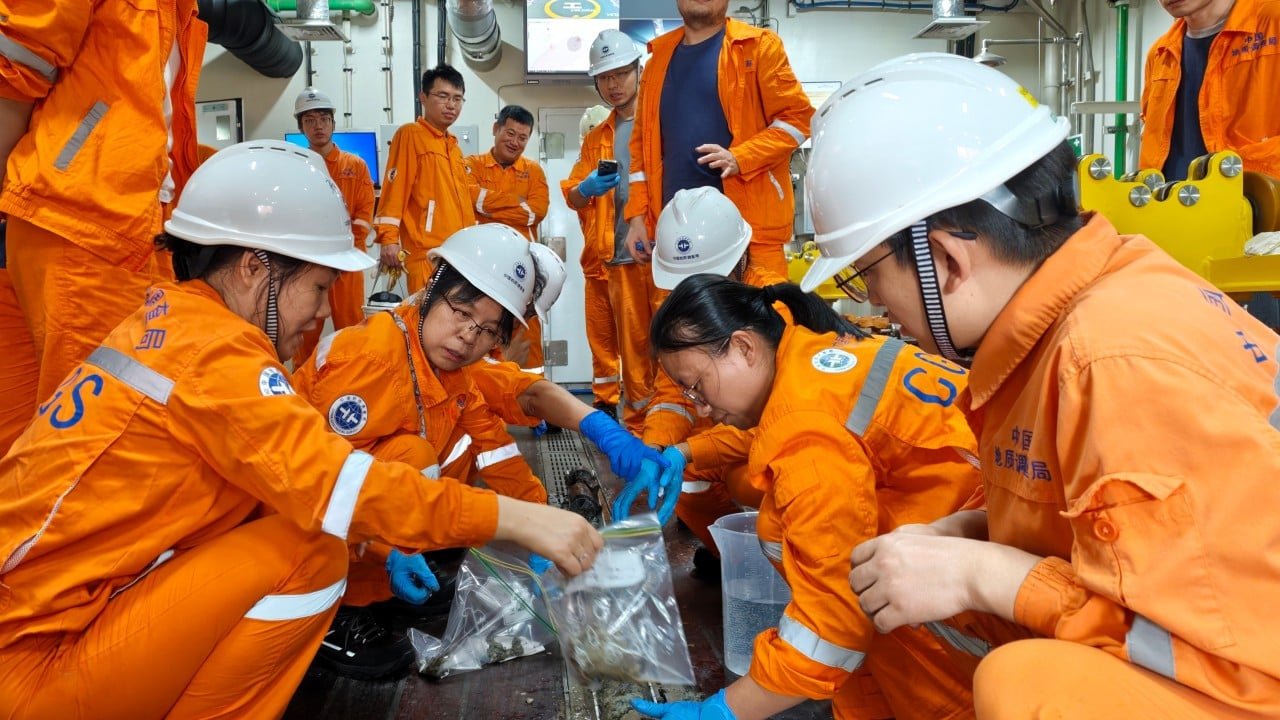
China's deep-ocean drilling ship Mengxiang has returned from its inaugural expedition in the South China Sea, where it set a national depth record and collected basalt core samples that could help unravel the region's tectonic history. The 30-day mission, organized by the China Geological Survey, concluded with the vessel bringing home what officials described as 'precious' geological specimens, according to a report published Monday by the official ministry newspaper Science and Technology Daily.
The expedition tested the operational capabilities of what is billed as the world's most powerful deep-ocean drilling ship. While exact depth figures were not immediately disclosed, the record underscores China's growing prowess in deep-sea exploration. Basalt cores, formed from cooled lava, are key to understanding the timing and nature of seafloor spreading and tectonic activity. The South China Sea is a geologically complex region where several tectonic plates interact, making such samples particularly valuable for reconstructing its evolution.
The successful mission is likely to bolster China's scientific standing in marine geology and could have implications for resource exploration and strategic interests in the contested South China Sea. It also signals China's advancing capability in deep-sea technology, which may intensify regional competition in ocean research. Next steps include detailed analysis of the cores, which could yield insights into past climate change, ocean circulation, and potential hydrocarbon resources. International reactions have yet to surface, but the mission is expected to draw attention from neighboring countries and global scientific bodies.




Comments (0)
No comments yet. Be the first to share your thoughts!
Leave a Comment